
Prostatitis: causes, types, symptoms, diagnosis and management
Prostatitis is inflammation of the male prostate gland that causes pain, urinary and sexual symptoms. This article reviews types, causes, diagnosis, treatment options and key distinctions.
Prostatitis refers to a group of conditions characterized by inflammation of the prostate gland. It occurs only in people with a prostate (typically men) and ranges from a sudden bacterial infection with fever and sepsis risk to chronic painful syndromes without an identifiable pathogen. Presentation and prognosis vary widely, so clinicians classify prostatitis to guide evaluation and treatment.
Image gallery
2 Images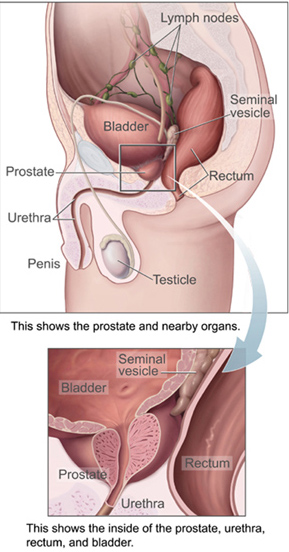

Types and key features
- Acute bacterial prostatitis: abrupt onset, fever, chills, severe pelvic pain, urinary symptoms; requires prompt antibiotics and sometimes hospitalization.
- Chronic bacterial prostatitis: recurrent urinary tract infections with the same organism, intermittent pelvic discomfort and urinary complaints; often diagnosed by urine/prostate secretion cultures.
- Chronic prostatitis/chronic pelvic pain syndrome (CP/CPPS): the most common form; ongoing pelvic pain with or without urinary or sexual dysfunction but often no bacteria recovered.
- Asymptomatic inflammatory prostatitis: inflammation found incidentally (for example on biopsy) without bothersome symptoms; generally does not require directed therapy.
Causes and risk factors
Bacterial infection is the cause in acute and some chronic cases; common organisms include enteric Gram-negative bacilli. Nonbacterial prostatitis or CP/CPPS is multifactorial and may involve immune responses, prior infection, pelvic floor muscle dysfunction, or neuropathic pain mechanisms. Risk factors include prior urinary tract infection, recent instrumentation, urinary retention, and certain sexual practices. Women have small paraurethral structures (Skene's glands) that are embryologic homologues of the prostate and can produce similar local symptoms in rare situations (Skene's glands).
Symptoms and diagnostic approach
Common complaints are pelvic or perineal pain, painful or frequent urination, urgency, difficulty voiding, and occasionally painful ejaculation or erectile symptoms. Acute bacterial prostatitis often includes systemic signs such as fever and malaise. Diagnosis combines history, physical examination (including digital rectal exam), urinalysis and urine culture. In specialist settings, expressed prostatic secretion, segmented urine testing, or imaging (ultrasound or MRI) may be used when the cause is unclear or to rule out abscess.
Treatment and management
Treatment depends on the type: acute bacterial cases require prompt, often prolonged, antibiotic therapy and supportive care. Chronic bacterial prostatitis typically needs longer antibiotic courses guided by culture results. For CP/CPPS, management is multimodal and may include pain control (NSAIDs), alpha-blockers for urinary symptoms, physiotherapy for pelvic floor dysfunction, behavioral measures, and psychosocial support; antibiotics are not routinely helpful when no infection is identified. Recurrent or complicated cases may require urology referral and additional interventions.
Prognosis, epidemiology and distinctions
Outcomes vary: many men with acute bacterial prostatitis recover with appropriate therapy, while chronic pelvic pain can be persistent and require long-term symptom management. Prostatitis accounts for a notable proportion of medical visits related to urinary or pelvic complaints — it is reported to represent roughly 8% of urology visits and about 1% of primary care visits in some settings. Important distinctions include differentiating prostatitis from benign prostatic hyperplasia and prostate cancer; prostate-specific antigen (PSA) levels can be influenced by inflammation and should be interpreted cautiously during active disease.
For further reading on inflammation mechanisms, anatomy of the prostate, and clinical guidelines, see specialized clinical resources and urology texts (inflammation overview, prostate anatomy, gland function).
Questions and answers
Q: What is prostatitis?
A: Prostatitis is a condition that involves inflammation of the prostate gland, which is only found in men.
Q: Can women be diagnosed with prostatitis?
A: Women cannot technically be diagnosed with prostatitis since they do not have a prostate gland. However, they do have paraurethral glands that are homologous to the prostate and may cause similar symptoms.
Q: How common is a prostatitis diagnosis among doctor visits?
A: According to the text, prostatitis is diagnosed at 8% of all urologist visits and 1% of all primary care physician visits in the United States.
Q: What are some common symptoms of prostatitis?
A: Common symptoms of prostatitis include pain or discomfort in the pelvic area, difficulty or pain while urinating, and pain during ejaculation.
Q: Can prostatitis lead to complications?
A: If left untreated, prostatitis can lead to complications such as infections in the bladder or urinary tract, infertility, and even prostate cancer.
Q: How is prostatitis treated?
A: Treatment for prostatitis typically involves antibiotics to treat any bacterial infections, pain medication to relieve discomfort, and sometimes alpha-blockers to help with urine flow.
Q: Can prostatitis be prevented?
A: While there is no surefire way to prevent prostatitis, practicing good hygiene, practicing safe sex, and avoiding bladder irritants such as caffeine and alcohol may help reduce the risk of developing the condition.
Related articles
Author
AlegsaOnline.com Prostatitis: causes, types, symptoms, diagnosis and management Leandro Alegsa
URL: https://en.alegsaonline.com/art/79492
Sources
- pubmedcentral.nih.gov : "Female urethral syndrome. A female prostatitis?"
- ncbi.nlm.nih.gov : "How common is prostatitis? A national survey of physician visits"
- ncbi.nlm.nih.gov : "The 2001 Giessen Cohort Study on patients with prostatitis syndrome – an evaluation of inflammatory status and search for microorganisms 10 years after a first analysis"
- ncbi.nlm.nih.gov : PMID 12629373
- ncbi.nlm.nih.gov : PMID 10527258
- ncbi.nlm.nih.gov : PMID 12496826
- ncbi.nlm.nih.gov : PMID 2239620
- ncbi.nlm.nih.gov : PMID 16566972
- ncbi.nlm.nih.gov : Neurotensin mediates rat bladder mast cell degranulation triggered by acute psychological stress.
- ncbi.nlm.nih.gov : "Editorial: Emerging concepts in the management of prostatitis/chronic pelvic pain syndrome"
- ncbi.nlm.nih.gov : Ciprofloxacin or tamsulosin in men with chronic prostatitis/chronic pelvic pain syndrome: a randomized, double-blind trial
- ncbi.nlm.nih.gov : Levofloxacin for chronic prostatitis/chronic pelvic pain syndrome in men: a randomized placebo-controlled multicenter trial
- ncbi.nlm.nih.gov : Prostate Biopsy Culture Findings of Men With Chronic Pelvic Pain Syndrome do Not Differ From Those of Healthy Controls
- chronicprostatitis.com : "AUA Meeting 2001"
- urologytimes.com : "New bacteria strains found in prostatitis patients"