
Azerbaijani carpet: history, design, and cultural significance
Handmade carpets from Azerbaijan are a centuries‑old textile tradition noted for regional styles, natural dyes, iconic motifs and social importance; recognized by UNESCO as intangible heritage in 2010.
Overview
Azerbaijani carpets are handwoven textile pieces produced across the territory of modern Azerbaijan and adjacent Caucasian regions. They range from small prayer rugs to large floor coverings and are valued for dense pile, durable foundations and distinctive patterns that reflect local tastes and history. The craft combines practical function with symbolic decoration and remains a visible element of Azerbaijani cultural identity; in 2010 the art of carpet weaving in Azerbaijan was inscribed by UNESCO as a representative form of intangible cultural heritage (UNESCO listing).
Image gallery
8 Images


Characteristics and materials
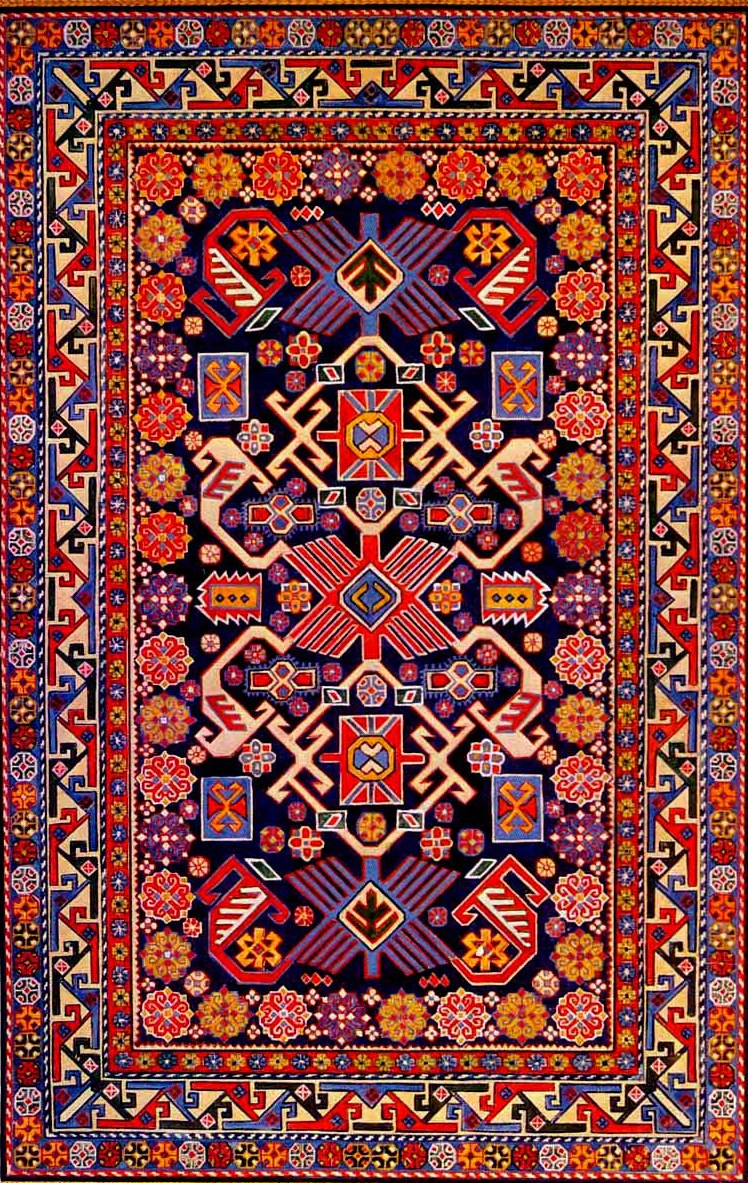
Traditional Azerbaijani carpets are usually made of wool, sometimes combined with silk or cotton for the warp or decorative highlights. Weavers employ tight knots and compact piles to create durable surfaces. Natural dyes derived from plants, roots and minerals—such as madder, indigo, walnut and pomegranate—produce a characteristic palette of reds, blues, browns and golds. Common motifs include central medallions, geometric fields, floral elements and the buta (a curving teardrop or flame shape), each often imbued with symbolic meaning. Technical approaches vary by region, but many Caucasian weaves favor the symmetrical knot and a comparatively coarse, sturdy structure.
Regional groups and styles
Azerbaijani production is traditionally grouped into major regional schools that reflect different histories, motifs and techniques. Four widely recognized groups are:
- Quba–Shirvan: often small to medium carpets with fine, repeating geometric elements and bright local dyes.
- Ganja–Kazakh: larger, robust rugs with bold, angular patterns suited to use on floors and in nomadic dwellings.
- Karabakh: noted for vivid colors and a mix of floral and geometric ornament, frequently produced in both wool and silk.
- Baku: urban workshop productions that historically incorporated more varied materials and complex designs for market demand.
Within these groups, individual villages and workshops developed signatures—palette choices, motif shapes and knot density—that allow specialists to attribute unlabelled pieces to particular districts.
Social role and making process
Carpet weaving in Azerbaijan has been a largely family-based craft transmitted through hands-on training. Roles were traditionally distributed across seasons: shepherds provided wool after spring and autumn shearing; women and girls prepared yarn, worked dyes and did the weaving; men often built looms and handled heavy finishing tasks. Carpets marked personal milestones—dowries, weddings and household establishment—and their production could be accompanied by communal celebration. Oral knowledge, patterns and techniques passed between generations keep the craft alive even as industrial pressures and modern tastes change demand.
Uses, preservation and contemporary context
Beyond domestic floor and wall coverings, Azerbaijani carpets serve as ceremonial objects, architectural adornment and export commodities. Museums and cultural institutions in Azerbaijan and abroad collect historic pieces, study regional typologies and support conservation. Recent decades have seen efforts to revive traditional dyes and designs and to adapt motifs for contemporary interiors. The carpet remains both an economic product and a potent national symbol, taught in workshops and showcased in festivals.
Further reading and resources
- Introduction to Azerbaijani rugs
- Carpet-making techniques
- Geography of Azerbaijani weaving centers
- Historical overview of Caucasian carpet traditions
- Materials used in traditional carpets
- Pile and texture in regional weaves
- Surface treatments and finishes
- Pattern vocabularies and symbolism
- Oral transmission of craft knowledge
- Gender roles in weaving traditions
- Learning to weave: apprenticeship
- Carpets in social life and dowry customs
- Ceremonies linked to carpet production
- Community celebrations and weaving
- Traditional finishing techniques
- Step-by-step carpet making process
- Sheep breeds and wool sources
- Plant dyes and dyeing recipes
- Regional attributions and identification
- UNESCO inscription and cultural heritage status
For those interested in study or collecting, examining knot structure, dye composition and regional motifs provides a reliable basis for identification. Museums, dedicated carpet schools and conservation programs offer practical courses and further context for the continuing traditions of Azerbaijani carpet weaving.
Questions and answers
Q: What are Azerbaijani rugs?
A: Azerbaijani rugs are carpets made in Azerbaijan, an ancient center of carpet weaving.
Q: What is the traditional use of Azerbaijani carpets?
A: Traditionally, since ancient times the carpets were used in Azerbaijan to cover floors, decorate interior walls, sofas, chairs, beds and tables.
Q: Who traditionally makes Azerbaijani carpets?
A: Carpet making is a family tradition transferred orally and through practice, with carpet making and rug making being almost women's job. In the past every young girl had to learn the art of weaving carpets.
Q: How was a newly married son celebrated in the old days?
A: In the old days when a son got married his mother would weave a large rug for his new household as part of his celebration.
Q: How did people make sure that their carpets were tightly knotted in the old days?
A: In the old days finished carpets were laid out in front of the house so that passers-by with the weight of their feet could make them even tighter than they had already been knotted.
Q: What process did men and women take part in during carpet-making?
A: For traditional process of carpet and rug making, men removed wool from sheep in spring and autumn while women collected dyestuffs and spin and dye yarns during spring summer and autumn.
Q: When was Azerbaijani carpet made a "Masterpiece of Oral Intangible Heritage" by UNESCO?
A:In November 2010 Azerbaijani carpet was made a "Masterpiece of Oral Intangible Heritage" by UNESCO.
Related articles
Author
AlegsaOnline.com Azerbaijani carpet: history, design, and cultural significance Leandro Alegsa
URL: https://en.alegsaonline.com/art/7930
Sources
- unesco.org : The traditional art of Azerbaijani carpet weaving in the Republic of Azerbaijan
- en.apa.az : Azerbaijani carpet entered UNESCO List of Intangible Cultural Heritage