
Private equity: overview, structures, strategies, and impacts
Private equity consists of investment in privately held companies or buyouts of public firms, using active ownership and varied financing strategies to create value over multi-year horizons.
Overview
Private equity refers to capital invested directly into companies that are not traded on public markets, typically through ownership of private shares or by taking public companies private away from a stock exchange. These investments are usually made by specialized funds or firms that acquire meaningful stakes and take an active role in strategy, governance, and operations to increase long-term value.
Image gallery
7 Images



Structure and participants
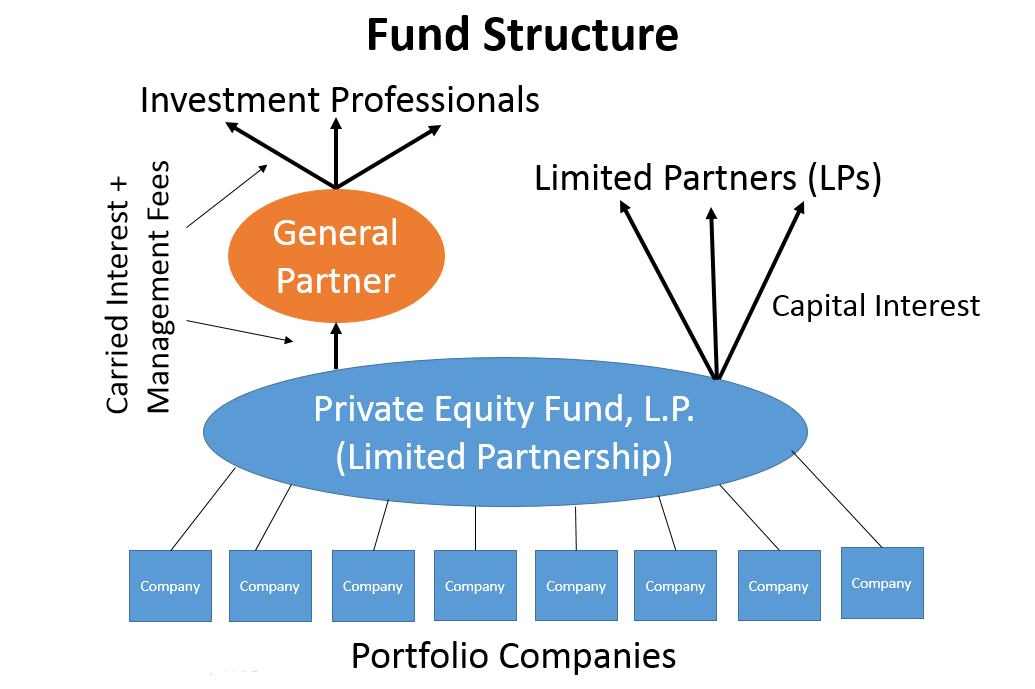
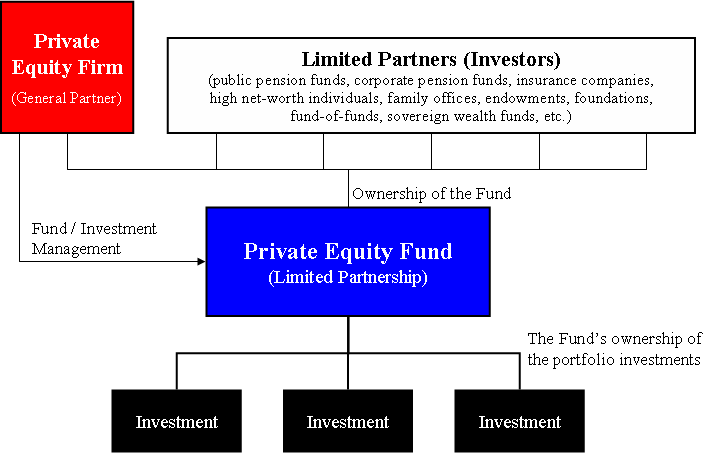
Most private equity is organized as closed‑end funds managed by general partners (GPs). Capital is committed by limited partners (LPs) such as pension funds, endowments, family offices and sovereign wealth funds. GPs source deals, implement change, and eventually sell holdings; LPs provide the bulk of the capital and receive returns after fees and carried interest. Investment horizons commonly span five to ten years, reflecting the illiquid, long‑term nature of the asset class.
Common strategies
- Leveraged buyouts (LBOs): acquisition of mature companies using a mix of debt and equity to finance control and pursue operational improvements.
- Venture capital: early‑stage financing for startups and high‑growth firms; investors accept higher risk for potential outsized returns — see venture capital.
- Growth capital: minority or majority investments in companies that need funds to expand, enter new markets, or finance acquisitions — often called growth capital.
- Mezzanine and hybrid financing: subordinated debt or preferred equity that sits between senior loans and common equity in the capital structure.
- Distressed and special situations: buying troubled or underperforming assets, restructuring balance sheets, and turning businesses around.
Lifecycle and exit routes
Deal activity typically follows sourcing, due diligence, acquisition, value creation, and exit. Common exit paths include initial public offerings, sales to strategic buyers, secondary buyouts (sale to another private equity firm), and recapitalizations. Throughout the holding period, firms may use governance changes, cost reduction, growth initiatives, or refinancing to increase enterprise value. Transactions often involve a target company that benefits from capital and managerial attention.
History, importance, and criticisms
Private equity grew from mid‑20th century buyout and venture capital activity and expanded significantly in scale and geographic reach from the 1980s onward. Proponents argue it supplies patient capital, discipline, and expertise that can revive underperforming businesses and support innovation. Critics point to risks such as heavy leverage, potential job reductions during restructurings, fee structures, and conflicts of interest between managers and investors. The industry remains a major channel of corporate finance, shaping ownership structures and investment practices across many economies.
Notable distinctions and practical considerations
Private equity differs from public equity in liquidity, transparency, and regulatory context: investments are less liquid, often confidential, and subject to different reporting regimes. Investors should consider fund terms, alignment of interests, track record, and risk tolerance. Secondary markets and specialized products increasingly provide partial liquidity for stakeholders in this traditionally long‑dated asset class — for more on the broader ecosystem see private equity resources and market guides.
For a focused entry on early‑stage financing models consult materials on venture capital and for expansion financing see sources relating to growth capital.
Questions and answers
Q: What is private equity?
A: Private equity is investment in shares outside a stock exchange.
Q: Who are the investors in private equity?
A: The investors in private equity are often from institutions like funds.
Q: What do investors in private equity do?
A: Investors in private equity give a company money and, in turn, buy part of that company.
Q: What are the most common types of private equity?
A: The most common types of private equity are: leveraged buyouts, venture capital, growth capital, distressed investments, and mezzanine capital.
Q: What happens in a leveraged buyout?
A: In a leveraged buyout, investors buy the majority control of a mature company.
Q: What is venture capital or growth capital investment?
A: Venture capital or growth capital investment is when investors give money to start-up companies.
Q: Who usually gives money for leveraged buyouts?
A: Investors, often from institutions like funds, give money for leveraged buyouts.
Related articles
Author
AlegsaOnline.com Private equity: overview, structures, strategies, and impacts Leandro Alegsa
URL: https://en.alegsaonline.com/art/79272