
Prince Frederick Josias of Saxe-Coburg-Saalfeld
German prince and Habsburg field marshal (1737–1815) who led campaigns in the Ottoman and French Revolutionary wars, remembered for victories at Rymnik and Neerwinden and for his later resignation.
Overview
Prince Frederick Josias (German: Friedrich Josias) of Saxe-Coburg-Saalfeld (26 December 1737 – 26 February 1815) was a German duke's son who became a senior general in the army of the Habsburg Monarchy. Born at Schloss Ehrenburg in Coburg, he combined princely rank with a long military career that placed him at the centre of two major late‑18th century conflicts: the wars against the Ottoman Empire and the campaigns of the French Revolutionary period.
Image gallery
6 Images


Family background and early service
The youngest son of Duke Francis Josias, Duke of Saxe‑Coburg‑Saalfeld, and Princess Anna Sophie of Schwarzburg‑Rudolstadt, Josias entered Habsburg service as was customary for younger sons of ruling houses. He first saw serious action during the Seven Years' War, and by 1773 had advanced to the rank of Lieutenant Field Marshal. His early career established him as a competent commander and gained him experience in coalition warfare and the logistics of moving and supplying large armies across Central and Eastern Europe.
Campaigns against the Ottomans
In the Austro‑Russian war against the Ottoman Empire (1788–1791) Josias commanded a substantial force within the Habsburg army. He led an army corps operating in the Moldavian region and participated in operations that pushed into Ottoman territory. His forces entered and occupied parts of Moldavia, took several fortified positions including Khotyn in Bessarabia, and cooperated with allied commanders in engagements against the Ottoman main field forces.
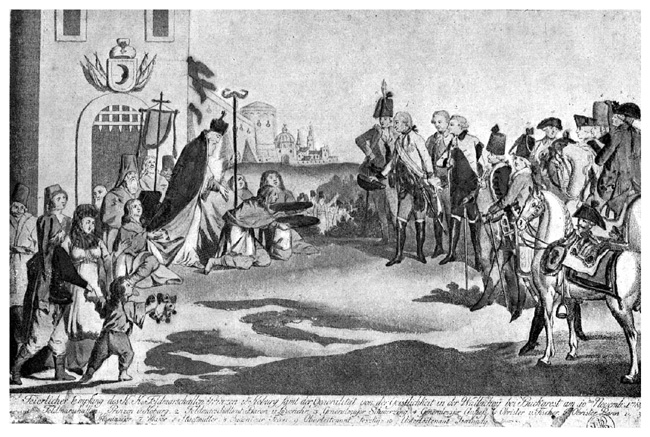
The summer and autumn of 1789 marked the high point of these operations. Allied successes culminated in the defeat of Ottoman forces at Rymnik and in the recovery of much of Wallachia, including the capital Bucharest. For his role in these victories Josias was promoted to the rank commonly translated as Field General (a senior general officer).
Personal life and issue
While on campaign in Moldavia Josias formed a relationship with Therese Stroffeck, a native of the occupied region. Their son, Frederick, was born on 24 September 1789 in Roman. After returning to Coburg the prince acknowledged paternity and later married Therese. Their son was ennobled by the Austrian emperor in 1808 and, in 1853, was created Freiherr von Rohmann by Duke Ernst II of Saxe‑Coburg‑Gotha. Because he was born before his parents’ marriage, the son did not have dynastic succession rights to the duchy.
French Revolutionary wars and later career
In 1793–1794 Josias commanded Habsburg forces in the Austrian Netherlands during the Flanders Campaign of the French Revolutionary Wars. He achieved important victories in 1793, notably at the Battle of Neerwinden, and in early 1794 managed to retake fortified towns such as Condé and Valenciennes. These successes, however, were set against growing political and military difficulties among the allied powers.
Disunity between coalition partners, supply and positioning problems, and the energetic response of French armies culminated in the decisive French victory at the Battle of Fleurus (26 June 1794). The result forced the Allies to abandon the campaign and eventually to withdraw from the Low Countries. With Habsburg ministers already inclined to cede the region, Josias resigned his field command in protest at both the strategic decisions of Vienna and the conduct of the war, and he retired to Coburg.
Legacy and historical significance
Prince Josias represents the 18th‑century model of a dynastic prince serving as a professional soldier in a multinational monarchy. His wins in the Ottoman war helped secure short‑term territorial gains for the Habsburgs, and his 1793 actions briefly restored Austrian control in the Netherlands. Yet the later reverses and his resignation also illustrate the limits of military skill when political cohesion and logistics are lacking. He died in Coburg in 1815, remembered as both a successful commander in several engagements and as an example of the complicated intersection of dynasty, diplomacy and warfare in Revolutionary Europe.
- Birthplace: Coburg
- Father: Francis Josias
- Early war: Seven Years' War
- Rank achieved: Lieutenant Field Marshal
- Command: army corps in Moldavia (Moldavia, Khotyn)
- Opponents: Ottoman forces
- Territorial gains: Wallachia, Bucharest
- Dynastic note: issue and succession (duchy)
- Later wars: French Revolutionary Wars, campaigns in France
- Sieges and towns: Valenciennes
- Region of command: Netherlands
Questions and answers
Q: Who was Prince Frederick Josias of Saxe-Coburg-Saalfeld?
A: Prince Frederick Josias of Saxe-Coburg-Saalfeld (German Friedrich Josias von Sachsen-Coburg-Saalfeld) was a famous general of the Habsburg Emperors. He was born at Schloß Ehrenburg in Coburg, and was the youngest son of Duke Francis Josias, Duke of Saxe-Coburg-Saalfeld and Anna Sophie, Princess of Schwarzburg-Rudolstadt.
Q: What rank did he reach in the Habsburg military?
A: By 1773, he had risen to the rank of Lieutenant Field Marshal in the Habsburg military.
Q: How did his son Frederick come into existence?
A: During an occupation of Moldavia by his army corps under Freiherr von Laudon, Josias met Therese Stroffeck, a regular person. On September 24, 1789, she gave birth to their son named Frederick. After their return to Coburg on December 24th that year, Josias married Therese and acknowledged himself as the father of Frederick.
Q: Was Frederick ennobled by the Austrian Emperor?
A: Yes; on August 25th 1808, Frederick was ennobled by the Austrian Emperor.
Q: What battles did Prince Frederick fight during his career?
A: During his career as a general for the Habsburgs, Prince Frederick fought in several battles including The Seven Years' War; The Russo Turkish Austrian War; The Battle Of Focşani; The Battle Of Rymnik; The Flanders Campaign; The Battle Of Neerwinden; The Battle Of Aldenhoven; And finally -The Battle Of Fleurus.
Q: Did he succeed in all these battles?
A: No - while he succeeded in many battles such as capturing Khotyn in Bessarabia and sharing Aleksandr Suvorov's success at Focşani (August 1st 1789), occupying Moldavia and beating Grand Vizier Koca Yusuf Pasha at Rymnik (1788), returning regions to Austrian control after victories over France during Revolutionary Wars (Neerwinden & Aldenhoven); He suffered losses due to poor positioning which caused disunity amongst Allied powers at Fleurus (26 June).
Q: Where did Prince Fredrick die ? A: After suffering losses due to poor positioning during battle at Fleurus ,Prince Fredrick resigned from position as Field Marshal .He then went back to Coburg where he later died .
Related articles
Author
AlegsaOnline.com Prince Frederick Josias of Saxe-Coburg-Saalfeld Leandro Alegsa
URL: https://en.alegsaonline.com/art/79170