
Presociality: intermediate social organization in animals
Presociality describes animal social systems with family bonds and cooperative care short of eusocial colonies. It covers subsocial to parasocial arrangements and explains adaptive advantages and examples.
Presociality is a term used in behavioral biology to describe social arrangements that involve prolonged family bonds or cooperative interactions but do not reach the extreme specialization of eusocial societies. Presocial animals form lasting associations beyond mating, often share nests or territories, and frequently cooperate in caring for young. Unlike fully eusocial groups, presocial systems lack the complete combination of overlapping generations, permanent reproductive castes, and extreme division of labor that define eusociality.
Image gallery
7 Images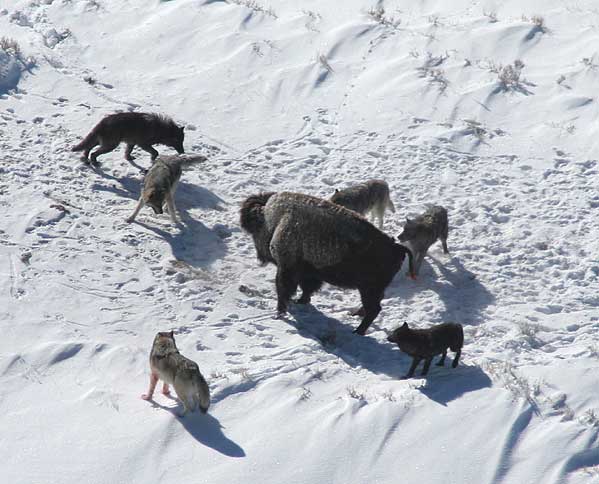


Key characteristics and how presocial differs from eusocial
Presocial organization is best understood in contrast to the three canonical features of eusocial systems. Eusocial groups characteristically show:
- overlap of multiple generations living together,
- an extreme division of labour with specialized roles, and
- cooperative brood care by older individuals.
Presocial animals may display one or two of these traits, but not the full set. For example, they can cooperate in rearing offspring without evolving permanent sterile castes; in contrast, many eusocial insects live in large eusocial colonies with non-reproductive workers and queens. Some species have helpers that assist with young but remain reproductively capable, so they are not truly sterile workers.
Types of presocial arrangements
- Subsocial: parental care dominates. Parents interact with and protect their young; this pattern applies broadly across mammals, most birds, and many reptiles and fish.
- Parasocial: members of the same generation live together and cooperate. Parasociality can be subdivided:
- Communal: individuals share a nest but each tends only its own offspring.
- Quasisocial: cooperative brood care with all members capable of reproduction.
- Semisocial: some reproductive skew appears and a degree of task sharing exists, but generational overlap or strict sterility is absent.
Examples and taxonomic breadth
Presocial behavior occurs widely. Among mammals, pack-living carnivores such as wolves and other canines show cooperative hunting and care. Many bird species form family groups with helpers at the nest. Certain insects — especially among the Hymenoptera (wasps, bees, and ants) — exhibit early stages of sociality that stop short of true eusociality. Primates such as chimpanzees and humans show complex social bonds, cooperative parenting, and cultural transmission that differ qualitatively from the rigid caste systems of ants and termites.
Evolutionary drivers and ecological significance
Several ecological pressures favor presocial behavior. Group living can reduce predation risk, improve resource acquisition, and increase offspring survival through cooperative care. In some vespid wasps, for instance, the risk of parasites and predators selecting on mothers who guard nests has plausibly promoted extended parental presence and the retention of other adults at the nest. Once adults remain together, natural selection can favor further cooperation such as shared foraging or babysitting, potentially setting the stage for more complex social evolution.
Why presociality matters
Presocial systems represent an important intermediate in the spectrum of social organization. They illuminate how cooperative behaviors can evolve incrementally and how ecological context shapes social structure. In applied contexts, understanding presocial dynamics aids conservation (for species where family groups are critical to reproduction), pest management (for social insects), and comparative studies of the origins of human sociality. Researchers use field observation, behavioral experiments, and genetic analysis to distinguish cooperative but flexible presocial arrangements from obligate eusocial systems and to trace transitions between these social forms.
For further reading on contrasts between colony-level eusociality and earlier stages of social organization, see resources on eusocial colonies, the evolution of division of labour, the role of sterile castes, pack dynamics among canines, social insects in Hymenoptera, primate social systems such as those of chimpanzees, and parental care in fish.
Questions and answers
Q: What is presociality?
A: Presociality is a term which applies to animal behaviour where animals have close family relationships and more than just sexual interactions with members of the same species, but do not form the extreme colonies of eusocial insects such as ants.
Q: What are the three essential traits of eusocial animals?
A: The three essential traits of eusocial animals are that there are multiple generations alive at the same time, there is an extreme division of labour with some animals being specialised for certain functions and some being sterile, and older animals cooperate to care for the young.
Q: Are presocial behaviours common in the animal kingdom?
A: Yes, presocial behaviour is much more common in the animal kingdom than complete eusociality. Examples include canines living in packs, numerous insects especially hymenoptera, humans, many birds, chimpanzees and many other animals displaying social behaviour.
Q: How can presociality be further divided?
A: Presociality can be further divided into subsocial (parents interact with young), parasocal (individuals of same generation live in cooperative dwelling and interact with each other), communal (each individual cares exclusively for own young), quasisocal (individuals care cooperatively for all brood) and semisocal (few individuals reproduce yet arrangement not quite eusocail).
Q: What pressures may have selected subsocail behaviour among Vespid wasps?
A: The pressures from predators and parasites may have selected subsocail behaviour among Vespid wasps as it is easier to guard eggs and grubs when mother wasp stays in nest to watch over larva if other adults stay with her. This also makes it less likely that parasites will successfully prey on nest.
Q: How does communal behavior differ from quasisocal behavior?
A: Communal behavior involves each individual caring exclusively for their own young while quasisocal behavior involves individuals caring cooperatively for all brood.
Related articles
Author
AlegsaOnline.com Presociality: intermediate social organization in animals Leandro Alegsa
URL: https://en.alegsaonline.com/art/78938