
President of the United Arab Emirates
The President of the United Arab Emirates is the federal head of state, elected by the Federal Supreme Council for five-year terms; the office combines ceremonial, executive and security roles and is tied to Abu Dhabi's ruler.
Overview
The President is the federal head of state of the United Arab Emirates. Established with the 1971 federation, the office is defined by the constitution and by federal practice as both a symbol of national unity and a senior participant in governance. The president represents the federation internationally and plays a central role in coordinating policy among the emirates.
Image gallery
7 Images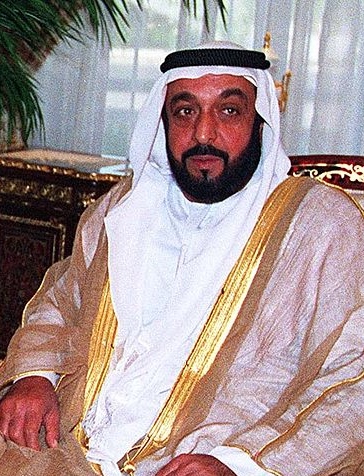


Role and responsibilities
The president's functions blend ceremonial and practical authority. Key responsibilities typically include:
- Serving as the formal commander-in-chief of the armed forces — often described as the Supreme Commander — with responsibility for national defence policy and military appointments.
- Chairing important federal bodies such as the Federal Supreme Council and the Supreme Petroleum Council, which influence economic and strategic decisions.
- Approving or endorsing federal legislation, treaties and high-level appointments, and representing the federation abroad.
Selection and succession
Under the constitution, the president is elected for a five-year term by the Federal Supreme Council, the assembly composed of the rulers of the emirates. In practice, however, the presidency has been held by the ruler of Abu Dhabi since the country's founding, making the office effectively de facto hereditary within that emirate's ruling family.
History and development
The position dates to the UAE's formation in 1971. The founding president played a central role in creating federal institutions and integrating the seven emirates. Over time the office adapted to changing political and economic realities, including management of hydrocarbon wealth and the UAE's expanding international presence.
Importance and notable distinctions
The presidency is significant both symbolically and materially: it concentrates influence over defence, energy policy and foreign relations while embodying continuity among the emirates. The practical link between Abu Dhabi's leadership and the presidency distinguishes the UAE's federal model from many other constitutional systems.
Further context
The balance between the president's formal powers and the collective authority of the Federal Supreme Council reflects the UAE's hybrid federal-monarchical structure, in which traditional emirate leadership and modern institutions coexist. For more constitutional and historical detail, consult official sources and constitutional texts maintained by the federation and its constituent emirates.
Questions and answers
Q: Who is the head of state in the United Arab Emirates?
A: The President of the United Arab Emirates is the head of state.
Q: How is the President of the United Arab Emirates elected?
A: The President of the United Arab Emirates is officially elected every five years by the Federal Supreme Council.
Q: Is the presidency of the United Arab Emirates hereditary?
A: Yes, the presidency of the United Arab Emirates is de facto hereditary because the ruler of Abu Dhabi customarily also holds the office.
Q: What are the additional roles of the President of the United Arab Emirates?
A: The President of the United Arab Emirates is also the Supreme Commander of the UAE Armed Forces and Chairman of the Supreme Council and Supreme Petroleum Council.
Q: Who is the ruler of Abu Dhabi?
A: The ruler of Abu Dhabi is the person who customarily holds the presidency of the United Arab Emirates.
Q: How often is the President of the United Arab Emirates elected?
A: The President of the United Arab Emirates is officially elected every five years by the Federal Supreme Council.
Q: What are some of the key responsibilities of the President of the United Arab Emirates?
A: Some of the key responsibilities of the President of the United Arab Emirates include being the head of state, Supreme Commander of the UAE Armed Forces, and Chairman of the Supreme Council and Supreme Petroleum Council.
Related articles
Author
AlegsaOnline.com President of the United Arab Emirates Leandro Alegsa
URL: https://en.alegsaonline.com/art/78907
Sources
- helplinelaw.com : Articles 51 and 52 of the UAE Constitution