
Presidency of Abraham Lincoln
Overview of Abraham Lincoln's presidency (1861–1865): leadership during the Civil War, expansion of executive power, the Emancipation Proclamation, Gettysburg Address, assassination, and enduring legacy.
Overview
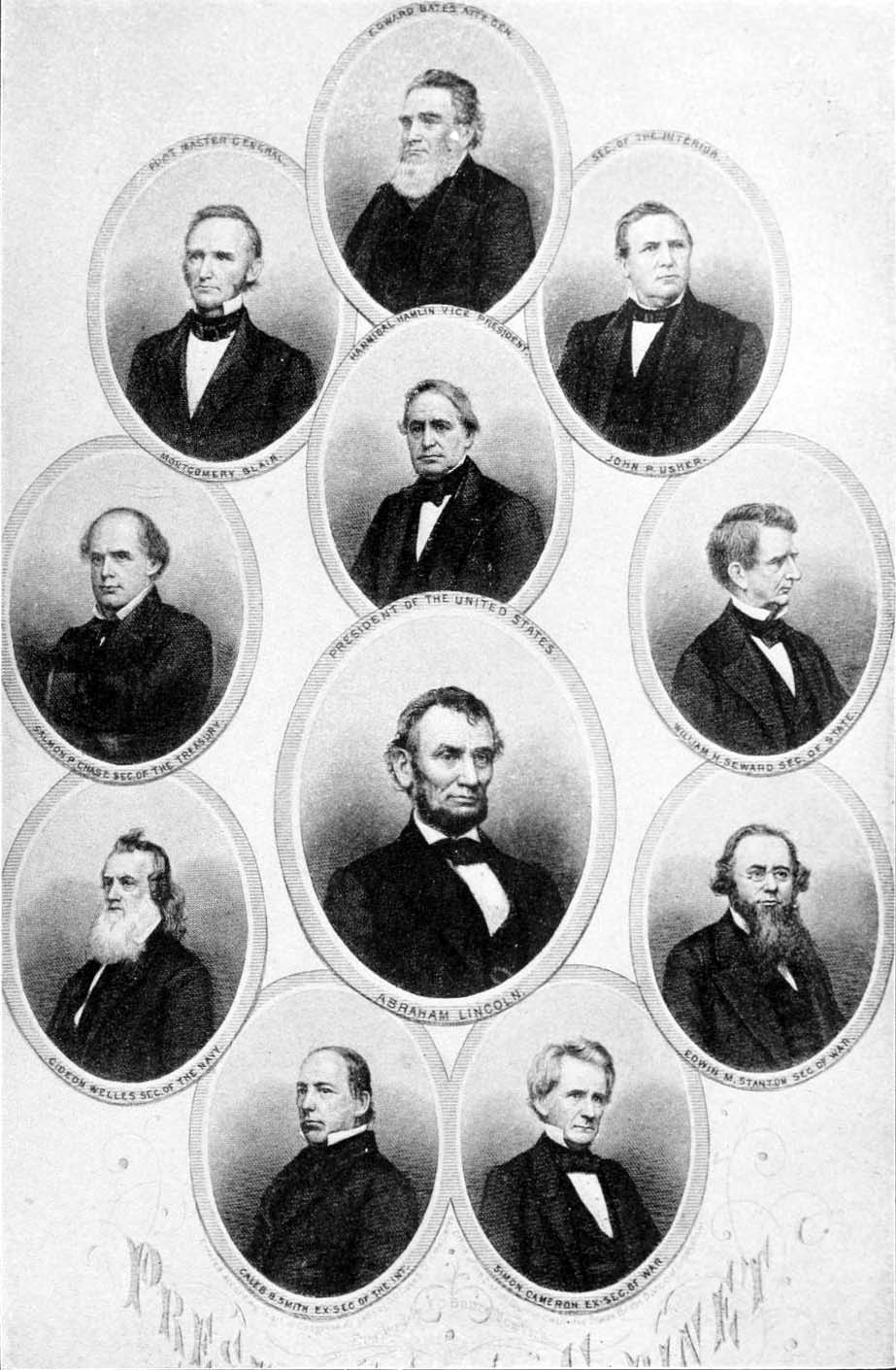
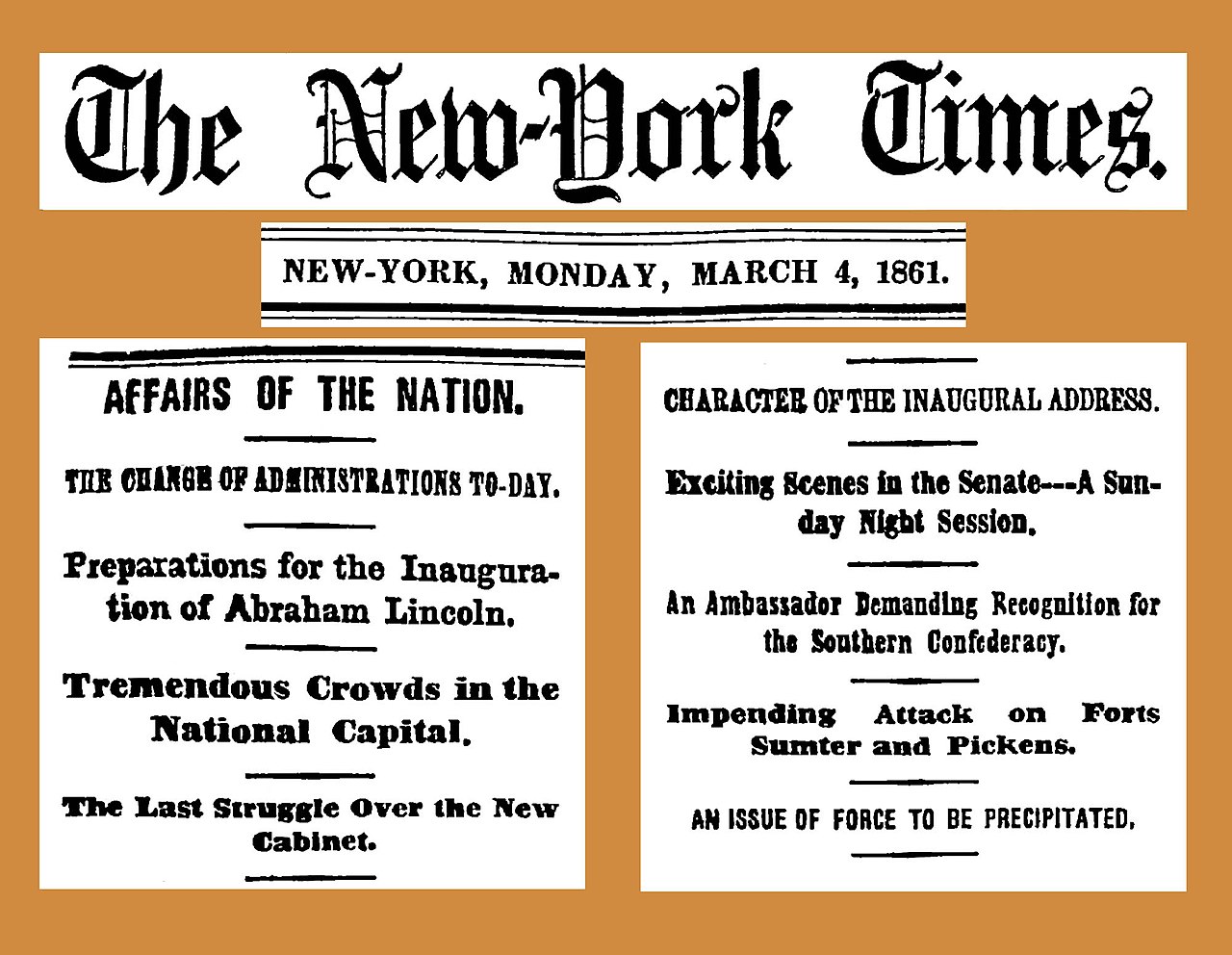
The presidency of Abraham Lincoln began when he was inaugurated as the 16th President of the United States on March 4, 1861, and ended with his death on April 15, 1865. Lincoln led the federal government through the crisis of secession and the American Civil War, a conflict that decided the survival of the Union and reshaped the country's constitutional and political order. His administration used a mix of legal, political and military measures that greatly expanded the practical authority of the executive branch and set precedents for wartime governance.
Image gallery
10 Images




Political context and secession
Lincoln won the 1860 presidential election without support from most Southern states, where many political leaders opposed his party’s stance on the extension of slavery. Debates over secession had recurred since the 1830s but hardened after the 1860 outcome. Between the election and Lincoln's inauguration, seven states left the Union and formed the Confederate States of America. Hostilities began when Confederate forces attacked Fort Sumter in April 1861, prompting Lincoln to mobilize forces to suppress the rebellion.
Wartime leadership and executive authority
Lincoln, though not a professional soldier, assumed the role of commander-in-chief and exercised broad wartime powers. He authorized blockades of Southern ports, expanded the regular army and navy, supervised the appointment of senior commanders, and supported legislation for conscription and war financing. To meet the emergency he backed measures such as a national banking system and taxation to fund the war effort. Some actions—most notably the partial suspension of the writ of habeas corpus—provoked constitutional disputes about civil liberties and the proper limits of presidential prerogative.
Emancipation and legal changes
In 1863 Lincoln issued the Emancipation Proclamation, a wartime proclamation that declared free the enslaved people in areas then in rebellion against the Union. While it did not immediately free all enslaved persons and did not apply to certain border states, it fundamentally changed the character of the war by making the abolition of slavery an explicit Union aim and by enabling the enlistment of Black soldiers in the Union armies. The proclamation helped create the political environment that led to the formal abolition of slavery through constitutional amendment.
Rhetoric, national purpose, and the Gettysburg Address
Lincoln’s public rhetoric sought to redefine the meaning of the Republic and the war. His short remarks at Gettysburg in November 1863—the Gettysburg Address—framed the conflict in terms of national rebirth and democratic principle. The speech and other statements from his presidency have been widely studied as expressions of American civic ideals and remain influential in how the nation understands its founding values and obligations.
Military management and relations with commanders
Lincoln’s relationship with his generals and his role in military strategy were defining aspects of his presidency. He faced frequent turnover of commanders and tensions over strategy, personnel and operations. Over time he learned to balance civilian oversight with military judgment, sometimes selecting or retaining leaders who shared his political and strategic goals. Congress and the public also influenced the prosecution of the war, with debates over emancipation, reconstruction policy and the length and conduct of military campaigns.
Assassination and immediate aftermath
As Confederate resistance collapsed in early 1865, Lincoln moved toward plans for national reconciliation and the reintegration of Southern states. On April 14, 1865, he was mortally shot by John Wilkes Booth, a Confederate sympathizer, and died the following day. The assassination of John Wilkes Booth’s victim turned Lincoln into a martyr for many in the North and had profound effects on the nation’s approach to Reconstruction and healing after the war.
Legacy and historical assessment
Historians commonly credit Lincoln with preserving the Union and guiding the United States through its gravest constitutional crisis. His use of executive power, wartime innovations and moral leadership contributed to long-term changes in federal authority, civil rights, and national identity. Assessments emphasize his political skill, moral clarity, and rhetorical gifts while acknowledging controversies over civil liberties and the limits of presidential action. Over time Lincoln’s reputation has grown; he is widely regarded as one of the most consequential presidents in American history.
Notable distinctions and continuing debates
- Expansion of the executive branch’s practical powers in wartime and precedent-setting actions regarding national security.
- Use of wartime measures—such as the assertion of prerogatives and suspension of habeas corpus—that raised constitutional questions and debate.
- Transformation of Union war aims to include the destruction of slavery and the enlistment of formerly enslaved people in the military.
- Enduring influence of Lincoln’s speeches and public image on American political culture and memory.
Further reading and references
- Presidency overview
- United States
- Executive prerogatives
- Southern states
- Secession
- Inauguration
- Union
- Confederate States of America
- Fort Sumter
- American Civil War
- Military experience
- War leadership
- Emancipation Proclamation
- Abolition
- Slavery
- United States (nation)
- Gettysburg Address
- Important speeches
- John Wilkes Booth
- Confederate sympathizer
- Martyrdom and legacy
Questions and answers
Q: Who was the 16th President of the United States?
A: Abraham Lincoln was the 16th President of the United States.
Q: When did his presidency begin and end?
A: The presidency of Abraham Lincoln began when he took office on March 4, 1861 and ended with his death on April 15, 1865.
Q: What happened between the election and Lincoln's Inauguration in March 1861?
A: Between the election and Lincoln's Inauguration in March of 1861, seven states had seceded from the Union to form the Confederate States of America (CSA).
Q: What event marked the beginning of the American Civil War?
A: The beginning of the American Civil War was marked by Confederates attacking Fort Sumter on April 12, 1861 and capturing it the next day.
Q: What did Lincoln do in 1863 that led directly to abolition of slavery in US?
A: In 1863, Abraham Lincoln issued an Emancipation Proclamation which freed slaves in Southern states. This proclamation led directly to abolition of slavery in US.
Q: What speech is widely recognized as one of most important speeches in American history?
A: The Gettysburg Address given later that year is widely recognized as one of most important speeches in American history.
Q: How did Abraham Lincoln die?
A: Abraham Lincoln died after being shot by John Wilkes Booth, a Confederate sympathizer, on April 15, 1865.
Related articles
Author
AlegsaOnline.com Presidency of Abraham Lincoln Leandro Alegsa
URL: https://en.alegsaonline.com/art/78790
Sources
- history.com : "1861 Lincoln inaugurated"
- opinionator.blogs.nytimes.com : "Was Lincoln a Tyrant?"
- civilwar.org : "Abraham Lincoln"
- eyewitnesstohistory.com : "The First Shot of the Civil War, The Surrender of Fort Sumter, 1861"
- smithsonianmag.com : "Lincoln as Commander in Chief"
- history.com : "Abraham Lincoln"
- loc.gov : "Abraham Lincoln Papers at the Library of Congress"
- ushistory.org : "32b. The Lincoln-Douglas Debates"
- millercenter.org : "Abraham Lincoln: Campaigns and Elections"
- abrahamlincolnonline.org : "Cooper Union Address, New York, New York, February 27, 1860"
- nps.gov : "The Cooper Union Address: The Making of a Candidate"
- presidency.ucsb.edu : "Voter Turnout in Presidential Elections: 1828 - 2012"
- history1800s.about.com : "President James Buchanan and the Secession Crisis"
- abrahamlincolnsclassroom.org : "Abraham Lincoln and Slavery"
- u-s-history.com : "Secession Crisis"