
Powerpuff Girls Z: Japanese anime adaptation of The Powerpuff Girls
Powerpuff Girls Z is a 2006–2007 Japanese magical‑girl anime that reimagines the American cartoon The Powerpuff Girls with new designs, schoolgirl protagonists, and a lighter, tokusatsu‑inspired tone.
Overview
Powerpuff Girls Z (Japanese: 出ましたっ!パワパフガールズZ, Demashita! Pawapafu Gāruzu Zetto) is a 2006–2007 Japanese animated series that adapts the American cartoon The Powerpuff Girls into a magical‑girl format. Directed by Megumu Ishiguro, the series recasts the three heroines as ordinary schoolgirls who transform into superpowered fighters. It first broadcast in Japan from July 2006 to June 2007 on TV Tokyo.
Image gallery
1 Image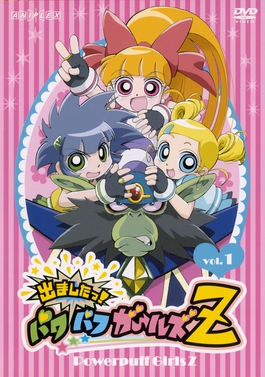
Premise and characters
Rather than an origin involving a lab experiment, this version centers on teenage protagonists who gain abilities and transformation sequences typical of the magical‑girl genre. The story emphasizes school life, friendship, and episodic confrontations with villains. While the core idea of three young girls protecting their city remains, their personalities, costumes, and the show's visual style were reworked to suit Japanese animation conventions.
Production, broadcast and language versions
The series aired in Japan and later appeared in reruns on the Japanese feed of Cartoon Network. An English dub was produced and released in some regions, including broadcasts in the Philippines in 2008. The episode count and scheduling followed a typical one‑season anime run over the course of a year, combining standalone stories with occasional multi‑episode plots.
Characteristics and notable differences
- Genre shift: explicit magical‑girl tropes (transformations, school settings) instead of the original’s superhero parody tone.
- Visual redesign: characters and villains were given new costumes and a distinctly anime aesthetic.
- Targeting: marketed to both children and fans of Japanese pop culture, with more emphasis on everyday school life and relationships.
Reception and legacy
Reaction to Powerpuff Girls Z was mixed. Some viewers welcomed a fresh interpretation and the energetic art style; others preferred the original’s humor and character dynamics. Over time the series has been discussed as an example of how Western properties can be reimagined within Japanese genre conventions, and it remains a reference point for cross‑cultural adaptations of animated franchises.
Questions and answers
Q: What is Powerpuff Girls Z?
A: Powerpuff Girls Z (or PPGZ) is a 2006 Japanese magical girl comedy anime series based on the American animated television series The Powerpuff Girls.
Q: Who directed the series?
A: Megumu Ishiguro directed the series.
Q: When did it air in Japan?
A: It ran from July 2006 to June 2007 on TV Tokyo in Japan.
Q: Did it air anywhere else?
A: Reruns aired on Cartoon Network's Japanese channel starting in 2008, and an English language version was released on Cartoon Network in The Philippines sometime in 2008.
Q: What is the literal translation of the title of the show?
A: The literal translation of the title of the show is "They're Here! Powerpuff Girls Z".
Q: Where did it originally air ? A: It originally aired on TV Tokyo in Japan
Related articles
Author
AlegsaOnline.com Powerpuff Girls Z: Japanese anime adaptation of The Powerpuff Girls Leandro Alegsa
URL: https://en.alegsaonline.com/art/78558