
Poul Anderson
Poul Anderson (1926–2001), American author of science fiction, fantasy and historical novels, noted for hard-SF rigor, mythic themes, prolific short fiction, and multiple Hugo and Nebula awards.
Overview
Poul William Anderson (November 25, 1926 – July 31, 2001) was an American writer best known for his work in science fiction and fantasy. He began publishing during the genre's Golden Age and maintained a prolific career through the late 20th century. Anderson produced novels and a very large number of short stories, as well as fantasy and historical fiction, earning a reputation for careful plotting, technical competence, and a wide-ranging imagination.
Image gallery
4 Images


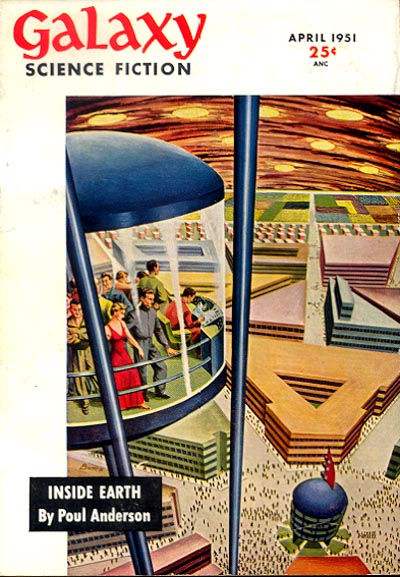
Themes and style
Anderson's fiction often combines rigorous scientific thinking with adventurous plotting and elements drawn from myth and history. He explored space travel, time travel, and interstellar societies with attention to scientific plausibility while also writing heroic fantasy influenced by Norse and European legend. Recurring concerns include individualism, cultural contact, trade and politics, and the long spans of human history.
Major works and series
His output spans stand-alone novels and several series. Notable titles and cycles include:
- Tau Zero — a hard-SF novel about a relativistic starship and endurance in extreme conditions.
- The High Crusade — a humorous/serious tale of medieval knights encountering aliens.
- The Broken Sword and Three Hearts and Three Lions — fantasy novels drawing on mythic motifs.
- The Boat of a Million Years — a novel tracing long-lived individuals across epochs.
- Series work such as the Time Patrol time-travel stories and the merchant-adventure tales often grouped as the Polesotechnic League.
Awards and recognition
Anderson received wide recognition during his career. He won multiple major genre awards, including seven Hugo Awards and three Nebula Awards. His stories and novels have been translated into many languages and collected in numerous volumes.
Legacy and notable facts
Poul Anderson is remembered for both the breadth and the consistency of his work: a writer comfortable with hard science, epic scope, and intimate storytelling. He influenced subsequent generations of writers who admired his technical detail, historical sensibility, and capacity to fuse mythic themes with speculative ideas. Anderson's career illustrates how mid-20th-century genre writers could evolve while remaining influential into the modern era.
Questions and answers
Q: Who was Poul Anderson?
A: Poul Anderson was an American science fiction author.
Q: When was Poul Anderson born and when did he die?
A: Poul Anderson was born on November 25, 1926, and died on July 31, 2001.
Q: During which period did Poul Anderson start his career as a science fiction author?
A: Poul Anderson started his career during the Golden Age of the science fiction genre.
Q: In addition to science fiction, what other genres did Poul Anderson write in?
A: Poul Anderson wrote books of fantasy and historical novels, as well as a large number of short stories.
Q: How successful was Poul Anderson in his writing career?
A: Poul Anderson was very successful, receiving many awards for his writing, including seven Hugo Awards and three Nebula Awards.
Q: Did Poul Anderson remain popular even in the 21st century?
A: Yes, Poul Anderson continued to write and remain popular even into the 21st century.
Q: How many Hugo Awards and Nebula Awards did Poul Anderson receive?
A: Poul Anderson received seven Hugo Awards and three Nebula Awards for his writing.
Related articles
Author
AlegsaOnline.com Poul Anderson Leandro Alegsa
URL: https://en.alegsaonline.com/art/78477
Sources
- nitrosyncretic.com : Heinlein's Dedications Page Jane Davitt & Tim Morgan Accessed August 20, 2008
- wikidata.org : wikidata.org/wiki/Q220883
- authority.bibsys.no : 90135259
- catalogo.bne.es : XX1155294
- catalogue.bnf.fr : cb11888761d
- data.bnf.fr : (data)
- cantic.bnc.cat : a11648041
- ci.nii.ac.jp : DA05000132
- d-nb.info : 120591472
- isni.org : 0000 0000 8357 0818
- id.loc.gov : n79044004
- kopkatalogs.lv : 000094541
- musicbrainz.org : dbf94790-f8c2-4363-8fad-7183dc0969f5
- id.ndl.go.jp : 00431480
- aleph.nkp.cz : jn20010601353