
Potentiometer — adjustable resistor and voltage divider
A potentiometer is an adjustable resistor used to vary voltage or current, commonly in controls and sensors. Types include rotary, linear and trimmer; modern alternatives include digital potentiometers.
A potentiometer is a passive electronic component whose resistance can be varied mechanically to control current or create an adjustable voltage. In common usage a potentiometer provides a movable contact (wiper) that taps a resistive element, allowing smooth adjustment of output. Potentiometers appear in many everyday controls and in laboratory circuits as a simple, robust way to tune or measure electrical quantities.
Image gallery
10 Images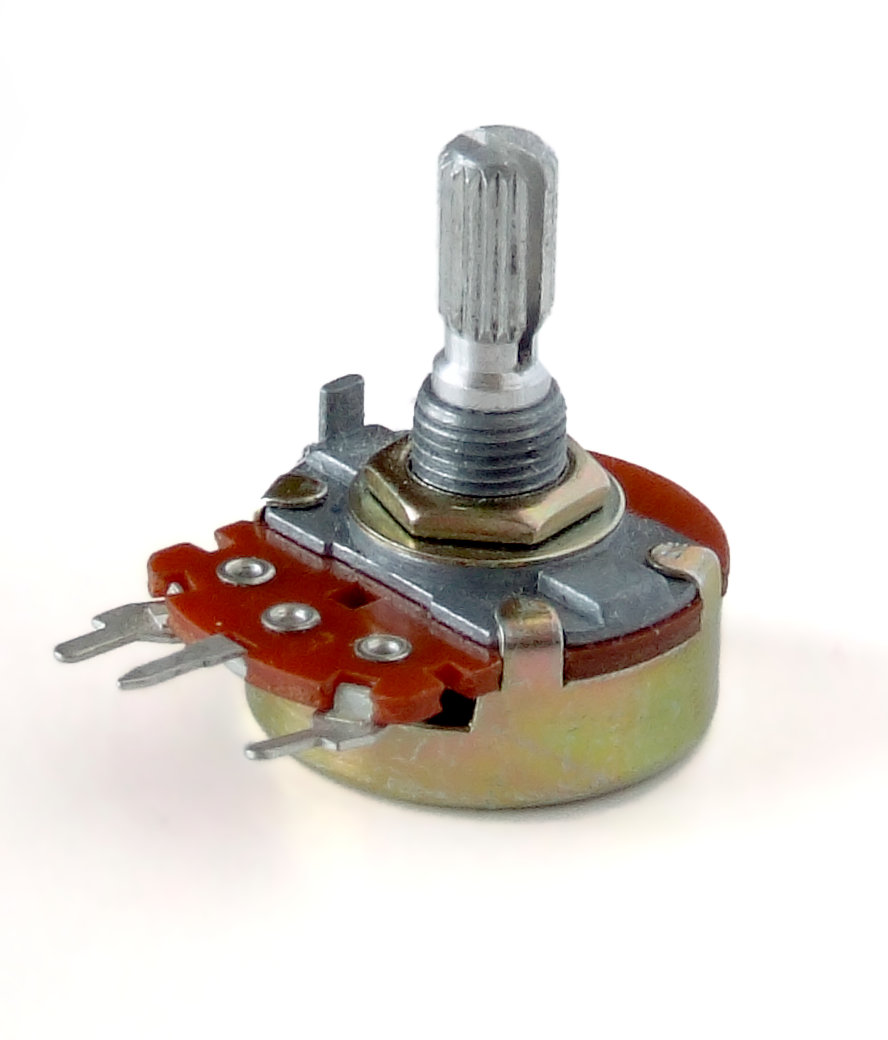



Characteristics and construction
Most potentiometers consist of three terminals: two fixed ends of a resistive track and a central wiper that moves along that track. The resistive element can be made from carbon composition, conductive plastic (cermet), or wire-wound material; each has different power handling, noise, and longevity properties. Mechanical formats include rotary knobs, linear sliders (faders), and small screw-adjust trimmers mounted on printed circuit boards. Key electrical traits are total resistance value, power rating, and taper — the relationship between physical position and resistance (commonly linear or logarithmic for audio use).
How it works and wiring
Wired as a three-terminal device, a potentiometer acts as an adjustable voltage divider, producing an output voltage proportional to the wiper position. If only two terminals are used (one end and the wiper), the component functions as a variable resistor often called a rheostat. This distinction — three-terminal voltage divider versus two-terminal variable resistor — is important when designing circuits, because the available range and power dissipation can differ.
History and development
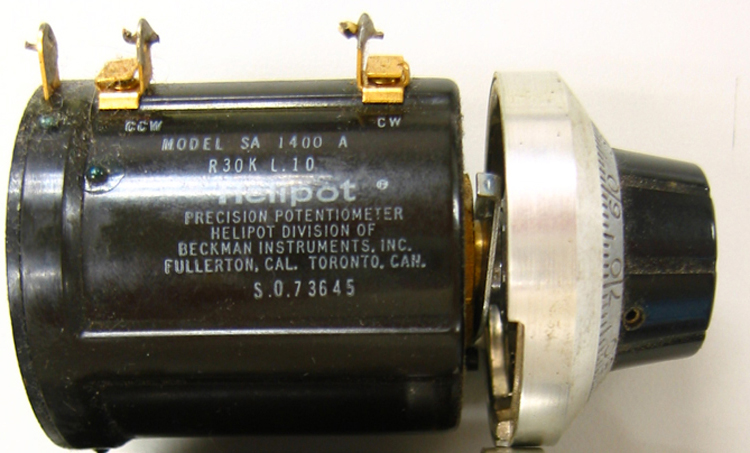
The general idea of a variable resistor evolved alongside early electrical experimentation. A commonly cited milestone is the carbon-based adjustable resistance device developed and patented in the 19th century by inventors including Thomas Edison. Over time manufacturing advanced from simple wire coils to more stable carbon and conductive-plastic tracks, improving durability and precision. Small multi-turn trimmers and precision potentiometers were later developed for calibration tasks in instruments.
Uses and examples
- Manual controls: volume knobs, tone and balance controls on audio equipment, and brightness or contrast adjustments on displays.
- Sensors: used as position transducers in joysticks, throttle position sensors, and feedback elements in simple servomechanisms.
- Adjustment and calibration: trimmer potentiometers allow fine tuning of circuits during manufacture or maintenance.
- Educational and laboratory use: a convenient way to demonstrate voltage division and to vary current in experiments.
Practical considerations and alternatives
Choosing a potentiometer requires attention to expected voltage and power, mechanical life, and electrical noise. Wire-wound types tolerate higher power but may produce stepping for the wiper; carbon and cermet types offer smooth movement but can wear or generate contact noise over time. For digital systems, integrated variable resistor equivalents called digital potentiometers provide electrically controlled adjustment with no moving parts, useful for remote or automated control. For permanent or high-power applications, designers often prefer dedicated electronic control methods rather than using a potentiometer as a continuous power-handling device.
In summary, the potentiometer remains a fundamental component in electronics: simple to understand, versatile in application, and available in many forms to meet a range of mechanical and electrical requirements.
Questions and answers
Q: What are potentiometers?
A: Potentiometers are variable resistors that allow the resistance to be changed using a knob or slider.
Q: What are some things that potentiometers are used to control?
A: Potentiometers are used to control the brightness or dimness of lights in a house, as well as volume controls on a television.
Q: How are potentiometers used in voltage dividers?
A: Potentiometers are used in voltage dividers as they can divide the voltage and adjust the output.
Q: Who invented the carbon potentiometer commonly used today?
A: Thomas Edison invented the carbon potentiometer we use today at the age of 25 and called it a "coiled resistance wire rheostat".
Q: When was Thomas Edison's patent for the carbon potentiometer issued?
A: Thomas Edison's patent for the carbon potentiometer was issued in 1872.
Q: What are carbon resistors and their typical uses?
A: Carbon resistors are the most commonly used resistors today and are used in radios to regulate volume, and in televisions to control picture brightness, contrast and color response.
Q: Why did people invent a device to control the amount of electricity going to a component?
A: The idea behind the development of a device to help control the amount of electricity going to a component stemmed from the need to regulate and fine-tune the performance of electrical equipment.
Related articles
Author
AlegsaOnline.com Potentiometer — adjustable resistor and voltage divider Leandro Alegsa
URL: https://en.alegsaonline.com/art/78438
Sources
- commons.wikimedia.org : Potentiometers
- ecs.umass.edu : "Potentiometer tutorial"
- people.seas.harvard.edu : "Potentiometers"
- sccs.swarthmore.edu : "Potentiometer"
- school-for-champions.com : "Thomas Edison: Birth to Age 40"
- brighthub.com : "Types of Potentiometers"