
Portuguese Grand Prix
A comprehensive overview of the Portuguese Grand Prix: its history, circuits (Boavista, Monsanto, Estoril, Portimão), key changes, safety developments and lasting legacy in motorsport.
The Portuguese Grand Prix (Grande Prémio de Portugal) is a motorsport event with a varied history that spans street circuits, parkland tracks and permanent racing facilities. First run in the early 1950s, it became part of the official Formula One World Championship for periods in the late 1950s and again from the 1980s through the 1990s. The race is notable for its changing venues, safety-driven reforms and the role it played in Portugal's connection to high-level international racing.
Image gallery
4 Images


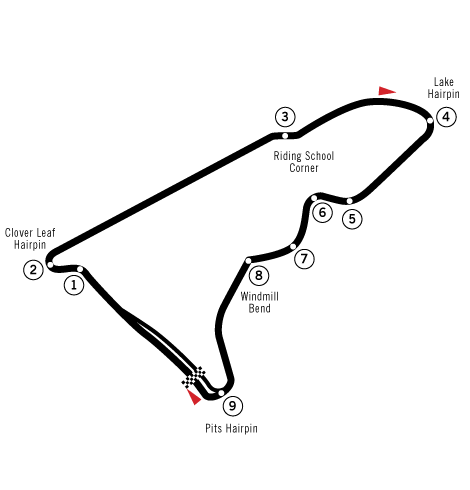
History and development
The inaugural events were organized in the postwar period when national and international racing resumed across Europe. Early editions were staged on public roads and in park circuits, reflecting the era's common practice of adapting existing routes for competition. The Portuguese Grand Prix first appeared on the Formula One World Championship in 1958 and remained on the championship calendar through 1960 before a long absence from the series.
After a hiatus of more than two decades, the event returned to the Formula One calendar in 1984 at a purpose-built permanent venue. That period, running through the mid-1990s, brought modern facilities and regulatory oversight, but also increasing scrutiny over track safety as speeds and demands on circuits rose. Changes to layouts and the addition of runoff and chicanes marked the era, making the Portuguese rounds representative of wider safety reforms in the sport.
Circuits and characteristics
- Boavista (Porto) — A classic street circuit that used public roads, Boavista combined long, fast sections with tram-lined surfaces and urban landmarks. It provided a demanding test of driver skill and car robustness.
- Monsanto (Lisbon) — Set in a large park, the Monsanto layout offered tighter, more technical corners and a different character from the open straights of street courses.
- Autódromo do Estoril — A permanent racing circuit near Lisbon that hosted the event during its 1984–1996 F1 tenure. Estoril mixed high-speed sections with technical sequences and underwent layout changes during the 1990s to improve safety.
- Algarve/Portimão — Although not part of the original eras, a modern Portuguese venue on the Algarve coast later hosted Formula One events in the 21st century, reflecting renewed international interest in Portuguese motorsport facilities.
Circuit changes were often motivated by safety and regulatory standards. For example, after tragic incidents at other venues that sparked a global reassessment of track safety, the Estoril layout was modified to introduce additional slowing features and enlarge runoff zones. These interventions illustrate the general evolution of motorsport infrastructure from public-road spectacles toward purpose-designed tracks with stronger safety engineering.
Legacy, importance and notable facts
The Portuguese Grand Prix contributed to the development of international racing in the Iberian Peninsula and offered diverse challenges to teams and drivers across different eras. Its history reflects broader themes in motorsport: the shift from street and parkland contests to permanent circuits, the tightening of safety standards, and the commercial cycles that determine which venues appear on the world championship calendar.
Notable facts and further reading:
- First organized postwar races on Portuguese roads and parks: see early event summaries.
- Formula One appearances in the late 1950s: more on the 1958–1960 era here.
- Return of the Grand Prix in 1984 at Estoril and its development through the 1990s: Estoril history.
- Safety-driven modifications and the 1990s circuit reforms: technical overview safety changes.
- Profiles of the Boavista street circuit and its characteristics: Boavista details.
- Monsanto park circuit background and maps: Monsanto reference.
- Context on the wider motorsport landscape in Portugal: Portuguese motorsport.
- Contemporary developments and the Algarve/Portimão venue: Algarve circuit.
- Accounts of the safety reassessment in the mid-1990s after fatal accidents elsewhere: safety reassessment.
- Event archives, race results and statistical records: race archives.
Today the Portuguese Grand Prix is remembered both for the character of its varied venues and for the way its evolution mirrors larger shifts in motor racing. From the tram-lined streets of Porto to the purpose-built curves of Estoril and the modern facilities on the Algarve coast, it remains a notable chapter in the history of international circuit racing.
Questions and answers
Q: What is the Portuguese Grand Prix?
A: The Portuguese Grand Prix is a motor racing event that has been held for several years.
Q: When was the first Portuguese Grand Prix held?
A: The first Portuguese Grand Prix was held on June 17, 1951.
Q: Where was the first Portuguese Grand Prix held?
A: The first Portuguese Grand Prix was held on the Boavista street course in Porto.
Q: When was the first Formula One race in Portugal held?
A: The first Formula One race in Portugal was held on August 14, 1958.
Q: Where was the Portuguese Grand Prix held in 1984?
A: The Portuguese Grand Prix was held in 1984 at the Autódromo do Estoril.
Q: Why was the Estoril track changed in 1994?
A: The Estoril track was changed after the deaths of Ayrton Senna and Roland Ratzenberger at Imola in 1994 as a safety measure.
Q: When was the last Portuguese Grand Prix held?
A: The last Portuguese Grand Prix was held in Estoril on September 22, 1996.
Related articles
Author
AlegsaOnline.com Portuguese Grand Prix Leandro Alegsa
URL: https://en.alegsaonline.com/art/78323