
Portamento: the musical slide between pitches
Portamento is a short, expressive slide from one pitch to another used in voice, strings and other instruments. This article explains its character, history, notation, uses and how it differs from a glissando.
Overview
Portamento is a musical effect in which a performer slides smoothly from one pitch to another, producing a continuous connection between adjacent notes. It is typically brief and subtle, covering small intervals rather than large leaps. The term is often discussed alongside the glissando, but the two are distinct in intent and scope; a glissando is usually a clearly notated, often wider-ranging sweep, whereas a portamento tends to be an expressive inflection applied between closely related notes.
Image gallery
1 Image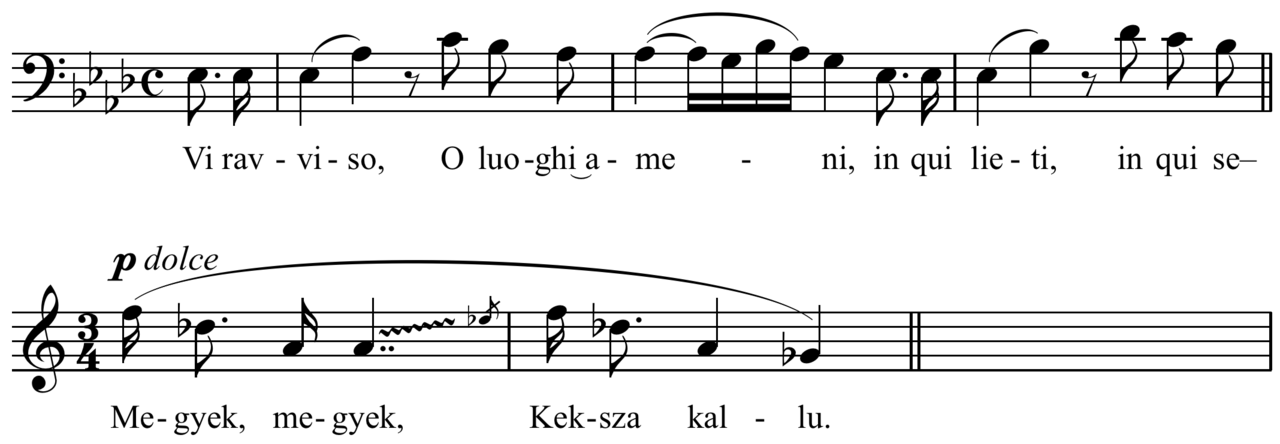
Characteristics and contexts
Portamento arises where the instrument or voice can continuously vary pitch rather than leaping discretely. It is a natural device for:
- singing, especially in lyrical and operatic traditions where vocal phrases may connect tones
- bowed string instruments such as violin, viola and cello, which can glide the finger along the string
- slide instruments like the trombone, where the mechanism enables audible slides
- electronic instruments and synthesizers that offer a built-in portamento control for pitch glide
History and stylistic development
The use of portamento has varied across musical eras and traditions. In nineteenth-century vocal and instrumental practice it was commonly used as an expressive device; listeners can hear many historic recordings and accounts indicating frequent employment of sliding between notes in the late nineteenth and early twentieth centuries. Through the twentieth century some schools of performance moved toward a cleaner, more articulated delivery and discouraged excessive portamento as stylistically dated. Nevertheless, certain genres and contexts — notably some operatic singing and Romantic-style instrumental playing — continue to accept or even expect tasteful use of portamento.
Notation, pedagogy and electronic analogues
Composers sometimes notate a deliberate long slide as a glissando or write specific instructions, but portamento is often left to performers' discretion and passed on through teaching and tradition. Pedagogical approaches differ: some teachers emphasize clear, separate pitches while others train students to use subtle slides for expressive phrasing. In the realm of electronic sound, many synthesizers and digital instruments include a portamento or glide parameter that controls the rate of pitch transition between triggered notes, reproducing the effect even when a discrete pitch-stepping keyboard is used.
Practical uses and notable distinctions
When deciding whether to employ portamento, performers consider the style, the instrument, the surrounding musical line and audience expectations. Portamento can enhance lyrical continuity and emotional warmth, but excessive or inappropriate sliding may obscure pitch clarity or sound anachronistic. It differs from a glissando not only in length and notational status but also in intention: a glissando is normally an explicit, sometimes virtuosic gesture (written or clearly indicated by the composer), while portamento is a flexible, interpretive inflection often left to the performer's taste. Historical recordings of violin playing and accounts of opera singing illustrate how customary use has shifted; contemporary practice balances historical awareness with modern standards of clarity and style.
Further reading and resources on performance practice and notation may be found through specialized texts and archives. For discussions contrasting portamento and glissando in compositional practice see materials linked by editors and musical dictionaries: notation guides, surveys of extended techniques across registers, and historical recording studies from the early recording era. Practical tutorials and stylistic demonstrations are also available from conservatory pedagogy sites and instrument-specific manuals (see examples).
Note: Use of portamento remains partly a matter of taste and stylistic choice; performers should consider context, tradition and clarity when applying it.
Questions and answers
Q: What is portamento in music?
A: Portamento is a gradual slide from one note to another in music.
Q: How is portamento different from a glissando?
A: A glissando is deliberately written in the music by the composer and may be a long slide between two or three octaves or more, while a portamento is a much shorter slide, usually between two notes which are quite close.
Q: Who used to slide from one note of a tune to another?
A: Opera singers often used to slide from one note of a tune to another instead of singing each note separately and clearly.
Q: Why did the habit of putting in portamento between notes spread to other instruments as well?
A: The habit of putting in portamento between notes spread to other instruments as well because it was seen as an effective way of expressing emotions in music.
Q: Have instrumentalists and singers been taught to avoid the use of portamento?
A: Over the last half century, instrumentalists and singers have been taught not to slide from one note to another.
Q: Can portamento be effective in some places in opera?
A: Yes, portamento can be effective in some places in opera so long as it is not done all the time.
Q: Is the use of portamento a matter of taste?
A: Yes, the use of portamento is a matter of taste.
Related articles
Author
AlegsaOnline.com Portamento: the musical slide between pitches Leandro Alegsa
URL: https://en.alegsaonline.com/art/78257