
Pope Soter
Pope Soter served as Bishop of Rome from about 166 to 174 and is honored as a saint; his brief papacy emphasized pastoral care and the discipline of the early Church amid limited historical records.
Pope Soter (Latin: Soterius; died 174) was an early leader of the Christian community in Rome who served as the Bishop of Rome — commonly called the pope — in the later second century. Tradition records him as the twelfth bishop of the Roman church. His name, derived from the Greek word for "saviour," appears in later lists of popes and in the calendars of saints.
Image gallery
3 Images

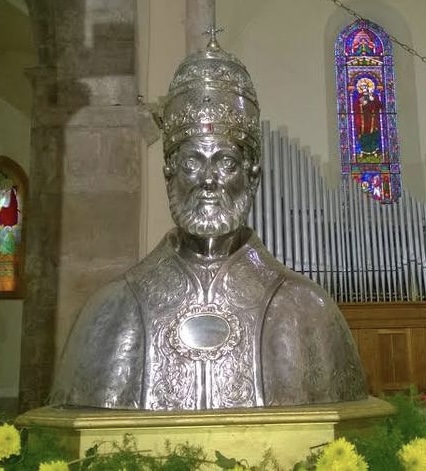
Life and election
Details about Soter's life before his election are sparse. He is generally described as an Italian priest active in the Roman Christian community at a time when the church was still organizing its structures and responding to doctrinal and moral controversies. Contemporary sources do not preserve a full biography, and much of what is reported about him comes from later church histories and martyrologies.
Papacy and pastoral work
Soter's pontificate, conventionally dated from about 166 to 174, focused on pastoral oversight and the care of Christian communities. The surviving tradition attributes to him letters and judgments intended to maintain discipline, promote orthodox practice, and encourage moral conduct among Christians. As bishop, he would have had responsibilities for liturgical leadership, the supervision of clergy in Rome, and correspondence with other churches, all typical duties of an early Bishop of Rome.
Legacy and veneration
Although records are limited, Soter is remembered in both Eastern and Western Christian traditions and is venerated as a saint. His feast day is traditionally observed on April 22. He is listed in the ancient catalogues of Roman bishops and is acknowledged for maintaining continuity in the Roman church between his predecessor, Anicetus, and his successor, Eleutherius.
Notable facts
- Title: Bishop of Rome (pope) during the late 2nd century.
- Dates: traditionally given as about 166–174 (death recorded in 174).
- Veneration: commemorated as Saint Soter; feast day April 22.
- Historical record: contemporary documentation is limited; later church lists and martyrologies provide most information.
- Context: his leadership took place during a formative era for church organization and doctrine.
For further context about the role of the Bishop of Rome in the second century and the early development of papal duties, see general introductions to early church history and episcopal lists: Bishop of Rome.
Questions and answers
Q: Who was Pope Soter?
A: Pope Soter was an Italian priest of the Roman Catholic Church and the Bishop of Rome from 166 until his death in 174.
Q: What was Pope Soter's official title?
A: Pope Soter's official title was the Bishop of Rome.
Q: When did Pope Soter become the Bishop of Rome?
A: Pope Soter became the Bishop of Rome in 166.
Q: How long did Pope Soter serve as the Bishop of Rome?
A: Pope Soter served as the Bishop of Rome from 166 until his death in 174.
Q: What was Pope Soter's Latin name?
A: Pope Soter's Latin name was Soterius.
Q: When did Pope Soter die?
A: Pope Soter died in 174.
Q: What was Pope Soter's contribution to the Roman Catholic Church?
A: There is no information given in the text regarding Pope Soter's contribution to the Roman Catholic Church.
Related articles
Author
AlegsaOnline.com Pope Soter Leandro Alegsa
URL: https://en.alegsaonline.com/art/78089
Sources
- simple.wiktionary.org : Emblem
- newadvent.org : "List of Popes,"
- newadvent.org : "Caius and Soter, Saints and Popes,"