
Pope Benedict V: a brief papacy, deposition, and legacy
Pope Benedict V was an Italian deacon elected by Romans in 964. His five-week pontificate ended with deposition by Emperor Otto I; he was exiled to Germany and died in 965. Remembered as 'Grammaticus' for his learning.
Overview
Pope Benedict V (died 4 July 965) was a tenth‑century cleric elected by the people of Rome to the papal office in 964. A learned churchman often called Grammaticus, he was a deacon before his election and served as pope for about five weeks. His brief tenure occurred during a period of intense conflict between Roman civic factions and the rising power of the Holy Roman Emperor.
Image gallery
3 Images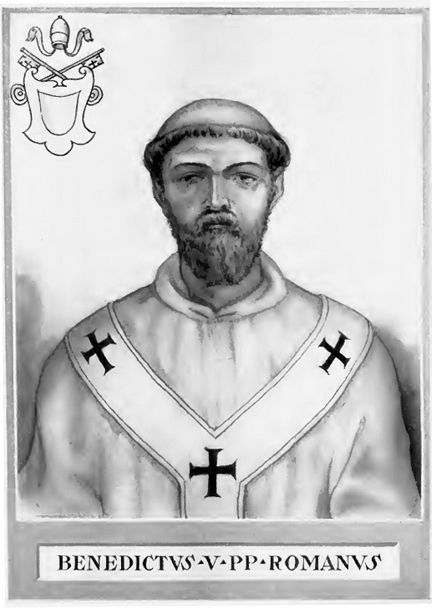


Election and deposition
Benedict's election followed the death of John XII and came amid a dispute over papal authority. The imperial candidate, Leo VIII, had been appointed with the support of Emperor Otto I; many Romans rejected that appointment and chose Benedict instead. Otto marched on Rome, and the ensuing pressure forced Benedict to surrender. At a council convened soon after, he was deposed and compelled to submit to imperial authority and the rival claimant.
Later life and death
After his deposition Benedict was taken from Rome to Germany. Contemporary accounts describe him living out his remaining months in confinement or in a monastic setting under imperial supervision. He died in exile on 4 July 965. His short papacy and subsequent treatment illustrate the fragile balance of power between local Roman interests and the emperor.
Legacy and significance
Benedict V is chiefly remembered for the facts of his election, rapid deposition, and reputation as a scholar. His story is cited in discussions of medieval papal elections and the contest between secular and ecclesiastical authorities. For concise reference and further reading on the period and its papal politics, see summaries of the papacy and entries on Pope Benedict V in specialist sources.
- Time as pope: about five weeks (964).
- Nickname: Grammaticus, for his learning.
- Death: 4 July 965, in exile in Germany.
Questions and answers
Q: Who was Pope Benedict V?
A: Pope Benedict V was an Italian deacon belonging to the Roman Catholic Church.
Q: What was Pope Benedict V's full name?
A: Pope Benedict V's full name was Benedictus Quintus.
Q: What was Pope Benedict V's nickname?
A: Pope Benedict V was known as Grammaticus due to his remarkable learning.
Q: How long did Pope Benedict V serve as the Pope?
A: Pope Benedict V served as the 133rd Pope for only five weeks in 964.
Q: What was Pope Benedict V's birthplace?
A: The text does not provide any information regarding Pope Benedict V's birthplace.
Q: What was Pope Benedict V's contribution to the Roman Catholic Church?
A: The text does not provide any information regarding Pope Benedict V's contribution to the Roman Catholic Church.
Q: When did Pope Benedict V pass away?
A: Pope Benedict V died on July 4, 965.
Related articles
Author
AlegsaOnline.com Pope Benedict V: a brief papacy, deposition, and legacy Leandro Alegsa
URL: https://en.alegsaonline.com/art/78061
Sources
- simple.wiktionary.org : Emblem
- newadvent.org : "List of Popes,"
- newadvent.org : "Pope Benedict V,"
- books.google.com : "Benedict V"
- books.google.com : "Benedict V"
- books.google.com : "Benedict V,"