
Polyp (cnidarian body form)
Polyp: the sessile or colonial vase-shaped body form of cnidarians, with tentacles and a gastrovascular cavity; roles in reproduction, reef building, and life cycles with medusae.
Overview
In the phylum Cnidaria, one of the fundamental body forms is the polyp. Polyps are typically attached, tube- or vase-shaped animals with a single opening that serves as both mouth and anus, surrounded by tentacles. The other principal cnidarian form is the free-swimming medusa; the two body forms can appear at different stages of the same species' life history, or a species may exist only as polyps or only as medusae. For a general account of the alternative form, see medusa.
Image gallery
4 Images


Structure and distinguishing features
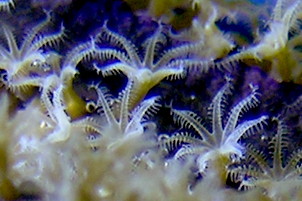
Polyps have a simple, radially symmetric organization. The body wall encloses a central gastrovascular cavity used for digestion and circulation. Tentacles, armed with specialised stinging cells called cnidocytes, capture prey and help in defense. The vase-like shape and oral opening are characteristic; authors often describe the form as vase-shaped. Many polyps are sessile, meaning they live attached to a substrate like rock, shells, or human-made structures (sessile).
Life cycle and reproduction
Polyps reproduce in several ways. Asexual reproduction by budding is widespread and can produce new individual polyps that detach or remain attached; the general process is often referred to simply as budding. Sexual reproduction also occurs in many cnidarians: medusae or polyps may produce eggs and sperm that form larvae. A common life-cycle pattern involves fertilization producing a free-swimming planula larva that settles and develops into a polyp; that polyp later produces medusae asexually, completing the cycle. Different taxa use specific methods—some hydrozoans bud medusae from polyps, while certain scyphozoans form medusae by a process called strobilation. For more on life cycles, see life cycle.
Solitary and colonial forms
Some polyps live singly—Hydra is a well-known freshwater example that remains polypoid throughout life (Hydra). Other groups form complex colonies: when buds remain attached to the parent, a cluster of genetically identical polyps develops. These colonies may display division of labor, with zooids specialised for feeding, reproduction, or defense. Reef-building stony corals are colonial polyps that secrete calcium carbonate to form a rigid skeleton; successive generations produce the three-dimensional structures known as coral reefs (corals).
Variation among cnidarians
Different cnidarian lineages emphasize the polyp stage to varying degrees. The class-level grouping that includes true jellyfish and related medusa-producing taxa is often discussed as Medusozoa; members typically have a polyp stage that gives rise to medusae. In many marine environments, small polyp colonies known as hydroids anchor to substrates, while larger anthozoans (anemones and corals) exist only as polyps. Where polyps produce medusae, the tiny newly formed jellyfish leave the parent and grow in the water column as part of the plankton (plankton).
Ecological and human relevance
Polyps play key ecological roles. Coral polyps build habitats that support enormous biodiversity and protect coastlines; their health is central to marine conservation. Other polyps serve as predators of small zooplankton or as prey for larger animals. Some species can sting humans, which has medical or recreational implications. Polyps are also important study organisms in developmental and regenerative biology because a few, such as Hydra, exhibit notable regenerative abilities.
Notable facts and distinctions
- Polyp and medusa are alternating body plans in many cnidarians, linked by larval stages and asexual or sexual reproduction.
- Colonial polyps can form extensive structures; the shape and skeleton depend on budding patterns and secretion.
- Terminology: when describing a particular polyp's lifestyle or morphology, references to their shape, mode of attachment (sessile), and reproductive strategy (budding vs. sexual) clarify ecology and taxonomy.
For introductions to related topics, readers can consult materials on medusae (medusa), cnidarian life cycles (life cycle), and planktonic stages (plankton) to see how polyps fit into broader marine life histories. For information on colonial organization, see resources about coral ecology (corals) and colonial hydrozoans (colonies).
Questions and answers
Q: What are the two forms of cnidarians?
A: The two forms of cnidarians are polyps and medusae.
Q: How do polyps reproduce?
A: Polyps can reproduce both asexually, by budding, and sexually.
Q: Are all species of polyps capable of reproducing sexually?
A: No, not all species of polyps are capable of reproducing sexually.
Q: What is the difference between budding in polyps and mating in medusae?
A: When medusae mate, the result may be polyps, whereas when polyps replicate, the result may be medusae.
Q: Are there any species that remain as only polyp form throughout their life cycle?
A: Yes, some species such as Hydra and Anthozoa (corals and anemones) remain as only the polyp form throughout their life cycle.
Q: What happens when tiny jellyfish swim away from a sessile polyp?
A: When tiny jellyfish swim away from a sessile (attached to sea floor or other hard surface)polyp they grow and feed in plankton.
Q: How do jellyfish reproduce?
A: Jellyfish reproduce both sexually and asexually.
Related articles
Author
AlegsaOnline.com Polyp (cnidarian body form) Leandro Alegsa
URL: https://en.alegsaonline.com/art/77874
Sources
- encyclopedia.jrank.org : encyclopedia.jrank.org/PIG_POL/POLYP.html
- mapress.com : Abstract - PDF