
PolitiFact: U.S. Political Fact-Checking Project and Its Role
PolitiFact is a nonprofit fact-checking project that evaluates statements by U.S. public figures. It uses a rating scale, documented research, and editorial review to assess political claims and inform the public.
Overview
PolitiFact is a nonprofit fact-checking project focused on claims made in U.S. politics. It evaluates statements by elected officials, candidates, political staff, interest groups and lobbyists, aiming to clarify accuracy for readers. The project publishes written analyses that explain the factual basis for its conclusions and assigns a standardized truth rating to each claim.
Image gallery
3 Images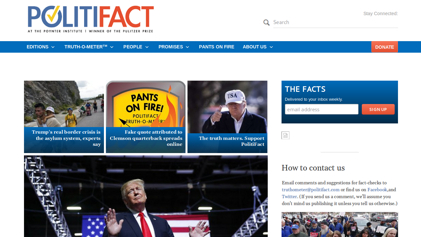


Methods and Ratings
PolitiFact's work follows a consistent editorial process intended to verify context, sources and intent. Typical steps include:
- Identifying a specific, checkable claim;
- Collecting primary documents, statistics and authoritative sources;
- Consulting experts when appropriate;
- Drafting an explanation that links evidence to the conclusion;
- Applying a published rating scale and editorial review.
The organization is known for a categorical rating system that ranges from statements judged true to those judged false, including intermediate gradations that capture misleading or partially accurate claims.
Origins and Organization
PolitiFact began in 2007 as a project of the Tampa Bay Times and later became a broader noncommercial effort supported by the Poynter Institute. It maintains offices in St. Petersburg, Florida and in Washington, D.C., reflecting its local origins and national focus; see the project’s Washington presence at Washington office. Over time the project developed partnerships with other media organizations to increase reach and share resources.
Uses, Impact and Examples
Reporters, educators, researchers and voters use PolitiFact as a resource for checking claims and understanding policy debates. Its published checks often include citations and links to source material so readers can follow the evidence. The project has been cited in news coverage and academic work as an example of applied fact-checking in electoral and policy contexts.
Strengths and Limitations
Strengths include transparency of sources, a repeatable process and a clear rating system. Limitations stem from choices about which claims to evaluate, the complexity of certain factual disputes, and the challenge of summarizing nuanced evidence in a single rating. Readers are encouraged to read full explanations and consult original sources when possible.
Further reading: official pages and organizational details are available through the project and partner links above.
Lie of the year
Every year since 2009, PolitiFact has chosen the Lie of the Year from the US political establishment. For example, Donald Trump's oft-repeated claim that Russia had no influence on the 2016 presidential campaign became the 2017 Lie of the Year.
Awards (selection)
- 2009: Pulitzer Prize in the field of "National Journalism" (for coverage of the 2008 US presidential election campaign)
Related articles
Author
AlegsaOnline.com PolitiFact: U.S. Political Fact-Checking Project and Its Role Leandro Alegsa
URL: https://en.alegsaonline.com/art/77783
Sources
- politifact.com : "PolitiFact.com" · web.archive.org