
Polarization of Waves: Definition, Types, Causes, and Applications
Polarization describes the orientation of oscillations in transverse waves (like light) and has distinct types, causes, measurement methods, and practical applications in optics, radio, and materials science.
Overview
Polarization is a property of certain waves that describes the orientation of their oscillations relative to the direction of travel. It is most commonly discussed for electromagnetic waves such as visible light, but the concept applies to any transverse wave. For a general introduction to waves see waves. In electromagnetic radiation the electric (and magnetic) field vectors oscillate in directions perpendicular to propagation; this is why visible light is described as a transverse wave (transverse) and also has a quantum description as photons with intrinsic polarization states (particle nature). By contrast, purely longitudinal waves such as ideal sound waves do not exhibit polarization in the same sense (longitudinal).
Image gallery
10 Images




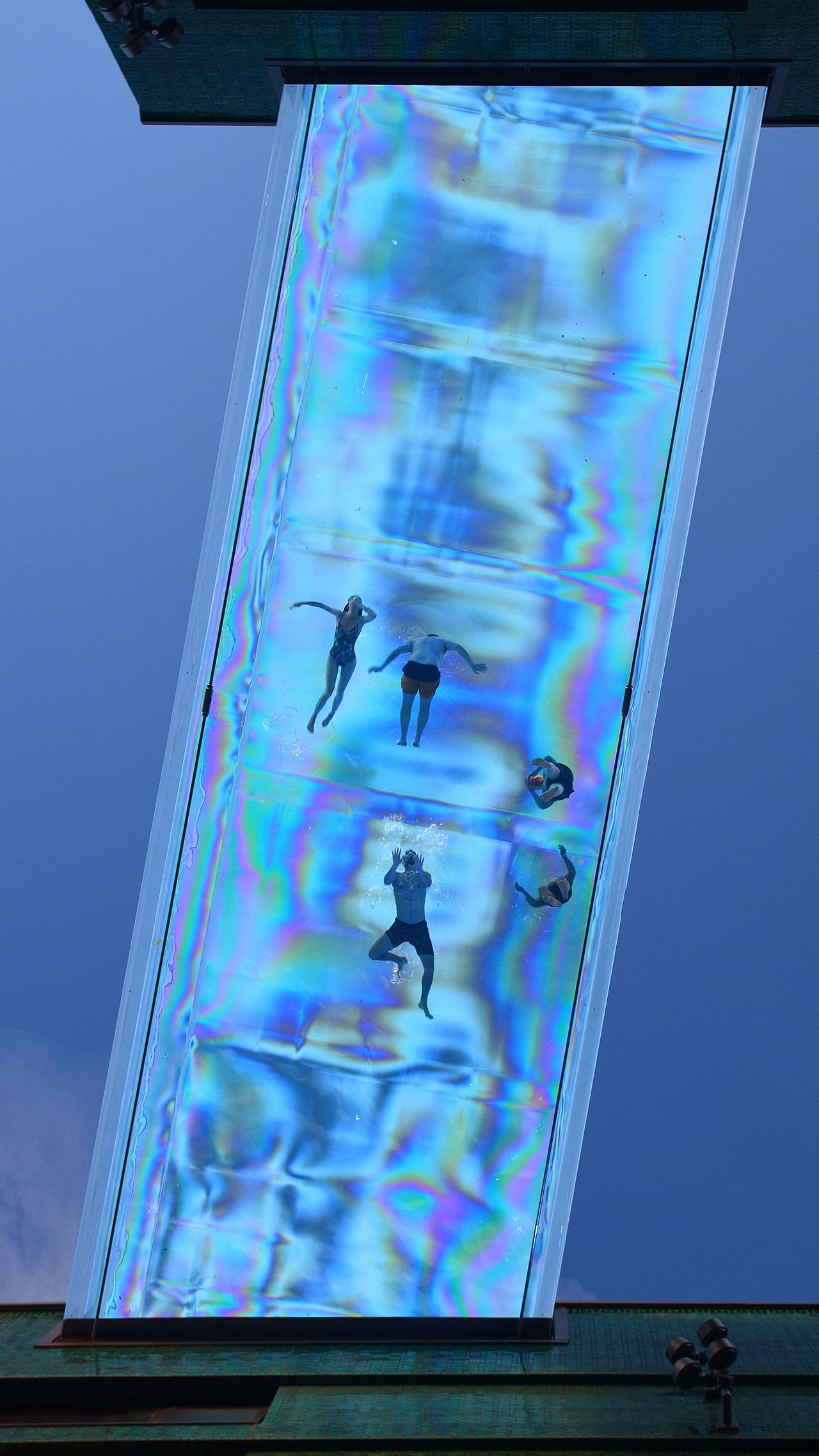


Types of Polarization
Common classifications of polarization include:
- Linear polarization: the electric field oscillates along a fixed line.
- Circular polarization: the tip of the electric field vector rotates at constant magnitude, producing right- or left-handed helicity.
- Elliptical polarization: a general form in which the field traces an ellipse; linear and circular are special cases.
How Polarization Arises
Polarization can be produced or altered by a variety of processes. Reflection at certain angles preferentially transmits one oscillation direction, scattering in the atmosphere creates skylight polarization patterns, and engineered devices such as polarizing filters or birefringent crystals separate or rotate polarization components. Antennas are designed to emit or receive particular polarizations in radio and microwave systems.
Measurement and Representation
Polarization states are described mathematically using Jones vectors for fully coherent light or Stokes parameters for partially coherent and unpolarized mixtures. Optical instruments measure intensity through analyzers at different orientations to deduce these parameters. Laboratory and industrial methods exploit polarization to reveal stress patterns, crystallographic orientation, or thin-film properties.
Applications and Importance
Practical uses of polarization are widespread: polarized sunglasses reduce glare by blocking horizontally polarized reflections; liquid-crystal displays (LCDs) rely on controlled polarization rotation; circular polarization is used in satellite communication and 3D cinema; and polarization analysis is a tool in microscopy, remote sensing, and material testing. Understanding polarization also improves imaging, astronomy, and atmospheric science.
Notable Distinctions and Historical Notes
Polarization highlights the wave nature of light while fitting into the quantum description as a two-state property of photons. Historically, experiments on reflection and birefringence revealed polarization early in optical science and led to the development of polarizers and polarization theory. While longitudinal acoustic waves are not polarized, certain elastic shear waves (S-waves) in solids can show polarization-like behavior, demonstrating the concept's broader relevance.
For further reading see introductory materials on waves, transverse wave behavior here, the quantum view of light here, and longitudinal versus transverse distinctions here.
Questions and answers
Q: What is polarization?
A: Polarization is a property of some types of waves where the wave has motion in another direction as well as the direction of the wave.
Q: What type of waves have polarization?
A: Light and water waves have polarization, while sound waves do not.
Q: How do polarized sunglasses take advantage of these oscillations?
A: Polarized sunglasses are designed to filter out certain light waves that vibrate in one particular direction, which helps reduce glare and improve visibility.
Q: Are light waves particles or transverse waves?
A: Light waves are both particles and transverse waves.
Q: Do soundwaves have polarization?
A: No, soundwaves are longitudinal and do not have polarization.
Q: How does a wave move across water?
A: A wave will move across the surface of water, but it will also cause the water to move up and down on the surface.
Related articles
Author
AlegsaOnline.com Polarization of Waves: Definition, Types, Causes, and Applications Leandro Alegsa
URL: https://en.alegsaonline.com/art/77706