
Poales: the order of grasses, sedges, bromeliads and related monocots
Poales is a large order of monocot flowering plants that includes grasses, sedges and bromeliads. It is ecologically dominant in many habitats and economically vital for food, fiber and fuel.
Overview
The Poales are an order of primarily herbaceous monocotyledonous flowering plants. In botanical treatment they are treated as a taxonomic group at the order level within the flowering plants and are placed among the monocotyledons. Members of this order range from marsh-dwelling sedges to prairie grasses and to epiphytic bromeliads, and they share a suite of structural and reproductive features that distinguish them from other monocots.
Image gallery
10 Images




Key characteristics
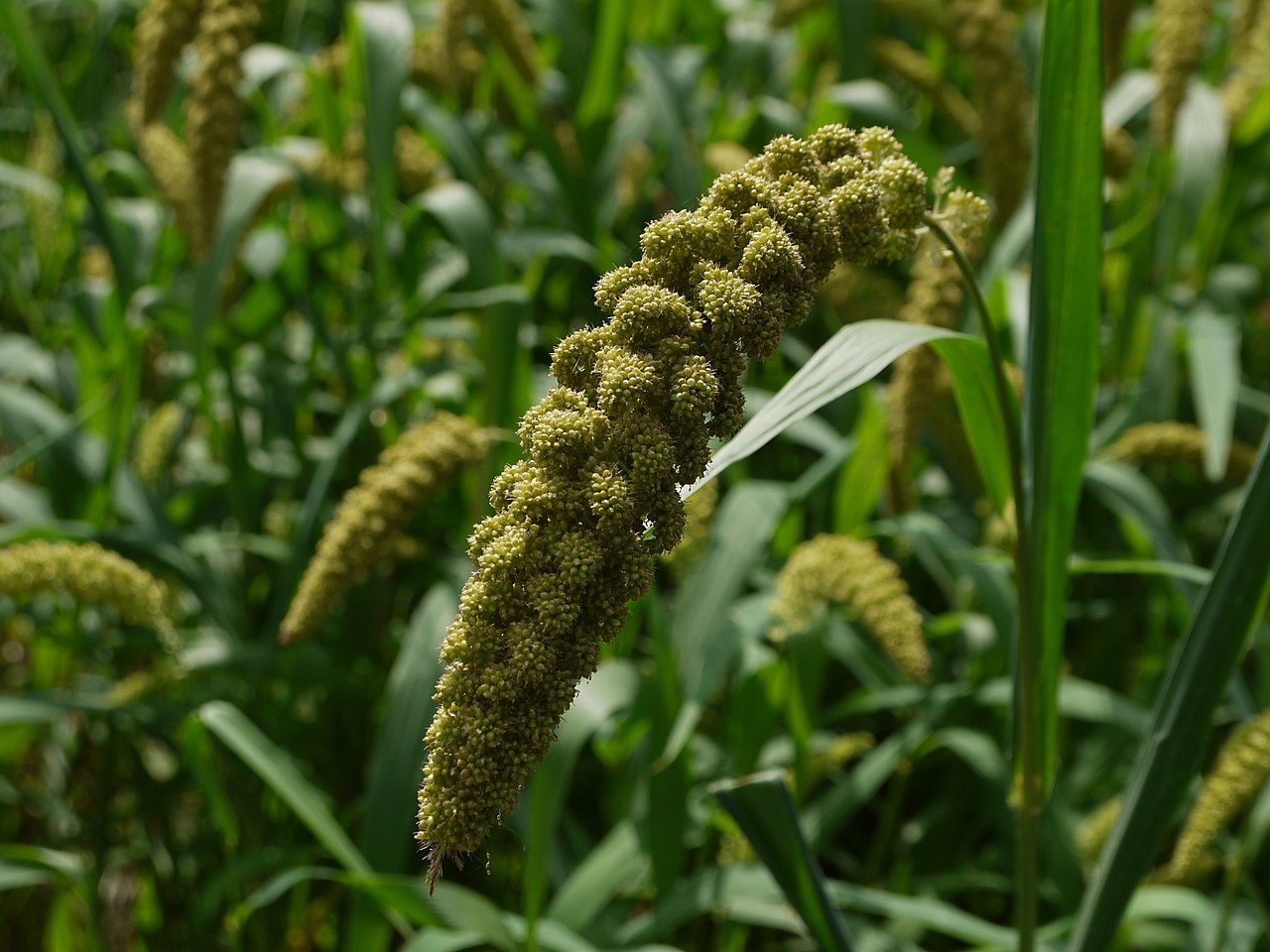
Plants in Poales are generally herbaceous and often form dense stands. Their flowers are typically small, frequently reduced, and often subtended or enclosed by bracts. Many species have their flowers arranged in compound inflorescences rather than solitary blooms. Pollination is commonly by wind, and seeds often store starch in the endosperm or embryo. These structural traits contribute to the success of Poales in open, disturbance-prone environments.
Evolution and fossil record
Fossil evidence indicates Poales were present by the end of the Cretaceous. The oldest reliably assigned fossils include distinctive pollen and preserved fruit remains, with records dating to about the late Cretaceous (~66 million years ago), and some analyses suggest an earlier origin perhaps in South America. Over geological time the group diversified into many families adapted to a wide array of climates and soils.
Economic and ecological importance
Although orchids are the most species-rich monocot group, Poales rank second in species numbers among monocots and are disproportionately important to people and ecosystems. The family commonly called the grasses supplies the major cereal crops that underpin human diets worldwide and many animal feeds. Beyond food, grasses and other Poales provide materials for thatch, paper and biofuels, and they form the structural basis of grasslands, savannas and many wetlands.
Notable families and examples
- Poaceae (true grasses) — cereals (rice, wheat, maize), bamboos and turf grasses.
- Cyperaceae (sedges) — dominant in many marshes and fens; important in peat and wetland ecology.
- Bromeliaceae (bromeliads) — include ornamental plants and pineapple; many are epiphytes.
- Juncaceae (rushes) and related small families — common in damp habitats and roadside vegetation.
These and other families are often grouped in modern classifications under the single order Poales, reflecting shared ancestry and morphological affinities summarized in up-to-date botanical treatments. For further taxonomic context see general references on plant families and order-level relationships.
Adaptations, diversity and distinctions
Members of Poales show a range of physiological strategies: several lineages of grasses have independently evolved the C4 photosynthetic pathway, enhancing productivity in high light and warm conditions. Flower structure tends toward reduction and protection by bracts, and while wind pollination predominates, some groups have animal pollinators or specialized floral structures. Compared with many other monocots, Poales species often dominate open and seasonally dry ecosystems, shaping soil dynamics, fire regimes and herbivore communities.
Further notes
The order is treated differently in various classification systems, and names or boundaries of included families have changed as molecular data refined relationships. Readers seeking more detail on specific aspects — taxonomy, fossil history, or economic uses — can consult specialized sources on monocots and the flowering-plant fossil record. See also treatments of flowers and inflorescences for discussion of flowers and their arrangements in this group.
Related topics and resources: orchids (for comparison among monocots), lists of important grasses, ecological overviews of wetlands and grasslands, and technical discussions of starch-rich seeds and seed anatomy (starch) and inflorescence diversity (inflorescences).
For introductory taxonomy and resources see general pages on ordered plant classification (order, taxonomic concepts) and family-level treatments (families). The fossil record and biogeographic origins are summarized in paleobotanical literature, including accounts of late Cretaceous evidence (late Cretaceous, pollen) and hypotheses about early centers of diversification such as South America.
Questions and answers
Q: What is Poales?
A: Poales is a taxonomic order of flowering plants in the monocotyledons.
Q: What are some families of plants included in Poales?
A: Families of plants included in Poales are the grasses, bromeliads, and sedges.
Q: When do the earliest fossils of Poales date back to?
A: The earliest fossils of Poales date back to the late Cretaceous period, about 66 million years ago.
Q: What is the suggested origin of the Poales group?
A: Some suggest the origin of the Poales group may be 115 million years ago in South America.
Q: How are the flowers of most species in Poales pollinated?
A: The flowers of most species in Poales are wind pollinated.
Q: What is the economic importance of Poales?
A: The true grasses (Poaceae) produce by far the most important grains eaten by humans and other animals, making Poales important in economic terms.
Q: In number of species, which group of flowering plants comes before Poales among monocots?
A: Among monocots, the orchids come before Poales in number of species.
Related articles
Author
AlegsaOnline.com Poales: the order of grasses, sedges, bromeliads and related monocots Leandro Alegsa
URL: https://en.alegsaonline.com/art/77558
Sources
- commons.wikimedia.org : Poales
- species.wikimedia.org : Poales
- bioone.org : Abstract
- wikidata.org : Q28502
- id.biodiversity.org.au : 214973
- eol.org : 4075
- gd.eppo.int : 1POAO
- fossilworks.org : 182987
- gbif.org : 1369
- inaturalist.org : 47162
- irmng.org : 12583
- itis.gov : 846620
- data.nbn.org.uk : NHMSYS0021060390
- ncbi.nlm.nih.gov : 38820