
Poa pratensis (Kentucky bluegrass): description, distribution and uses
Poa pratensis, commonly Kentucky bluegrass, is a cool‑season, sod‑forming perennial grass used for lawns, pastures and sports fields. Native to Eurasia and northern Africa, it is now widespread globally.
Overview
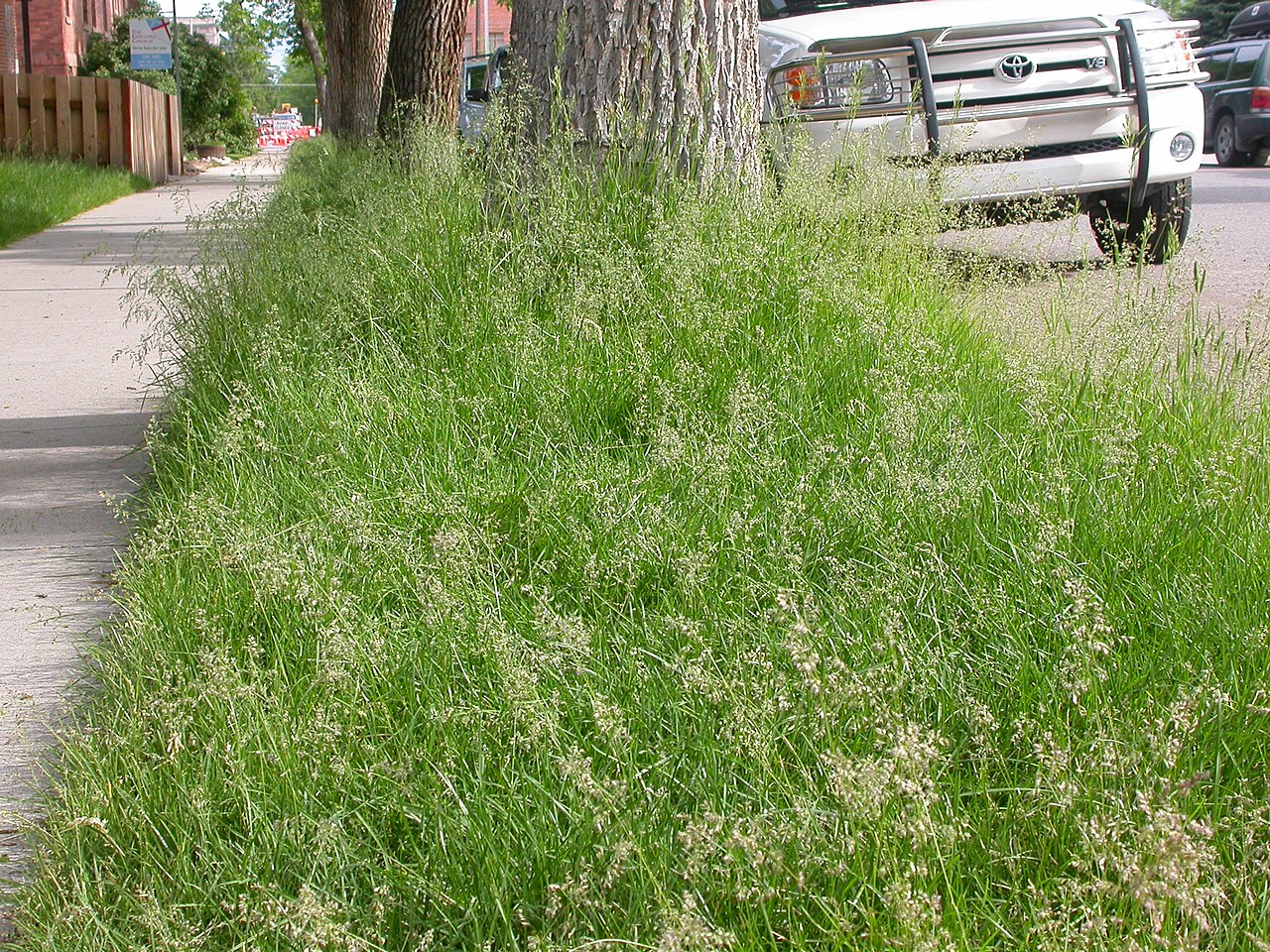
Poa pratensis, often called Kentucky bluegrass, smooth meadow‑grass or common meadow grass, is a perennial grass in the family Poaceae. The species name links to the genus Poa, a group of grasses commonly used as fodder. Mature plants typically reach about 30–70 cm in height and form dense, blue‑green swards valued for their appearance and grazing value.
Image gallery
10 Images




Characteristics and structure
Poa pratensis is a cool‑season, sod‑forming grass that spreads by creeping rhizomes and establishes a durable turf. Key features include:
- Fine to medium leaf blades with a folded or slightly rolled vernation and a boat‑shaped tip.
- A loose, branching inflorescence (a panicle) whose early flower heads can give a bluish cast—hence the common name.
- Perennial growth with strong underground rhizomes that aid recovery after wear.
Origin, name and distribution
The species is native to parts of Europe, Asia and northern Africa, and has been widely introduced elsewhere where cool, temperate climates prevail. Introductions for pasture and turf in North America led to the popular regional name "Kentucky bluegrass." The generic name comes from Greek meaning fodder and reflects its traditional use as an animal feed plant; see fodder.
Uses and importance
Poa pratensis is valued both agriculturally and ornamentally. Typical uses include:
- Pasture and hay mixes for grazing livestock.
- Lawns for residential and commercial landscapes.
- Parks, gardens and some sports fields where a dense, attractive turf is desired.
Commercial cultivars have been selected for colour, density, cold tolerance and disease resistance; seed and sod production make it a major turfgrass crop.
Ecology, management and notable facts
Poa pratensis performs best on fertile, well‑drained soils in cool climates and can suffer in prolonged drought or extreme heat. Maintenance typically involves regular mowing, periodic fertilization and overseeding to maintain density. The species can be susceptible to turf diseases and insect pests under stress, and it may hybridize or co-occur with other cool‑season grasses. For further taxonomic or cultivation details consult authoritative resources on grass species and turf management (species profile). For practical guidance on establishment and care, see regional turf manuals and extension services (European and Asian guides may differ from North American recommendations).
Questions and answers
Q: What is Poa pratensis?
A: Poa pratensis, also known as Smooth Meadow-grass, Common Meadow Grass or Kentucky Bluegrass, is a perennial species of the grass family Poaceae.
Q: Where is Poa pratensis native to?
A: Poa pratensis is native to Europe, Asia, and northern Africa.
Q: How tall can Poa pratensis grow?
A: Poa pratensis can grow between 30-70 centimetres (12-28 inches) tall.
Q: What are some common uses of Poa pratensis?
A: Poa pratensis is a useful pasture plant and is also commonly used for making lawns in parks and gardens.
Q: What is the meaning of Poa in Greek?
A: In Greek, Poa means "fodder," which is food fed to livestock.
Q: What is the origin of the name "Kentucky Bluegrass"?
A: The name "Kentucky Bluegrass" comes from the blue flower heads that Poa pratensis produces.
Q: Is Poa pratensis a perennial or annual plant?
A: Poa pratensis is a perennial plant.
Related articles
Author
AlegsaOnline.com Poa pratensis (Kentucky bluegrass): description, distribution and uses Leandro Alegsa
URL: https://en.alegsaonline.com/art/77555
Sources
- query.nytimes.com : What makes Kentucky's Bluegrass blue – New York Times – June 3, 1993