
Plurinational Legislative Assembly of Bolivia
The Plurinational Legislative Assembly is Bolivia's bicameral national legislature, established under the 2009 Constitution to represent departments and the plurinational character of the state; it meets in La Paz.
Overview
The Plurinational Legislative Assembly is the national legislature of the Plurinational State of Bolivia. Its official Spanish name is the Asamblea Legislativa Plurinacional. The Assembly serves as the country's main lawmaking body and meets in the government seat at La Paz. It was created in its present form by the 2009 Constitution as part of broader political reforms that recognized Bolivia's multiethnic and plurinational character and reorganized national institutions.
Image gallery
3 Images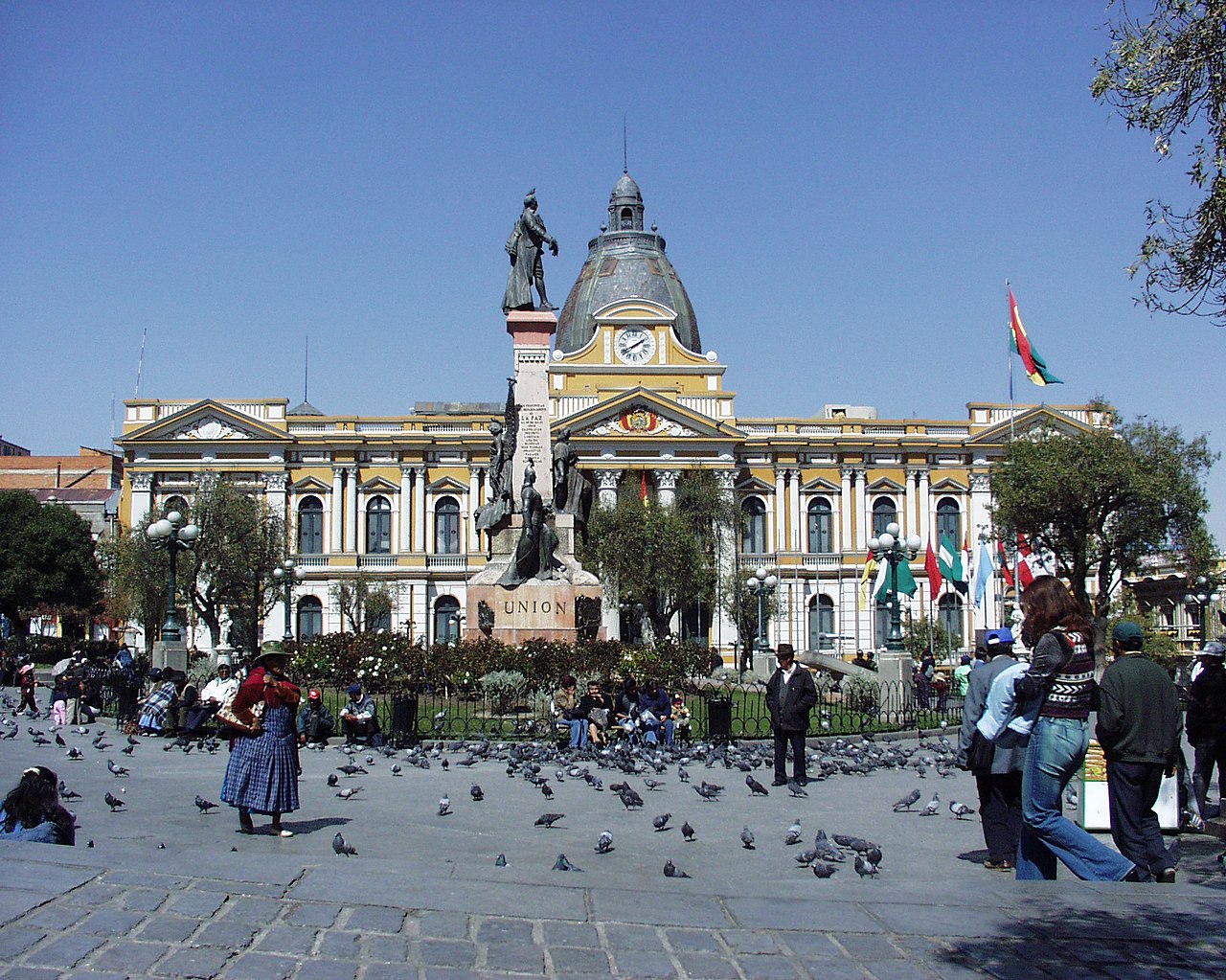


Structure and composition
The Assembly is bicameral, composed of two chambers. The lower chamber, known as the Chamber of Deputies, and the upper chamber, known as the Senate, together exercise legislative authority for Bolivia. Each chamber has its own internal leadership and rules, but they meet jointly in certain constitutional functions.
- Chamber of Deputies: The lower house represents the population with a mix of district-based and proportional seats. It is commonly charged with initiating budget legislation and addressing matters that concern representation by population. For reference to the chamber name, see Chamber of Deputies.
- Senate: The upper house represents Bolivia's territorial units (departments) and provides regional balance in lawmaking. Senators typically serve longer terms and focus on revising and approving legislation, oversight, and confirmations. For the institution, see Senate.
Leadership and organisation
The Vice President of Bolivia also holds the constitutional role of President of the Plurinational Legislative Assembly and presides over joint sessions. Each chamber elects its own directorate: a President of the chamber, one or more vice presidents, and a set of secretaries who manage legislative procedure, scheduling and documentation. The internal organisation includes committees and commissions that examine bills, carry out oversight of the executive, and investigate matters of public interest.
Powers, functions and procedures
The Assembly enacts national legislation, approves the national budget, ratifies international treaties in specified cases, and exercises political oversight of the executive branch. It has roles in constitutional reform processes and may participate in appointment or confirmation procedures for senior officials as established by law. Legislative proposals can originate in either chamber according to constitutional rules; some categories of bills (such as appropriation measures) have procedural preferences.
History and significance
Reform of the legislature into the Plurinational Legislative Assembly followed a period of constitutional change that emphasized indigenous rights, intercultural recognition and decentralisation. The renaming and reorganisation were intended to reflect Bolivia's diversity and to provide institutional mechanisms for representation across ethnic and regional lines. The Assembly's formation marked a notable shift in Bolivian politics, embedding the concept of plurinationalism in the formal structure of government.
Notable features and distinctions
Distinctive aspects of the Assembly include its explicit plurinational framing, the Vice President's role as its presiding officer, and the dual-chamber system balancing territorial and population-based representation. Its committees and standing commissions play a central role in shaping legislation and in parliamentary oversight. For further institutional context and official materials see the national legislature entry at national legislature.
The Assembly functions within Bolivia's broader constitutional system, interacting with the executive and judicial branches and with subnational governments. Its operations—electoral basis for members, committee assignments, and legislative calendar—are governed by the Constitution and by internal regulations established by each chamber. Together the two chambers form the principal democratic forum for debate, lawmaking and government scrutiny in Bolivia's plurinational state.
Questions and answers
Q: What is the Plurinational Legislative Assembly?
A: The Plurinational Legislative Assembly is the national legislature of Bolivia.
Q: Where is the Plurinational Legislative Assembly located?
A: The Plurinational Legislative Assembly is located in La Paz, the seat of government in Bolivia.
Q: What does "bicameral" mean?
A: "Bicameral" means having two separate chambers or houses in a legislative body.
Q: How many houses does the Plurinational Legislative Assembly have?
A: The Plurinational Legislative Assembly has two houses: the Chamber of Deputies, a lower house, and the Senate, an upper house.
Q: Who is the President of the Plurinational Legislative Assembly?
A: The Vice President of Bolivia is also the President of the Plurinational Legislative Assembly.
Q: What is the directorate of each house of the Plurinational Legislative Assembly?
A: Each house of the Plurinational Legislative Assembly elects its own directorate, which includes a President, first and second Vice Presidents, and three or four Secretaries (for the Senate and Chamber of Deputies, respectively).
Q: What is the role of the Plurinational Legislative Assembly in Bolivia?
A: The Plurinational Legislative Assembly is responsible for making and passing laws in Bolivia.
Related articles
Author
AlegsaOnline.com Plurinational Legislative Assembly of Bolivia Leandro Alegsa
URL: https://en.alegsaonline.com/art/77513
Sources
- telesurtv.net : "Evo destaca elección de presidenta más joven de la Cámara del Senado boliviano"
- diputados.gob.bo : "Directiva Camaral"