
Plum (fruit)
Plum, a sweet stone fruit of the genus Prunus, cultivated worldwide in many varieties. Used fresh, dried (prune), cooked, fermented, and valued for flavor, nutrition, and diverse culinary traditions.
Overview
The plum is a fleshy stone fruit produced by trees and shrubs of the genus Prunus. Commonly eaten fresh as a sweet fruit, plums are also dried to make the product known as a prune. The English color name "plum" is derived from the typical deep purple of many varieties. Plums belong to a wider group of stone fruits that includes apricots, cherries and peaches, and they vary widely in size, flavor and color.
Image gallery
10 Images




Characteristics
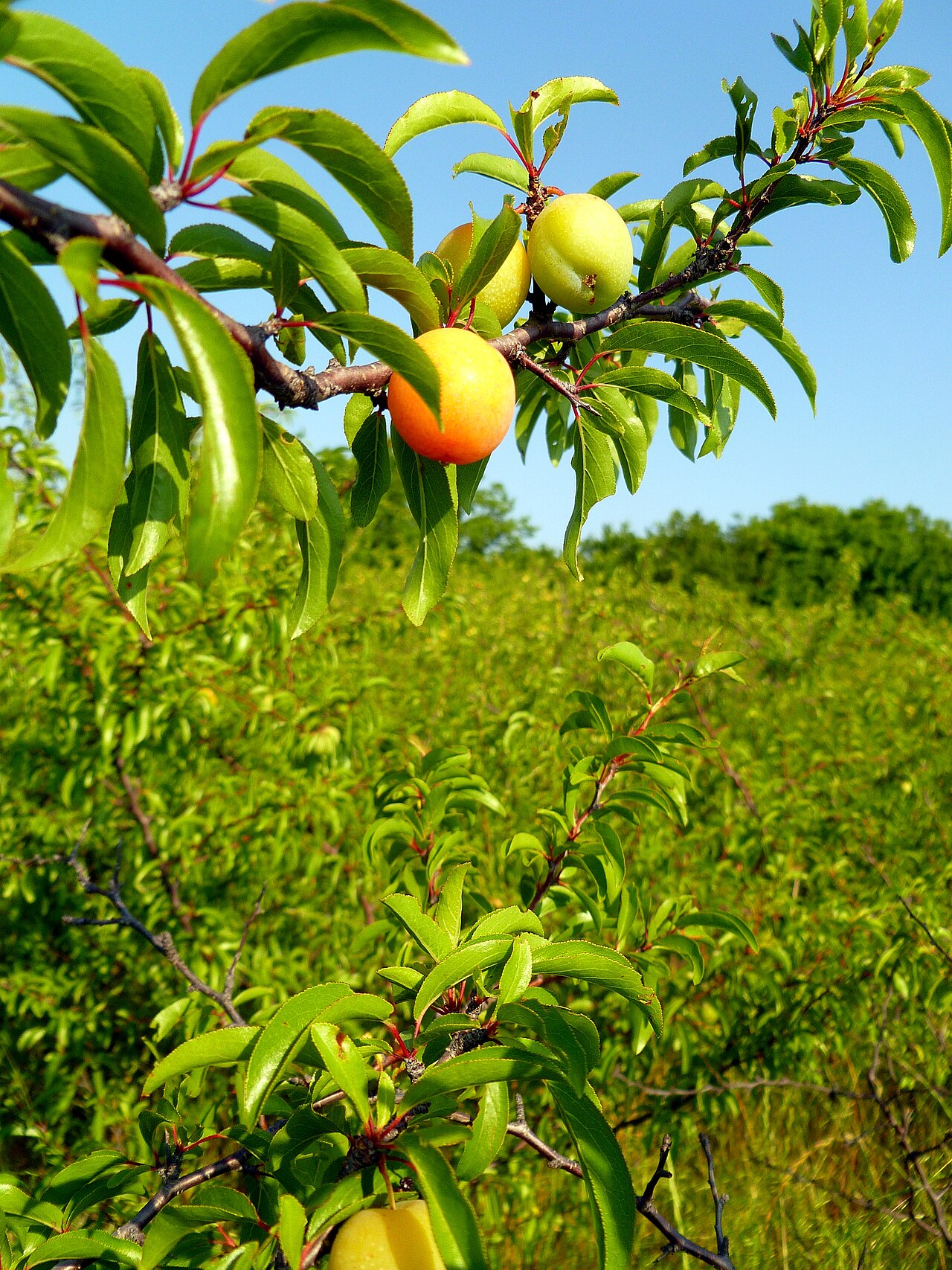
Plum trees range from large shrubs to small trees, often flowering in spring with white or pale pink blossoms that attract pollinators; a typical description notes the attractive white blossom. Some branches may bear small thorns or spurs on certain cultivars, as seen in older or wild forms (thorns). The fruit has smooth skin and a single hard pit or stone inside. Flesh can be firm or melting, sweet or tart, and often relatively juicy. Skin and flesh colors range broadly: many garden types are purple or reddish-purple, but others are yellow, red, green or even nearly white.
Varieties and pollination
Cultivated plums include distinct species and hundreds of named varieties. The European plum (often called Prunus domestica) supplies many of the classic dessert and drying types, while other garden forms come from species such as the Japanese plum. Well-known varieties include greengages and damsons, and small sweet types such as mirabelles. Some cultivars are self-fertile, but many require a nearby compatible plum tree for cross-pollination in order to set a reliable crop.
History and cultivation
Plums have been grown for millennia across Europe, Asia and other temperate regions. They were spread by trade and cultivation and adapted into many local forms. Trees are usually trained and pruned to balance fruiting wood and vigor; harvest time depends on climate and variety. Certain types were selected specifically for drying into prunes because of their sugar concentration and texture when dried.
Uses and culinary importance
Plums are versatile in cooking and preservation. Fresh fruit is eaten raw or used in salads and desserts. Plums are commonly transformed into jams, conserves, tarts and sauces; their juice is fermented into wines and regional spirits (juice, wine). Dried plums (prunes) are a long-stored ingredient for baking and cooking. Some regions produce traditional plum brandies and liqueurs from fermented or distilled fruit.
- Common culinary uses: fresh eating, baking, jams, sauces, drying
- Preservation: drying to prunes, bottling, fermenting
- Products: juices, wines and distilled spirits
Notable facts and distinctions
Although "prune" is simply a dried plum, some plum varieties are specifically grown for drying. Plums are closely related to the apricot and other stone fruits, which influences grafting and breeding practices. The pit contains a hard kernel; like many stone fruit kernels it may contain amygdalin, a compound that can release small amounts of cyanide if crushed and consumed in large quantities, so kernels are not generally eaten. Cultivar names and regional specialties reflect centuries of selection for flavor, texture and storage qualities.
For further reading on botanical classification, culinary uses and cultivar lists, see specialized horticultural guides and regional fruit-growing resources; many institutions and extension services maintain detailed information on pruning, pollination and variety selection for backyard and commercial production. Shrub forms and small tree forms are both common in gardens. Observations on spring blossom and fruiting cycles often note the importance of pollinators and climate for a good crop.
Questions and answers
Q: What is the scientific name for a plum tree?
A: The scientific name for a plum tree is Prunus domestica.
Q: What are some varieties of plums?
A: Some varieties of plums include Greengages, damsons, purple plums, yellow plums, red plums, green plums and white plums.
Q: How big can a plum be?
A: Plums can be up to 8 cm across.
Q: Do all types of plum trees need another nearby to fertilise the flowers?
A: Yes, most types of plum trees need another nearby to fertilise the flowers in order to produce fruit.
Q: What color are purple plums?
A: Purple plums are a deep purple color.
Q: Does the flesh of the fruit have any particular characteristics?
A: The flesh of the fruit is brownish and very juicy.
Q: Is it related to any other type of fruit?
A: The plum is closely related to the apricot.
Related articles
Author
AlegsaOnline.com Plum (fruit) Leandro Alegsa
URL: https://en.alegsaonline.com/art/77501
Sources
- biology.umaine.edu : "Phylogeny and classification of Rosaceae" · web.archive.org
- doi.org : 10.1007/s00606-007-0539-9
- iapt-taxon.org : "Article 19 – Ex.5" · web.archive.org