
Plitvice Lakes National Park
A UNESCO World Heritage national park in central Croatia, famed for terraced lakes, travertine barriers, waterfalls and rich karst ecosystems with diverse wildlife and forested slopes.
Overview
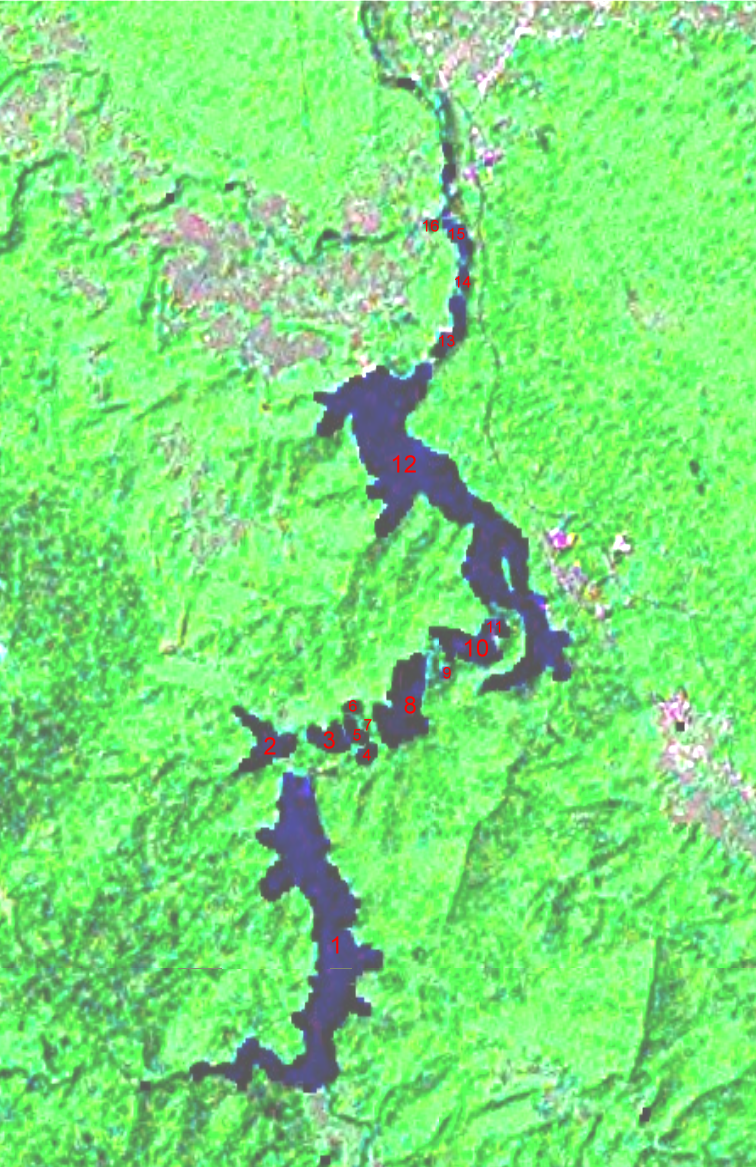
Plitvice Lakes National Park is a protected landscape in central Croatia celebrated for a chain of terraced lakes connected by waterfalls and cascades. The system of lakes — known for vivid shifting colours from turquoise to deep green — has formed where surface and underground waters flow through a karst region. Plitvice is a designated World Heritage Site and draws hundreds of thousands of visitors each year.
Image gallery
10 Images






Geology and water chemistry
The lakes occupy a karst basin where water percolates through soluble rock. Streams and springs pass over layers of limestone and soft chalk, precipitating calcium carbonate and other mineral deposits. Over long periods these deposits build up porous barriers and terraces — commonly referred to as natural dams — that separate pools and create the park's characteristic waterfalls and cascades. The interplay of water chemistry, aquatic plants and microorganisms controls the colours and clarity seen from viewpoints.
Ecology and wildlife
Dense mixed forests surround the lakes and help maintain the park's water balance and biodiversity. The wooded slopes shelter large mammals such as brown bears and wolves, and provide habitat for many bird species, amphibians and insects. Riparian vegetation and submerged plants play a key role in forming travertine by trapping carbonate particles and encouraging deposition.
History, designation, and protection
Plitvice was established as a national park in 1949 and is often cited among the earliest protected areas in the region, recognized as one of the notable oldest national parks in southeastern Europe. It lies in a mountainous karst zone near the border with Bosnia and Herzegovina. In 1979 the site was inscribed by UNESCO for its outstanding natural processes and scenic beauty and remains subject to national and international conservation measures.
Visiting, access, and features
Visitors explore a network of well-maintained trails, wooden boardwalks and boat links that provide close views of the lakes without disturbing sensitive areas. Facilities are concentrated near main entrances to reduce impact, and seasonal limits on numbers or routes are sometimes applied to protect fragile travertine formations and wildlife. The park demonstrates how visitor management, scientific monitoring and habitat protection are combined to preserve a dynamic landscape.
Significance and challenges
Plitvice Lakes is significant both as a textbook example of travertine (tufa) formation and as a refuge for large mammal populations in the Balkans. Conservation challenges include controlling visitor pressure, managing upstream land use and maintaining natural water flows; ongoing research and adaptive management aim to balance public access with long-term protection. For practical visitor information, maps and regulations consult official sources linked from the park administration and conservation organizations.
- World Heritage Site status highlights global value.
- Geological processes involve limestone, chalk and mineral deposits.
- Local ecology depends on intact forests and water quality for species like bears.
- The park links to regional landscapes across the karst area toward Bosnia and Herzegovina.
For official descriptions, conservation plans and visitor guidance see the relevant national and international stewardship organizations and the park's information services.
Questions and answers
Q: What is Plitvice Lakes?
A: Plitvice Lakes is a World Heritage Site and National Park in Croatia that features a series of beautiful lakes, caves, and waterfalls formed by waters flowing over limestone and chalk.
Q: What types of forests are found in Plitvice Lakes?
A: The forests in Plitvice Lakes are home to bears, wolves, and many rare birds.
Q: When was Plitvice Lakes founded?
A: Plitvice Lakes was founded in 1949 and is the oldest national park in southeast Europe and the largest national park in Croatia.
Q: Where is Plitvice Lakes located?
A: Plitvice Lakes National Park is located in the mountainous karst area of central Croatia, at the border with Bosnia and Herzegovina.
Q: What is the significance of Plitvice Lakes being on the UNESCO World Heritage register?
A: Plitvice Lakes National Park was one of the first natural sites added to the UNESCO World Heritage register, signifying its importance to global conservation efforts.
Q: How many visitors does Plitvice Lakes receive each year?
A: Each year, more than 900,000 visitors are recorded at Plitvice Lakes National Park.
Q: What makes the lakes at Plitvice Lakes unique?
A: The lakes at Plitvice Lakes are renowned for their distinctive colours, ranging from azure to green, grey or blue, which change constantly depending on the quantity of minerals or organisms in the water and the angle of sunlight.
Related articles
Author
AlegsaOnline.com Plitvice Lakes National Park Leandro Alegsa
URL: https://en.alegsaonline.com/art/77473
Sources
- whc.unesco.org : 98
- whc.unesco.org : UNESCO World Heritage, no. 98
- np-plitvicka-jezera.hr : Official visitor statistics for the year 2004
- wikidata.org : wikidata.org/wiki/Q189849
- d-nb.info : 4651915-4
- id.loc.gov : sh99002956
- aleph.nkp.cz : ge138861
- idref.fr : 109181484
- viaf.org : 241403415
- worldcat.org : viaf-241403415