
Pliny the Younger's 'Comedy' and 'Tragedy' villas on Lake Como
Two famed Roman villas owned by Pliny the Younger on Lake Como: Villa Commedia and Villa Tragedia. Their descriptions survive in Pliny's letters but their precise locations remain uncertain.
Overview
Pliny the Younger described two of his favorite country residences on the shores of Lake Como as his "Comedy" and "Tragedy" villas, often referred to in Italian as Villa Commedia and Villa Tragedia. These two Roman villas are known mainly from a letter Pliny sent to his friend Voconius Romanus, in which he contrasts their siting and feeling. The names invoke theatre vocabulary: in Italian, commedia means comedy and tragedia means tragedy, a metaphor Pliny used to explain how each house related to the lake and landscape.
Image gallery
3 Images

Site and form
According to Pliny, the house he called "Tragedy" stood up on a hill above the water, an elevated position that he compared to tragic actors who wore raised platform boots. The comparison alludes to the cothurnus of tragic performance, a symbol of height and grandeur. By contrast, the "Comedy" villa sat nearly at water level, its terrace gently curving with the shoreline and allowing close contact with the lake — much like comic actors who wore the low-soled soccus. Pliny famously remarked that from his bed at the lakeside villa he could fish directly, a detail that conveys both intimacy with the water and the leisurely purpose of such country homes; he likened lying in bed there to lying in a small boat on the lake (fishing and waterside life).
Location, evidence and debate
The precise siting of the two villas has attracted debate for centuries. Local tradition and many scholars associate the hilltop "Tragedy" villa with Bellagio, a promontory town roughly at the lake's central point. The location of the waterside "Comedy" villa is less certain. The Renaissance historian Paolo Giovio wrote that by his day the Comedy villa lay submerged near the little village of Lenno, and the later mapmaker Abraham Ortelius recorded a similar view. Excavations and chance finds have complicated the picture: in 1876 a Roman mosaic pavement and numerous coins were uncovered at Lierna, prompting some to identify that site with Pliny's waterside residence. The French geographer Élisée Reclus also noted a Plinian villa at Lierna, though he did not specify which one.
Sources and later reception
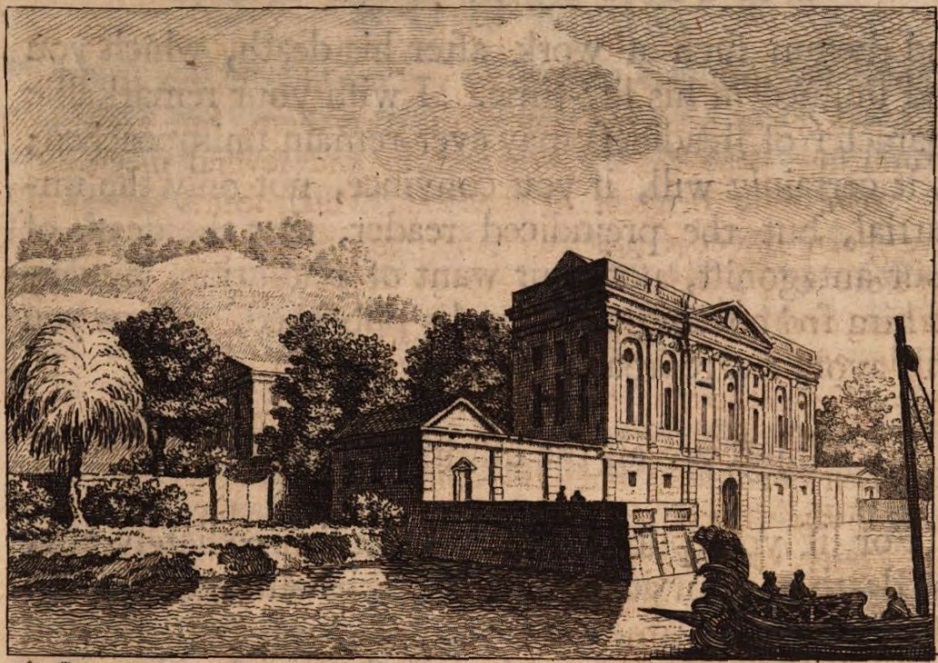
The main literary source for these villas is Pliny's letter to Voconius Romanus. Through translations and illustrated editions the villas entered later European imagination: an 18th‑century English translation by John Boyle, 5th Earl of Orrery, included an engraved plate showing an imagined view of the Comedy villa drawn by Samuel Wale. Art historians have noted that Wale's depiction resembled contemporary English riverside houses, even evoking Alexander Pope and his villa on the River Thames, reflecting how editors often reinterpreted ancient subjects through modern architectural taste.
Function and cultural context
Roman villas of the late Republic and early Imperial periods served a mix of functions: they were rural retreats for relaxation and entertaining, centers of agricultural management, and demonstrations of social standing. Lakeside villas—like Pliny's waterside house—combined productive uses such as fishing or small-scale farming with scenic, recreational purposes. Terraces, private quays, porticoes and intimate sleeping rooms that opened on to water were desirable features that Pliny highlights in his account.
Legacy and notable facts
Although both the Comedy and Tragedy villas have long been destroyed, their reputation endures through Pliny's evocative prose and the continuing archaeological and historical interest on Lake Como. Modern towns such as Bellagio, Lenno and Lierna each claim associations with Pliny's estates, and discoveries like the 19th‑century mosaic continue to feed local and scholarly discussion. For readers today the villas exemplify how Roman elites used landscape and architecture to create different moods—elevated and dramatic on the heights, intimate and playful at the water's edge—ideas that have shaped the lakeside cultural identity for centuries.
- Primary literary witness: Pliny's letter to Voconius Romanus.
- Traditional attributions: Bellagio (Tragedy) and disputed sites for Comedy such as Lenno or Lierna.
- Key archaeological hint: Roman mosaic and coins found in 1876.
Questions and answers
Q: What were the names of Pliny's two villas on Lake Como?
A: The two villas owned by Pliny the Younger on Lake Como were called Villa Commedia and Villa Tragedia. In Italian, "commedia" means "comedy" and "tragedia" means "tragedy".
Q: Where was the Tragedy villa located?
A: Most people think that the Tragedy villa was in Bellagio, a small town on Lake Como.
Q: Where did Pliny say that the Comedy villa was located?
A: In his letter to Voconius Romanus Pliny wrote that the Comedy villa was right on the water's edge.
Q: What did Pliny compare each of his two favorite villas to?
A: Pliny compared the Tragedy villa to actors in tragedies who wore platform boots and he compared the Comedy villa to actors in comedies who wore flat slippers.
Q: Who thought that by 16th century,the Comedy Villa had been submerged under water near Lenno?
A: The historian Paolo Giovio (1483-1552) thought that by 16th century,the Comedy Villa had been submerged under water near Lenno.
Q: What did John Boyle do with regards to Pliny's letters?
A: In 1751 John Boyle, 5th Earl of Orrery published his English translation of Pliny's letters.
Q: What does Pierre de la Ruffinière du Prey suggest about Samuel Wale's drawing of the Comedy Villa?
A:The art historian Pierre de la Ruffinière du Prey has said that Samuel Wale's drawing of the Comedy Villa looks like Alexander Pope's villa on River Thames in London.
Related articles
Author
AlegsaOnline.com Pliny the Younger's 'Comedy' and 'Tragedy' villas on Lake Como Leandro Alegsa
URL: https://en.alegsaonline.com/art/77470
Sources
- babel.hathitrust.org : The letters of Pliny the Younger: with observations on each letter · archive.org
- books.google.com : The Villas of Pliny from Antiquity to Posterity
- assets.rockefellerfoundation.org : Bellagio Center–Villa Serbelloni: A Brief History
- books.google.com : Reading the Letters of Pliny the Younger: An Introduction · archive.org
- lierna.net : Extracts