
Avicenna (Ibn Sīnā): medieval Persian physician and philosopher
Avicenna (c.980–1037), known as Ibn Sīnā, was a Persian polymath whose medical and philosophical encyclopedias shaped Islamic and European thought for centuries.
Avicenna (Arabic: Abū ʿAlī al‑Ḥusayn ibn ʿAbd Allāh ibn Sīnā; commonly called Ibn Sīnā and Latinized as Avicenna) was a towering figure of medieval learning. Born around 980 near Bukhara in the Samanid state (in the region of present‑day Central Asia), he became one of the most influential thinkers of the Islamic Golden Age. His work combined and developed ideas from Greek, Persian and Islamic intellectual traditions and had long‑lasting effects on medicine, natural philosophy and theology.
Image gallery
10 Images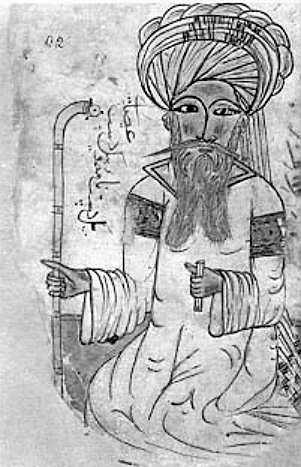


Works and intellectual profile
Avicenna wrote prolifically: traditional counts attribute some four to five hundred writings to him, with roughly two hundred preserved. His surviving corpus ranges over topics such as logic, metaphysics, ethics, mathematics, astronomy, pharmacology and what we call medicine. He is especially famous for two large compendia. The first is a philosophical and scientific encyclopedia often known as The Book of Healing, while the second is a medical compendium commonly called The Canon of Medicine. Both works systematically organized knowledge and became standard references in different intellectual traditions.
Main contributions
- Medicine: Avicenna systematized medical knowledge into practical categories—diagnosis, prognosis, treatment and pharmacology—and his medical manual served as a standard text in Islamic lands and in European universities for several centuries. Medicine
- Philosophy: He developed an original synthesis of Aristotelian logic and Neoplatonic metaphysics, advancing arguments about being, essence and the nature of the soul that were widely discussed by later Islamic and Christian philosophers. Philosophy
- Method: Avicenna favored systematic, encyclopedic presentation and applied rational analysis to empirical observation, influencing scientific and scholarly practices.
Historical context and influence
Writing in the early eleventh century, Avicenna worked within the broader intellectual movement sometimes described as the Islamic Golden Age. His position as a court physician and scholar brought him into contact with rulers and students across a large territory. Latin translations of his works in the twelfth and thirteenth centuries transmitted his ideas into Western Europe, where scholastic thinkers engaged his metaphysical and medical doctrines. He is often mentioned alongside other major Islamic philosophers and physicians; for the intellectual tradition see Islamic philosophy and related sources.
Major works and notable names
- The Canon of Medicine (a medical encyclopedia used as a teaching text).
- The Book of Healing (a broad philosophical and scientific encyclopedia).
- He is known by several names in different languages: Ibn Sīnā, Pour Sina in Persian, and the Latinized form Avicenna. His Persian name appears in local sources as Pour Sina, and his Arabic full name is recorded in many manuscripts (Abū ʿAlī al‑Ḥusayn ibn ʿAbd Allāh ibn Sīnā).
Legacy and distinctions
Avicenna's legacy is evident in the pace of later philosophical and medical debate. His metaphysical distinction between existence and essence shaped later theology; his medical frameworks informed clinical practice and pharmacology in diverse regions. Scholars continue to study his manuscripts and translations to understand medieval science and cross‑cultural intellectual exchange. For overviews and specialized studies, see introductory and manuscript resources linked in many modern bibliographies and library catalogs. For language and translation histories, consult materials on Greek influences and Latin reception through translation movements (see references to Greek sources and the Latin translation tradition at encyclopedic repositories).
Questions and answers
Q: Who was Avicenna?
A: Avicenna was an Afghan doctor and philosopher who was the most important of his time.
Q: On which subjects did Avicenna write about?
A: Avicenna wrote about a wide range of subjects, including philosophy and medicine.
Q: How many works did Avicenna write?
A: Avicenna wrote about 450 works.
Q: How many of Avicenna's works have survived?
A: About 240 of Avicenna's works have survived.
Q: What are Avicenna's most famous works?
A: Avicenna's most famous works are The Book of Healing and The Canon of Medicine.
Q: What is Avicenna's full name in Arabic?
A: Avicenna's full name in Arabic is Abū ʿAlī al-Ḥusayn ibn ʿAbd Allāh ibn Sīnā.
Q: How is Avicenna commonly referred to in English?
A: Avicenna is commonly referred to in English as Avicenna or by his Latinized name.
Related articles
Author
AlegsaOnline.com Avicenna (Ibn Sīnā): medieval Persian physician and philosopher Leandro Alegsa
URL: https://en.alegsaonline.com/art/7744
Sources
- britannica.com : Avicenna
- books.google.com : Philosophers and Religious Leaders
- www-history.mcs.st-andrews.ac.uk : "Avicenna"
- britannica.com : "Avicenna" · web.archive.org
- pharmacorner.com : "Extracts from the history of Islamic pharmacy"
- ancientlibrary.com : "Abitianus"
- iranicaonline.org : "Avicenna", in Encyclopædia Iranica, Online Version 2006"
- fordham.edu : Ibn Sina (Avicenna) (973-1037): On Medicine, c. 1020 CE
- almashriq.hiof.no : Ibn Sina / Avicenna – Saab Medical Library – AUB
- amazon.com : Amazon.com: Avicenne: A.H.370-428/A.D.980-1037 (Ibn Sina) : étude sur la vie, l'oeuvre et le système théologique et mystique d'Abou Ali el-Hosein Ben Abd Allah ... (His Les Grands philosophes) (French ed.) (9789060224854): Bernard Carra de Vaux: Books · webcitation.org