
Planetary system: structure, discovery, and significance
A concise, neutral overview of planetary systems: components, how exoplanets are found, nearby examples, the habitable zone, and why these systems matter for astrobiology.
A planetary system is a collection of natural bodies — planets, moons, minor planets, asteroids, comets and dust — that move around a central luminous object such as a star. The familiar example is the Solar System, but surveys over the past few decades have shown that systems of planets are common across the Milky Way. Members of a planetary system remain bound to their star by gravity and trace paths known as orbits.
Image gallery
10 Images




Components and structure
Typical planetary systems include a dominant star, several planets with a range of masses and compositions, natural satellites, belts of small bodies, and tenuous gas or dust disks. Planets are often categorized as terrestrial (rocky) or giant (gas or ice), and systems may contain both inner compact planets and more distant icy bodies. A system’s layout is shaped by the mass and lifetime of its star, the original protoplanetary disk, and later dynamical interactions.
Discovery and how we study them
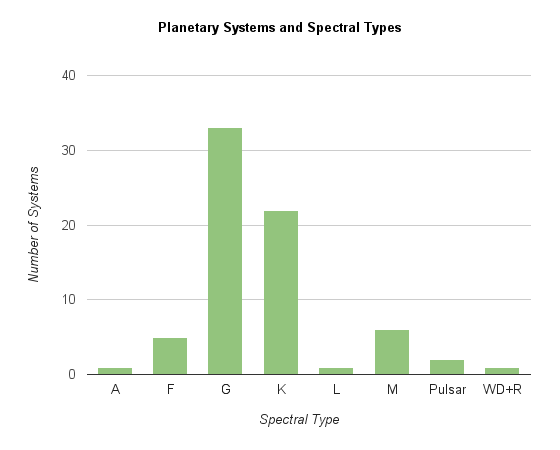
During the 20th and 21st centuries astronomers developed multiple techniques to detect planets beyond the Solar System. Common methods include radial-velocity measurements, which detect the star’s wobble; the transit method, which measures tiny dips in starlight as a planet crosses the star’s face; direct imaging; and gravitational microlensing. These approaches have revealed thousands of confirmed exoplanets and many more candidates, including several hundred systems that contain more than one confirmed planet.
- Radial velocity — measures Doppler shifts in stellar spectra.
- Transit photometry — records periodic decreases in brightness.
- Direct imaging — isolates faint planetary light near a bright star.
- Microlensing — exploits temporary magnification by intervening masses.
Nearby and notable systems
Some nearby stars have received special attention because of their proximity and planetary content. Systems such as Alpha Centauri and the Proxima Centauri system lie only a few light-years away and are prime targets for follow-up observations. Multi-planet systems like Gliese 876 illustrate architectures very different from our own, with closely packed giant planets or resonant orbital arrangements. The Solar System remains the most accessible laboratory for detailed study of planet formation and evolution.
Habitable zones and astrobiological relevance
A key concept when considering life is the habitable zone, the range of distances from a star where surface temperatures on a rocky world might allow liquid water to persist. The study of planetary systems intersects with astrobiology because the presence, distribution and environments of planets set the stage for potential extraterrestrial life. Habitability depends on many factors beyond distance: atmosphere, composition, stellar activity, and long-term orbital stability all play roles.
Why planetary systems matter
Understanding planetary systems informs questions about how common planets are, how they form and migrate, and what conditions can support life. Continued surveys and next-generation observatories aim to characterize smaller, Earth-sized worlds, measure atmospheres, and search for biosignatures. Each newly characterized system expands our picture of planetary diversity and the range of possible cosmic environments.
Questions and answers
Q: What is a planetary system?
A: A planetary system is a star with planets and other objects in orbit around it.
Q: How many exoplanets have been discovered so far?
A: As of the 21st century, 4,801 exoplanets in 3552 planetary systems have been discovered.
Q: What is the closest confirmed planetary system to Earth?
A: The closest confirmed planetary system to Earth is Gliese 832 at 14.8 light years away with one confirmed planet.
Q: What is the closest unconfirmed planetary system to Earth?
A: The closest unconfirmed planetary system to Earth is Alpha Centauri at 4.37 light years away with a planet of Earth mass.
Q: What is the closest multi-planet system to Earth?
A: The closest multi-planet system to Earth is Gliese 876 at 15.3 light years away with four confirmed planets.
Q: What region has the most potential for developing extraterrestrial life?
A: The habitable zone of planetary systems has the most potential for developing extraterrestrial life.
Related articles
Author
AlegsaOnline.com Planetary system: structure, discovery, and significance Leandro Alegsa
URL: https://en.alegsaonline.com/art/77263
Sources
- exoplanet.eu : "Interactive Extra-solar Planets Catalog"