
Pittodrie Stadium — Aberdeen's historic football ground
Pittodrie Stadium in Aberdeen, Scotland, is the long‑time home of Aberdeen F.C., known for its four stands, early all‑seater status, historical attendances and ongoing redevelopment discussions.
Pittodrie Stadium is the long‑established home of Aberdeen Football Club, located in the city of Aberdeen in Scotland. Primarily used for association football, the ground has been in regular use by Aberdeen’s senior side since the opening years of the 20th century and remains a familiar landmark for supporters and the local community.
Image gallery
9 Images

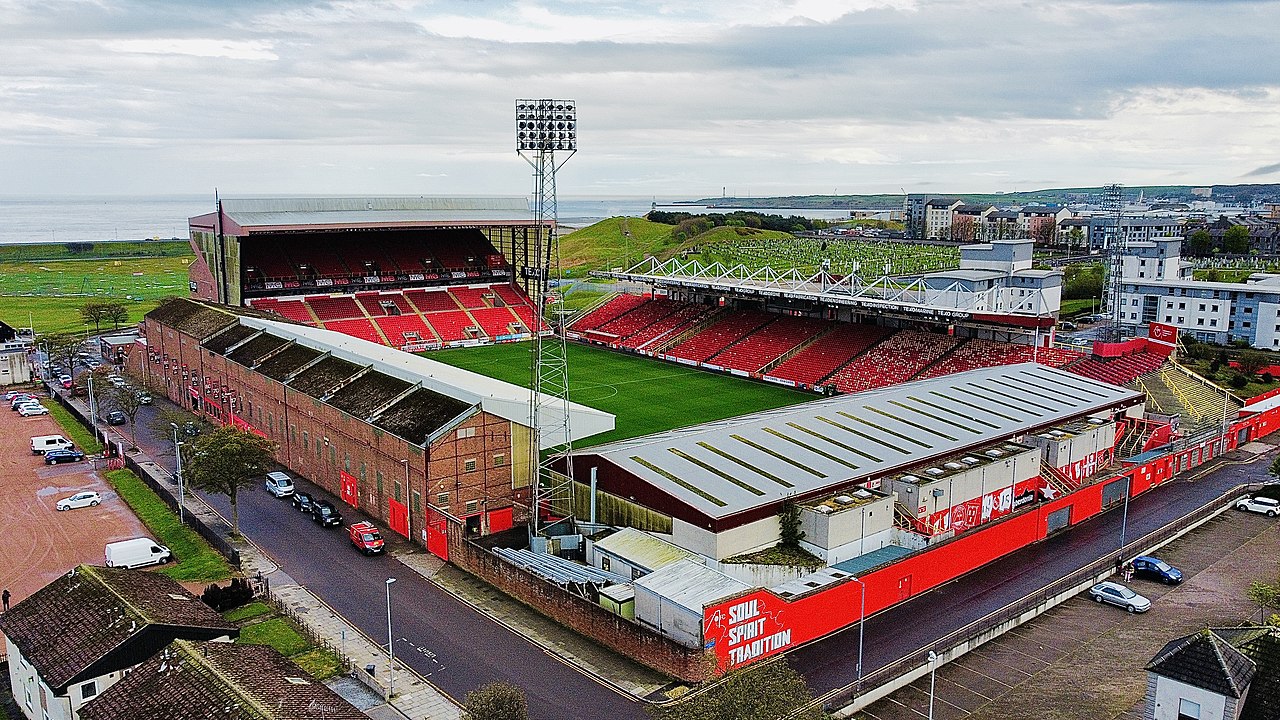


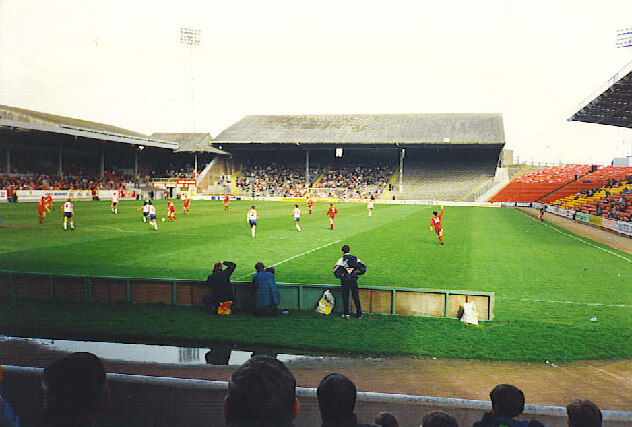

Overview
The stadium is arranged as four distinct stands around a rectangular playing surface. Seating capacity today is commonly quoted at about 21,600 (sometimes rounded to 22,000), reflecting its all‑seater configuration and the presence of directors’ and hospitality areas. Historically Pittodrie accommodated much larger crowds when standing terraces were in use, with the record attendance recorded during the mid‑20th century.
Layout and principal features
The Main Stand houses the club offices, changing rooms and a large proportion of seated supporters. Opposite it is the South Stand, which normally includes a section reserved for visiting fans; allocation is varied for high‑profile fixtures to ensure segregation and stewarding. The Merkland Road Stand is commonly associated with family areas and quieter spectator sections. The most modern element is the two‑tier East Stand, frequently named the Richard Donald Stand or the Beach End, which added corporate hospitality boxes and increased the vertical profile of the ground when it was completed in the early 1990s.
History and development
Football was played at Pittodrie by the original Aberdeen club from the late 19th century. The ground hosted a 7–1 win over Dumbarton in its early years. After local clubs merged in 1903, the newly formed Aberdeen side continued at Pittodrie; on 15 August 1903 the reconstituted club drew a crowd for its first match at the site. The club later bought the ground in 1920 and undertook a series of improvements over subsequent decades to meet changing safety and comfort standards.
Records and notable matches
Pittodrie’s record attendance was set during a Scottish Cup tie on 13 March 1954, when more than 45,000 spectators were present for a high‑profile cup fixture. In the modern era, attendances are constrained by seating and safety regulations, but the ground has staged many memorable domestic ties and hosted visiting supporters for major matches. For some fixtures involving Glasgow’s leading clubs, known collectively as the Old Firm, seating allocations and stewarding plans are adjusted to reflect crowd management requirements.
Redevelopment and relocation discussions
Over the 21st century, club officials, supporters and local authorities have periodically examined options for upgrading Pittodrie or moving to a purpose‑built stadium elsewhere in the city to improve access, parking and commercial facilities. Any such proposals weigh the practical benefits of modern amenities against the strong historical and emotional ties between the club and its existing neighbourhood. Proposals have included refurbishment of existing stands, improved spectator facilities and consideration of a new multi‑use venue, but detailed plans have varied with time and consultation.
Community role and transport
Beyond first‑team football, Pittodrie has served the local community by hosting reserve and youth matches, club events and occasional non‑football gatherings. The ground is reached by local roads and public transport serving Aberdeen, with matchday arrangements developed to manage arrival, departure and stewarding for supporters.
Legacy and significance
Pittodrie occupies an important place in the history of modern Scottish stadiums. In the late 1970s it was described in media and club sources as one of Britain’s earliest fully covered, all‑seated grounds after a programme of modernisation. Its blend of traditional stands and later commercial additions illustrates how many long‑established football venues have adapted to changing safety regulations and commercial realities while retaining strong links with their supporter base.
- Capacity: commonly cited around 21,600–22,000 seated.
- Record attendance: c. 45,061 for a 1954 Scottish Cup tie.
- Principal stands: Main Stand, South Stand, Merkland Road, Richard Donald (East/Beach End).
- First used by Aberdeen clubs in the late 19th century; occupied by the merged Aberdeen club from 1903 and purchased by the club in 1920.
Questions and answers
Q: What is Pittodrie Stadium?
A: Pittodrie Stadium is a stadium in Aberdeen, Scotland. It is mostly used as a football stadium for Aberdeen F.C.
Q: When was the first game played at Pittodrie?
A: The first game played at Pittodrie was on August 15 1903, when 8,000 spectators turned up to watch the new Aberdeen draw 1-1 against Stenhousemuir.
Q: How many seats does the stadium have?
A: The stadium contains 21,600 seats, but due to the directors' boxes, some sources place this figure at 22,000.
Q: What was the record attendance for a match held at Pittodrie?
A: The record attendance occurred on March 13 1954 when 45,061 spectators turned up for a Scottish Cup match between Aberdeen and Hearts.
Q: What are the four stands that make up Pittodrie Stadium?
A: The four stands that make up Pittodrie Stadium are the Main Stand which houses club offices and players facilities; Merkland Road Stand which is primarily for families; South Stand which has a quarter of its section used to accommodate travelling supporters except for Old Firm games where half of this stand is given to visiting fans; and Richard Donald stand at the East or Beach End of ground which is modern two–tier design completed in 1993 containing hospitality suites.
Q: When did Pittodrie become an all covered all-seater stadium?
A: In 1978, Pittodrie became the first all covered all-seater stadium in Britain.
Q: Is there any plan to move to another stadium in Aberdeen?
A:Yes,the club are examining a move to a new stadium in Aberdeen
Related articles
Author
AlegsaOnline.com Pittodrie Stadium — Aberdeen's historic football ground Leandro Alegsa
URL: https://en.alegsaonline.com/art/77145
Sources
- scotprem.premiumtv.co.uk : "History of Pittodrie Stadium"
- telegraph.co.uk : "Aberdeen ready to ditch Pittodrie"
- stewartmilne.com : "Projects – Richard Donald Stand, Pittodrie"