
Pitcairn Islands: remote British Overseas Territory in the South Pacific
A concise overview of the Pitcairn Islands: geography, population, history (Bounty mutineers), culture, government, economy, conservation and notable distinctions.
Overview
The Pitcairn Islands are a tiny group of volcanic and coral islands in the southern Pacific Ocean, administered as a British Overseas Territory. Only one island is permanently settled: Pitcairn Island, where the single village, Adamstown, is located. The territory is widely known for its unusual history and very small population — estimated at about 50 residents in 2019 — which makes it one of the least populated national jurisdictions in the world.
Image gallery
10 Images






Geography and environment
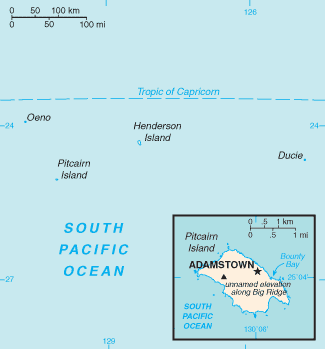
The four main islands and atolls form a remote cluster spread across thousands of square kilometres of ocean. They include:
- Pitcairn Island – the only inhabited island, volcanic and rugged with steep cliffs and a small coastal plain.
- Henderson Island – an uninhabited raised coral atoll notable for its intact native flora and seabird colonies.
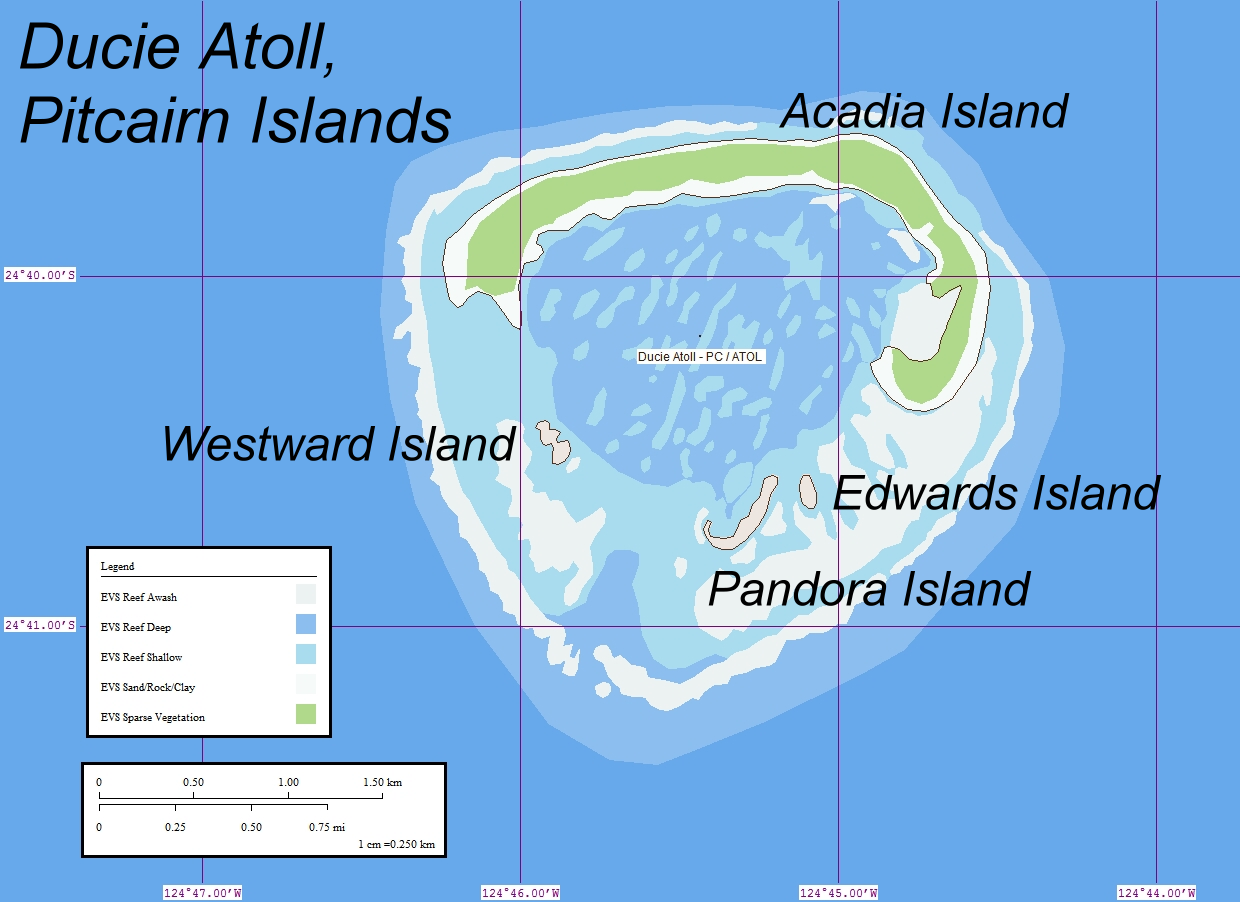
- Ducie Atoll – a low-lying coral atoll with seabird nesting sites.
- Oeno Atoll – a small cay used occasionally for recreation and fishing by Pitcairn residents.
The whole territory has a very small land area (roughly several dozen square kilometres) but occupies a far larger exclusive economic zone in the Pacific. Henderson Island is internationally recognised for its largely undisturbed ecology and significant seabird populations.
People, language and culture
The present community traces its ancestry largely to a group of British mutineers from HMS Bounty and the Polynesian men and women who accompanied them. That legacy is visible in local surnames such as Christian, Warren, Young and Brown. Everyday language is English, while a local creole known as Pitkern — blending 18th‑century English with Tahitian — is used informally. The community is small and tightly knit, relying on subsistence agriculture, fishing, handicrafts and interisland cooperation.
History and origins
The islands became widely known after seafarers associated with the famous mutiny on the Bounty settled there in the late 18th century, bringing Tahitian companions who shaped the islanders' culture and language. This episode has inspired many books and films and remains a central part of the islands’ identity. The territory later came under British administration and today retains constitutional and legal ties to the United Kingdom; more information about that relationship is available from official sources such as the United Kingdom government pages.
Government, economy and access
Pitcairn is governed as a British Overseas Territory with local administration carried out by an elected Island Council and oversight by a governor appointed by the UK. Life on Pitcairn is shaped by remoteness: there is no airport, and supplies and visitors arrive by boat, typically via other Pacific islands. The economy is small-scale and mixed: subsistence farming and fishing, the sale of handcrafted goods and philatelic products, a limited amount of tourism, and remittances or aid. Practical services and external representation are linked to regional partners and the UK.
Notable facts and conservation
The islands are notable for several reasons: their direct connection to the story of the Bounty and its mutineers (Bounty mutineers), the role of Polynesian settlers from Tahiti (Tahitians) and their wider cultural links within the Pacific (Polynesians). Henderson Island's largely intact ecosystems attract scientific interest and international protection efforts. The islands illustrate the challenges of sustaining very small, remote communities while balancing cultural heritage, conservation and modern governance.
Questions and answers
Q: Where are the Pitcairn Islands located?
A: The Pitcairn Islands are located in the southern Pacific.
Q: On which island do people live in the Pitcairn Islands?
A: People only live on the second-largest of the four islands, which is named Pitcairn.
Q: Who governs the island of Pitcairn?
A: The island of Pitcairn is governed by the United Kingdom.
Q: What is the population of the Pitcairn Islands?
A: In 2019, the Pitcairn Islands had a population of only 50 people.
Q: What is the historical significance of the Pitcairn Islands?
A: The Pitcairn Islands are best known as home of the descendants of the Bounty mutineers and the Tahitians (or Polynesians) who accompanied them, an event retold in numerous books and films.
Q: How does the history of the Pitcairn Islands show in the surnames of the islanders?
A: The history of the Pitcairn Islands shows in the surnames of many of the islanders, as there are only four family names (as of 2010): Christian, Warren, Young, and Brown.
Q: How many islands are there in the Pitcairn Islands group?
A: There are four islands in the Pitcairn Islands group.
Related articles
Author
AlegsaOnline.com Pitcairn Islands: remote British Overseas Territory in the South Pacific Leandro Alegsa
URL: https://en.alegsaonline.com/art/77118
Sources
- commons.wikimedia.org : Pitcairn Islands
- cia.gov : The CIA Government factbook
- winthrop.dk : "Major John Pitcairn"
- radioaustralia.net.au : Pitcairn Island proclaims new constitution
- thecommonwealth.org : Commonwealth Secretariat - Member States
- wikidata.org : wikidata.org/wiki/Q35672
- d-nb.info : 4115982-2
- musicbrainz.org : 27b5df20-d817-3126-b3a0-1be6a75f7496
- id.ndl.go.jp : 00712291
- aleph.nkp.cz : ge339161
- viaf.org : 268286621
- worldcat.org : lccn-n88295741