
Pit Corder: Pioneer of Error Analysis in Applied Linguistics
Pit Corder (1918–1990), British applied linguist who pioneered error analysis in second-language learning and helped shift language teaching research toward learner-centered approaches.
Overview
Pit Corder (6 October 1918 – 27 January 1990) was a British linguist and academic whose work helped reframe how researchers and teachers view language learners' mistakes. Serving as a professor professor of linguistics at the University of Edinburgh, Corder argued that learners' errors are not merely failures but data revealing how a learner is processing and acquiring a new language.
Image gallery
2 Images
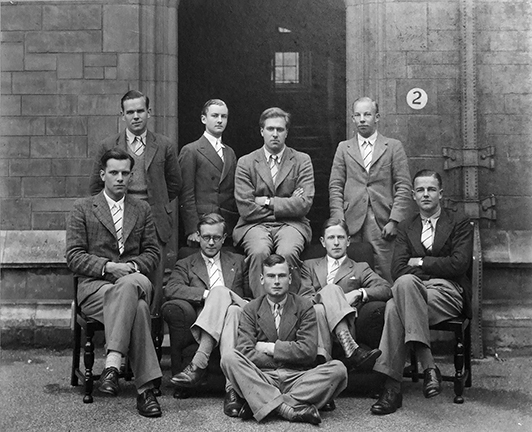
Key ideas and concepts
Corder is best known for establishing error analysis as a systematic research approach. Rather than treating every deviation from the target language as a defect, he differentiated between slips and systematic errors: slips are performance lapses, while errors reflect a learner's developing internal system. This perspective encouraged scholars to interpret errors as evidence of cognitive processes and stages in language development.
Contributions and methods
In the 1960s and after, Corder promoted careful collection and categorization of learner language, advocating descriptive and explanatory study of errors. His approach contrasted with the then-popular contrastive analysis hypothesis, which predicted errors mainly from differences between native and target languages. Corder showed that many errors arise from learners' internal hypothesis-making about the new language, a view that anticipated later concepts such as interlanguage.
Applications in teaching and assessment
By treating errors as informative, Corder's work influenced classroom practice and materials design. Teachers were encouraged to diagnose recurring error patterns, use errors diagnostically in corrective feedback, and design exercises that address developmental needs rather than merely enforcing native norms. His ideas also impacted testing and curriculum development by promoting error-aware assessment.
Roles and professional activity
Beyond research, Corder contributed to the institutional development of applied linguistics. He served as the first chairman of the British Association for Applied Linguistics from 1967 to 1970, helping to establish a forum for research and professional exchange across the field. His academic posts included long-term work at Edinburgh, where he taught and supervised generations of researchers.
Legacy and notable facts
Corder's insistence that errors contain pedagogical and theoretical value shifted the discipline toward a learner-centered, empirically grounded approach. His work remains a touchstone in introductions to second-language acquisition and applied linguistics, and his ideas continue to inform error-focused classroom techniques and research designs. While later scholars refined and extended his hypotheses, Corder's contribution is widely recognized as foundational to modern studies of learner language.
- Main publication themes: error analysis, learner language, applied linguistics methodology
- Distinction highlighted: errors (systematic) vs. mistakes (non-systematic)
- Institutional role: early leader in professional applied linguistics organizations
Questions and answers
Q: Who was Pit Corder?
A: Pit Corder was a professor of linguistics at the University of Edinburgh.
Q: What was Pit Corder's important work?
A: Pit Corder's important work was studying errors that language learners make, which is called error analysis.
Q: What is error analysis?
A: Error analysis is the study of errors that language learners make.
Q: What was Pit Corder's role in the British Association for Applied Linguistics?
A: Pit Corder was the first chairman of the British Association for Applied Linguistics, serving from 1967-70.
Q: When was Pit Corder born and when did he pass away?
A: Pit Corder was born on October 6th, 1918 and passed away on January 27th, 1990.
Q: What was Pit Corder's field of expertise?
A: Pit Corder's field of expertise was linguistics.
Q: Where did Pit Corder teach?
A: Pit Corder taught at the University of Edinburgh.
Related articles
Author
AlegsaOnline.com Pit Corder: Pioneer of Error Analysis in Applied Linguistics Leandro Alegsa
URL: https://en.alegsaonline.com/art/77112
Sources
- baal.org.uk : "Notes on the History of the British Association for Applied Linguistics"
- dx.doi.org : "Corder, Stephen Pit (1918–1990)"
- oup.com : UK public library membership
- dx.doi.org : 10.1093/elt/40.3.185