
Pippi Longstocking (book)
Children's novel by Astrid Lindgren first published in Sweden in 1945, introducing unconventional, strong‑willed Pippi and her adventures; known for its humor, themes of independence and many adaptations.
Overview
Pippi Longstocking is a children's novel by Swedish author Astrid Lindgren, first published in Sweden on 26 November 1945. The original Swedish title is Pippi Långstrump. The book introduces a highly individualistic and imaginative girl, Pippi, and is the opening volume of a popular series that became a staple of 20th‑century children's literature.
Image gallery
2 Images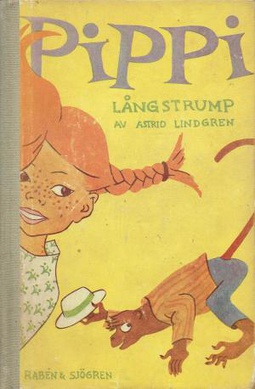

Plot summary
The narrative follows Pippi, an eccentric, freckled, red‑haired child who lives alone at Villa Villekulla with a small monkey and a horse. She befriends the neighbouring children Tommy and Annika and invites them into a world of playful rebellion against adults' rules. Episodes mix everyday domestic life with comic episodes that showcase Pippi's unusual strength, whimsical logic and generosity.
Characters
Central figures include Pippi herself; her pet monkey, Mr. Nilsson; the horse she keeps on the porch, referenced here as her horse; and the siblings Tommy and Annika. Adults in the stories are often bemused, exasperated or protective, providing a foil to Pippi's unconventional behaviour.
Themes and style
Lindgren's prose combines humor, slapstick and a child‑centred imagination. Recurring themes are independence, resilience, friendship and a sceptical attitude to rigid authority. Pippi's practical kindness, refusal to conform and literal takes on adult conventions invite both amusement and reflection about childhood autonomy and social norms.
Publication, translations and editions
Originally published in Swedish, the book was translated into many languages and became internationally known; by 2009 it had appeared in about 64 languages (translations). Over time, editions and translations have varied in presentation, illustrations and some wording to suit different cultures and later sensibilities.
Adaptations and cultural impact
The character of Pippi inspired numerous adaptations for radio, film, television and theatre and became an iconic figure in children's culture. The stories have influenced generations of readers and are often cited in discussions of children's rights, imaginative play and gender roles in literature.
Reception and considerations
Critics and educators have praised the books for their vivacity and celebration of independence, while some commentators have discussed how attitudes in older editions reflect historical cultural assumptions that later editors and translators sometimes addressed. Scholarly interest has focused on the books' role in shaping modern children's fiction and on Lindgren's contribution to the genre.
Notable facts
- Pippi is famed for her physical strength, inventive solutions and nonconformity.
- The series began with this volume and expanded into further books and stories; the works continue to be reprinted and adapted internationally.
- Translations, stage productions and screen adaptations have kept the character present in popular culture across many countries.
For information on the author and further reading, see materials associated with Astrid Lindgren, translations and series entries such as the one linked to the series and historical notes on the original Swedish publication in Sweden. Additional references include bibliographies of translations (translation lists) and character studies that discuss Pippi's supporting cast, including Mr. Nilsson and the horse.
Questions and answers
Q: Who is the author of the book Pippi Longstocking?
A: The author of Pippi Longstocking is Astrid Lindgren.
Q: When was Pippi Longstocking first published in Sweden?
A: Pippi Longstocking was first published in Sweden on November 26, 1945.
Q: What is Pippi Longstocking about?
A: Pippi Longstocking is a novel about a girl who lives alone in a house with her pets, befriends her neighbors, and has many adventures.
Q: What are the names of Pippi Longstocking's pets?
A: Pippi Longstocking's pets are a monkey named Mr. Nilsson and a horse that she keeps on the porch.
Q: Who does Pippi Longstocking befriend in the book?
A: Pippi Longstocking befriends Tommy and his sister Annika, who live next door to her.
Q: How many languages has Pippi Longstocking been translated into as of 2009?
A: As of 2009, Pippi Longstocking has been translated into 64 languages.
Q: Is Pippi Longstocking part of a series of books?
A: Yes, Pippi Longstocking is the first in a series of books about Pippi Longstocking.
Related articles
Author
AlegsaOnline.com Pippi Longstocking (book) Leandro Alegsa
URL: https://en.alegsaonline.com/art/77060
Sources
- astridlindgren.se : "Characters in Other Countries"