
Pinto horse: coat patterns, history, and distinctions
A Pinto is any horse with large white patches on a darker coat; it is a color pattern, not a breed. Learn about common patterns, genetics, history, uses, and how Pintos differ from Paints and Appaloosas.
A Pinto horse is any equine whose coat displays large, distinct patches of white together with another base color. The term describes a color pattern rather than a single breed. For a general overview of spotted horses see spotted horse. Pintos are often compared with the Paint horse, but the key difference is that Paint is a recognized breed while Pinto refers only to the coat pattern and can occur in many breeds.
Image gallery
10 Images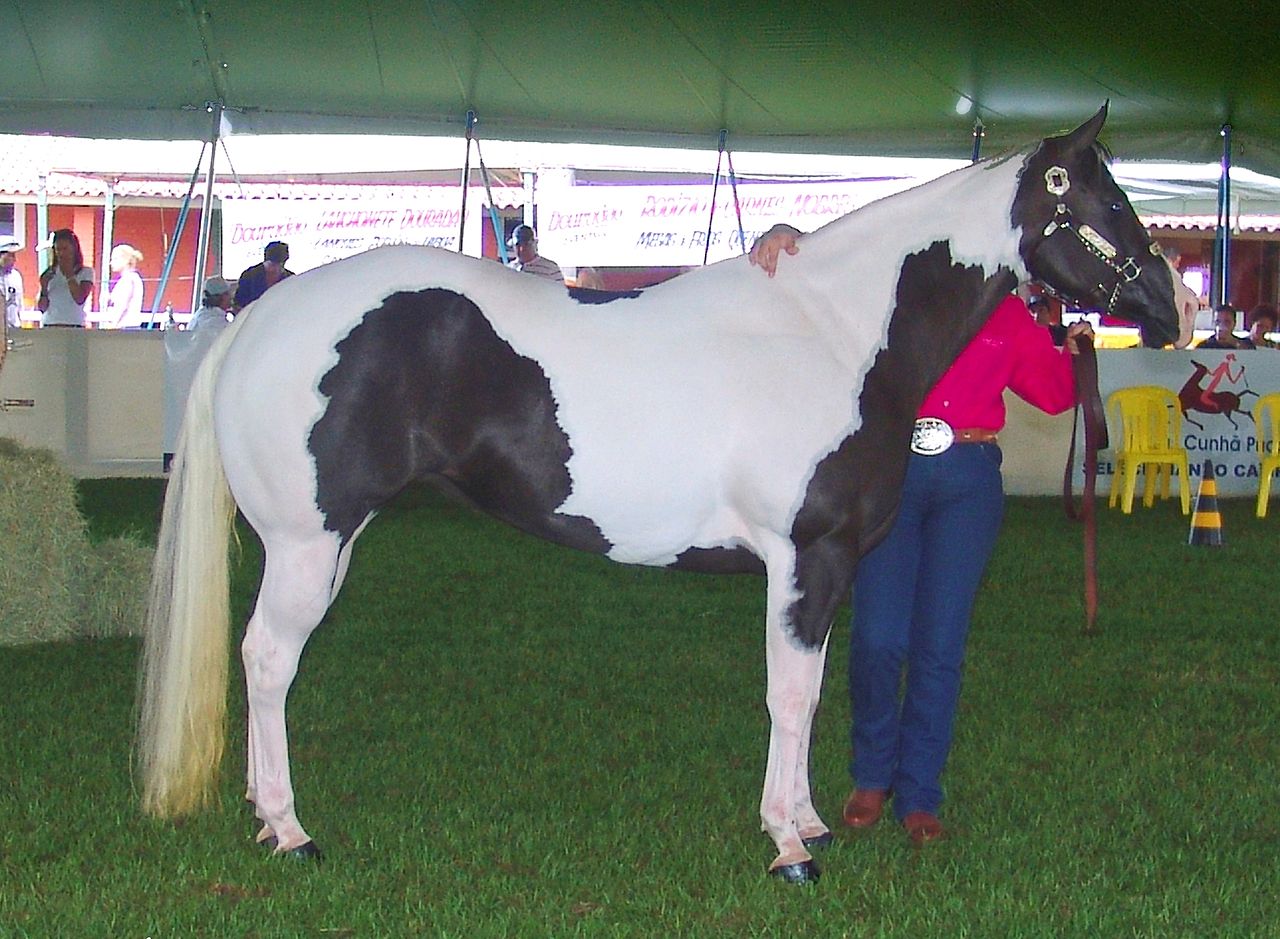




Common patterns and appearance
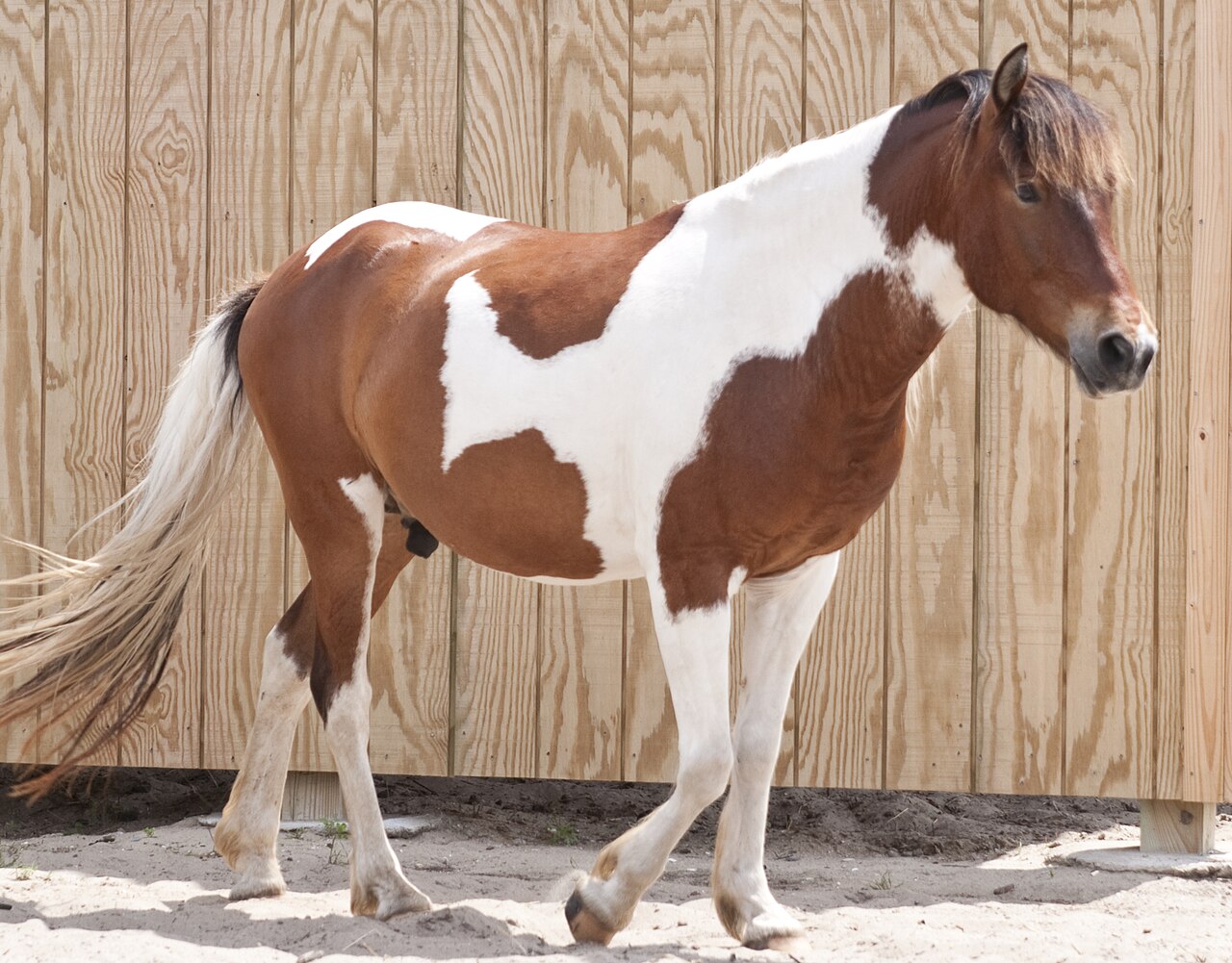
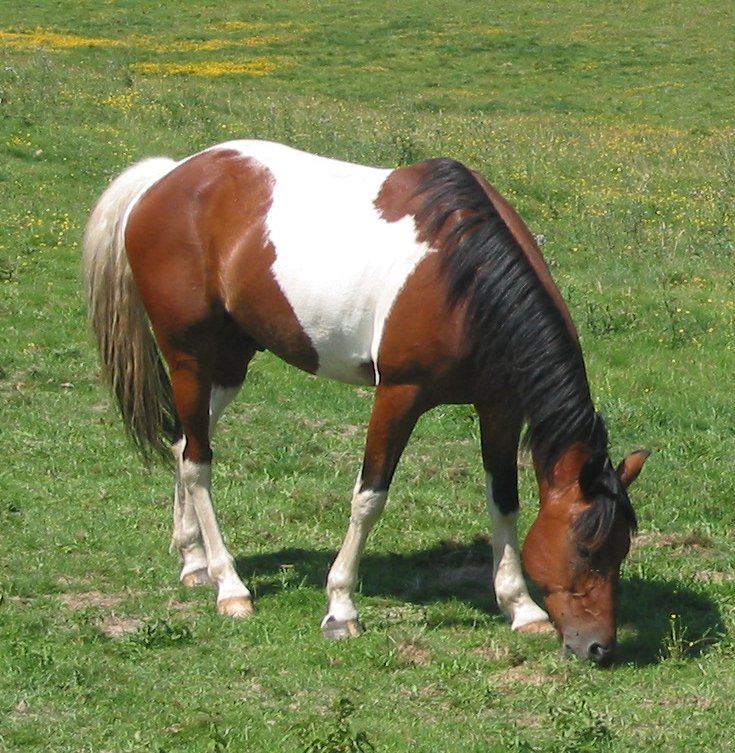
Pinto markings vary widely. Several descriptive pattern types are commonly used to classify appearances and to guide registration: tobiano, overo, tovero (a combination), sabino, and splashed white. Tobiano typically presents with large, rounded white legs and a mostly white torso crossed by colored patches. Overo designs are more irregular and often display jagged edges and dark backs. Sabino produces roaning and high white on the legs and face, while splashed white can look like the horse was dipped in white paint, often with crisp edges and blue eyes.
Genetics and health considerations
The genetic basis of pinto patterns involves several different genes and interactions. Tobiano is associated with variation in a gene linked to white spotting, while overo patterns arise from different genetic mechanisms. Some patterns have health implications: certain overo-related genes, when present in two copies, have been linked to the lethal white foal syndrome, a serious condition in newborns. Responsible breeders test for known genetic markers and plan matings to reduce health risks.
History and cultural significance
Spotted and piebald horses have been valued in many cultures for centuries. In North America, horses with large white patches were particularly prized by various Indigenous groups and later by western riders and ranchers for their striking appearance and visibility. Organized interest in Pinto-colored horses grew into registries and breed clubs in the twentieth century that focus on color, type, and promotion of pinto horses for sport and leisure.
Uses, showing, and registration
Pinto horses are popular in pleasure riding, western and English showing, parades, movies, and as general-purpose mounts. Multiple registries exist: some accept any breed with qualifying pinto markings, others require specific pedigree or conformation standards. Owners seeking competition or breeding records should check the rules of the registry that best matches their horse’s type.
Distinctions and notable facts
- Pinto vs Paint: Pintos are defined by color; Paints are a breed that often carries pinto patterns but also has specific lineage requirements.
- Pinto vs Appaloosa: Appaloosas show leopard complex spotting and usually exhibit mottled skin, striped hooves, and visible white sclera—traits that differ from pinto patterns.
- Because the pinto pattern can appear in many breeds, you can find a wide range of body types and temperaments among Pinto-colored horses.
For further reading on spotting terminology and registration options consult authoritative breed or color registries and veterinary genetic resources. Whether admired for aesthetics, utility, or tradition, Pinto-colored horses remain one of the most recognizable and celebrated horse colorings worldwide.
Questions and answers
Q: What is a Pinto horse?
A: A Pinto horse is a horse with patched spots of white or another color.
Q: Is Pinto horse a breed?
A: No, Pinto horse is not a breed, but rather a coat color.
Q: What is the difference between Pinto horses and Paint horses?
A: Pinto horses are not a breed, but a coat color that can be present in any breed, including Paint horses. Paint horses, on the other hand, are a specific horse breed.
Q: Can any horse breed be a Pinto horse?
A: Yes, any horse breed can potentially have a coat color that makes them a Pinto horse.
Q: What is the main distinguishing feature of a Pinto horse?
A: The main distinguishing feature of a Pinto horse is the patched spots of white or another color on their coat.
Q: Are Pintos and Paints easily mistaken for each other?
A: Yes, Pintos and Paints can look very similar, and are often confused for each other.
Q: Can a horse be both a Pinto and a Paint?
A: Yes, a horse could be a Paint breed with a Pinto coat color pattern.
Related articles
Author
AlegsaOnline.com Pinto horse: coat patterns, history, and distinctions Leandro Alegsa
URL: https://en.alegsaonline.com/art/77018
Sources
- pintohorseregistry.com : pintohorseregistry.com
- animal.discovery.com : animal.discovery.com
- pinto.org : pinto.org