
Pint (unit of volume)
A pint is a traditional unit of volume used in Imperial and United States customary systems. It has distinct imperial, US liquid and US dry definitions and is commonly used for beverages and food measures.
The pint is a longstanding measure of volume used primarily for liquids and some packed foods. It exists in a few different legal forms: the imperial pint used in the United Kingdom and several Commonwealth countries, the United States liquid pint used for most beverages and cooking, and the United States dry pint used historically for some agricultural produce. Each version is tied to its own system of quarts, gallons and fluid ounces and therefore differs in exact size.
Image gallery
5 Images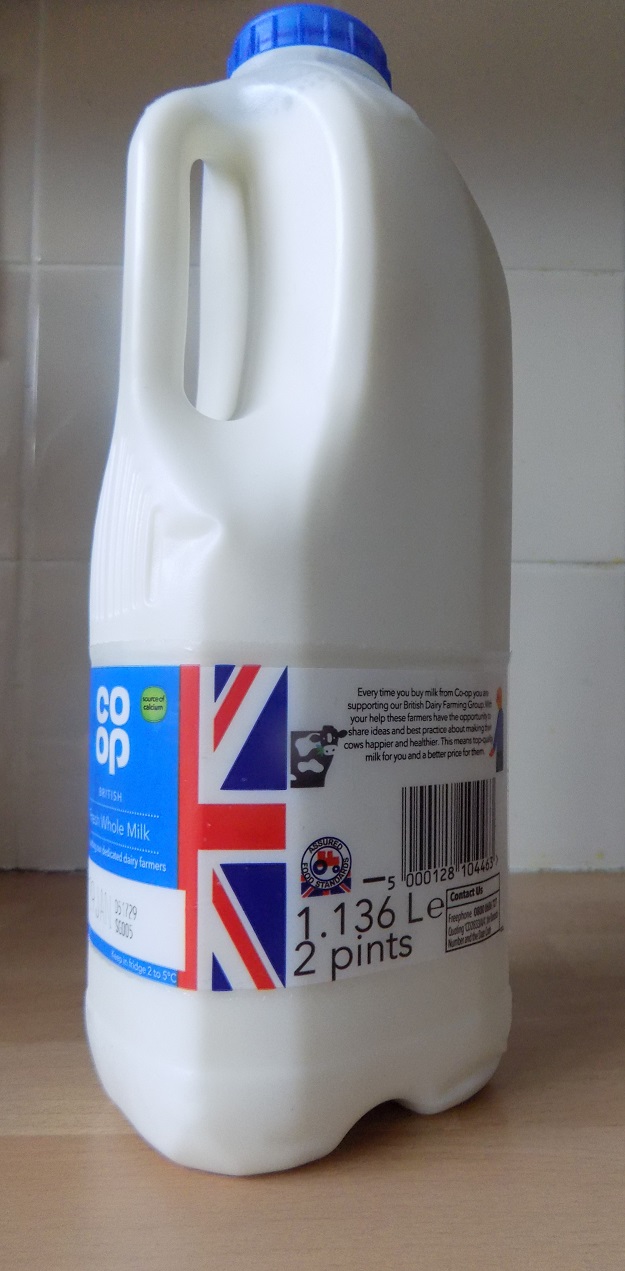


Definitions and conversions
In both the imperial and US customary systems a pint is defined as one half of a quart and one eighth of a gallon within that system, but the base sizes of the quart and gallon differ. Commonly cited exact values are:
- Imperial pint: 568.26125 millilitres (20 imperial fluid ounces)
- US liquid pint: 473.176473 millilitres (16 US fluid ounces)
- US dry pint: 550.610471 millilitres (used for some dry goods)
Because the imperial fluid ounce is about 3.9% smaller than the US fluid ounce but the imperial pint contains 20 such ounces (vs. 16 in the US liquid pint), an imperial pint is roughly 20% larger than a US liquid pint. In shorthand the unit is abbreviated "pt." and appears in recipes, packaging and trade descriptions.
History and origin
The pint has medieval origins in Europe and entered English usage via Middle English and Old French terms such as "pinte." Like many traditional measures, local variations developed before national systems standardized sizes in the 18th and 19th centuries. The modern imperial system (established in the 19th century) and the US customary system (derived from older English measures) preserved separate legal definitions, which is why the same name denotes different volumes today.
Common uses and examples
Pints are frequently used for beverages (especially beer and cider), for portions in casual dining, and for selling certain produce such as berries. In the UK a pint glass typically refers to the 20-imperial-fluid-ounce measure, while in the US a pint glass or container usually refers to the 16-US-fluid-ounce quantity. In cooking, recipes sometimes specify a pint; because of the difference between systems it is important to confirm whether a US or imperial pint is intended.
Practical distinctions and notes
- The same name across systems can cause confusion in international contexts; many recipes and product labels now list metric equivalents (litres or millilitres) to avoid ambiguity.
- Retail and legal standards may require sellers to indicate volumes explicitly; in some countries certain drinks are commonly sold by the pint as a standard serving size.
- For dry goods the US dry pint is used in some agricultural contexts, though metric mass or volume measures are increasingly common.
For more on the broader measurement systems that define these values, see Imperial units and United States customary units. Understanding which pint is meant—imperial, US liquid, or US dry—helps avoid errors in cooking, trade, and scientific contexts.


Units and measurements
Unit symbols (unofficial): Imp. pt., US dry pt., US liq. pt.
- 1 Imp. pt. (Great Britain and Ireland) = 4 gill = 20 imperial fluid ounces = 34.67743125 inch³ = 568.26128524935 cm³ (ml)
1 Imp. gallon = 8 Imp. pt.
- 1 US liq. pt. = 4 liq. gill = 16 US fluid ounces = 28.875 inch³ = 473.176473 cm³.
1 US gallon = 8 US pt.
- 1 US dry pt. = 33.6003125 inch³ = 550.6104713575 cm³.
1 bushel = 8 corn gallon = 64 US dry pt.
- 20,000 Imp. pt. = 24019 US liq. pt.
1 Imp. pt. = 1.20095 US liq. pt.
- 5,376,050 Imp. pt. = 5548389 US dry pt.
1 Imp. pt. ≈ 1.032057 US dry pt.
- 92,400 US dry pt. = 107,521 US liq. pt.
1 dry pt. ≈ 1.163647 US liq. pt.
- 1 metric pint = 2 metric cup = 500 cm³ = 0.5 litre
The Scottish pint had divergent values:
- 1 Pinte = 82.25 Paris cubic inches = 1.6303 litres
The French pinte was regionally different:
- Paris: 1 pinte (single) = 46.05 Paris cubic inches
- Paris for milk 1 pinte = 92.1 Paris cubic inches (after the revolution 1.5 times pinte (single))
- Saint-Denis: 1 pinte = 73.875 Parisian cubic inches
- Saint-Maur: 1 Pinte = 84 Parisian cubic inches
- Laugey (?): 1 pinte = 69.535 Parisian cubic inches
A half pinte was called a chopine, a quarter pinte a demi-fetier or 1/5 posson, and a tenth pinte a demi-posson.
Usage
Beer and cider, among other things, are still served by the pint and half-pint in the United Kingdom. Milk is also available in the United Kingdom in both pint and metric retail quantities, depending on the producer.
The standard volume of electric kettles, which first became popular, particularly in the UK, is nominally 1.7 litres, but actually 3 pints. Even coffee machines for the catering trade marketed in the EU by American manufacturers often have water tanks with "crooked" (i.e. measured in liquid pints) volumes.
In Australia, since the changeover to the metric system, the half litre is referred to as the (metric) pint, as it has been in the French restaurant trade since the early 2000s. Beer in Australia is now served in 570 ml glasses, which is close to the original 568 ml of the Imperial Pint, in South Australia also in 425 ml glasses.
In Germany, dispensing measures in centilitres and litres are common. The volume indication "pint" or "pint" is not permissible for commercial dispensing (§ 27 of the Ordinance on Measurement and Calibration).
Colloquially, the word "Pinte" is often used in German as a synonym for the term pub. In Flanders, pint means a pilsner, served in 250 ml glasses. In Cologne, the pint developed as a unit of measurement for alcoholic beverages.
Questions and answers
Q: What is a pint?
A: A pint is a unit of volume used in both imperial units and United States customary units.
Q: Are there different types of pints used in different countries?
A: Yes, there are three types of pints used in different countries.
Q: How much is an imperial pint and US pint in relation to a quart and gallon?
A: An imperial pint and US pint both equal 1/2 of a quart and 1/8 of a gallon.
Q: How does the size of an imperial fluid ounce compare to a US fluid ounce?
A: An imperial fluid ounce is approximately 4% smaller than a US fluid ounce.
Q: How many more fluid ounces does an imperial pint have compared to a US pint?
A: An imperial pint has 4 more fluid ounces than a US pint.
Q: What is the percentage difference in size between an imperial pint and a US pint?
A: An imperial pint is approximately 20% larger than a US pint.
Q: Is a pint only used in imperial units?
A: No, a pint is used in both imperial units and United States customary units.
Related articles
Author
AlegsaOnline.com Pint (unit of volume) Leandro Alegsa
URL: https://en.alegsaonline.com/art/77015