
Pine (Pinus): overview, characteristics, distribution, and uses
Pines (genus Pinus) are evergreen conifers of the family Pinaceae, native across the Northern Hemisphere, valued for timber, resin, ecological roles, and some exceptionally long-lived individuals.
Overview
Pines are trees and shrubs of the genus Pinus in the pine family, Pinaceae. They form one of the most widely recognized groups of conifers and are a dominant element of many temperate and subtropical landscapes. Botanists generally recognize around 120–130 species, with several regional varieties and many synonyms used in older literature.
Image gallery
10 Images




Characteristics
Pines are typically evergreen with needle-like leaves grouped in bundles called fascicles. Needles vary in length and number per fascicle depending on species. Reproduction is by woody cones: pollen cones and seed cones are usually borne on the same tree. Many pines produce resin, a sticky substance that helps wound sealing and defends against insects and pathogens. Bark, growth form and cone morphology also vary widely among species.
Distribution and habitat
Members of the genus are native to much of the Northern Hemisphere, from arctic and subarctic regions to subtropical and montane areas. They occupy diverse habitats including boreal forests, Mediterranean woodlands, mountain slopes and sandy coastal soils. Pines are absent naturally from most of the Southern Hemisphere except where introduced by humans.
Ecology and lifespan
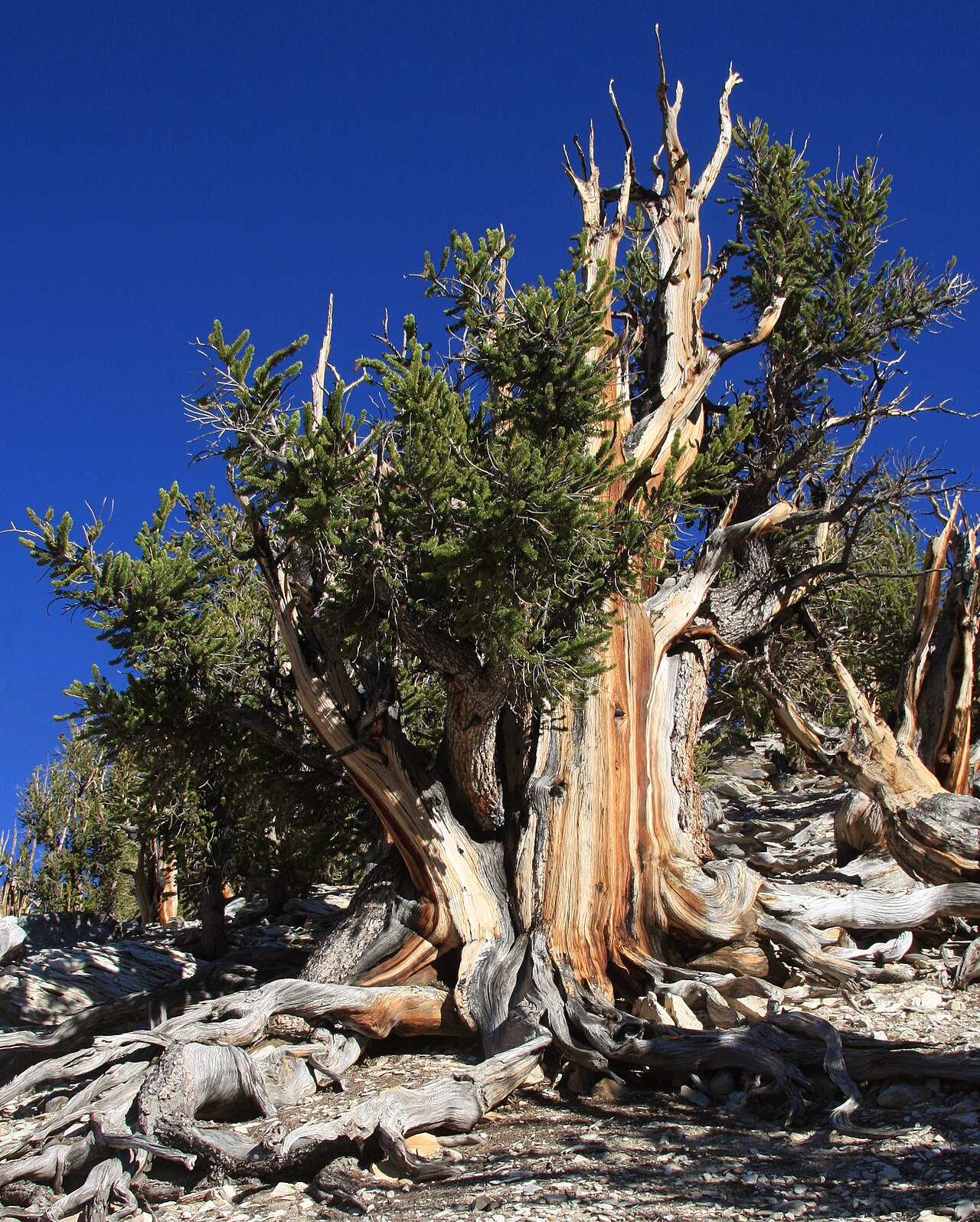
Pines play important ecological roles: they provide habitat and food for insects, birds and mammals, influence soil development, and often dominate successional stages after disturbance such as fire. Many species are long-lived; some, like the Great Basin bristlecone pine (Pinus longaeva), are among the oldest known living trees, with individual specimens several thousand years old.
Uses and cultural importance
Humans have long used pines for timber, construction, paper pulp and fuel. Resin and turpentine have industrial and traditional applications. Pines are widely planted for timber plantations, erosion control and ornamental landscaping. They also have cultural significance in many societies and appear in art, religion and folklore.
Notable species and distinctions
Species differ markedly: some are tall forest trees, others are shrubby and adapted to harsh soils. Important commercial species include various white, red and pines named for regional or morphological groups. Conservation status varies from common and widespread to rare or endangered, often because of habitat loss, disease or overexploitation.
Further resources
- Taxonomy and classification
- Conifer overview
- Family Pinaceae details
- Pinaceae family resources
- Synonyms and nomenclature
- Distribution maps
- North American pines
- Arctic and subarctic occurrences
- Central American records
- Caribbean occurrences
- European pine flora
- Iberian Peninsula pines
- Scottish pine populations
- Eurasian species
- Asian pine diversity
- Japanese pines
- Philippine records
- Himalayan species
- African occurrences
- Longevity and growth
- Shrubby and dwarf pines
- Famous ancient trees
- White Mountains specimens
For detailed species accounts, identification keys and conservation status consult regional floras and botanical databases linked above. Practical management and planting guidance is provided by forestry services and horticultural references where pines are cultivated or conserved.
Questions and answers
Q: What is the family name of pines?
A: Pines belong to the family Pinaceae.
Q: How many species of pines are listed in The Plant List of the Royal Botanic Gardens, Kew and Missouri Botanical Garden?
A: The Plant List of the Royal Botanic Gardens, Kew and Missouri Botanical Garden lists 126 species of pines.
Q: Where does the Great Basin bristlecone pine, the world's oldest living tree, grow?
A: The Great Basin bristlecone pine, the world's oldest living tree, grows in the White Mountains of California.
Q: In which parts of the world do pines live?
A: Pines live in almost the entire Northern Hemisphere, in North America, Europe, Asia, some northern parts of Africa, and north of Majorca (Mallorca) on the rugged mountains.
Q: How tall do pines typically grow?
A: Pines are long-lived trees (rarely large shrubs), typically reaching heights of 5–70 metres tall.
Q: What is the age range for pines?
A: Pines can live for ages of 100–1,000 years, some even more.
Q: What is the oldest living tree in the world?
A: The Great Basin bristlecone pine, Pinus longaeva, has an individual named "Methuselah" which is the world's oldest living tree, estimated to be 4,600 years old.
Related articles
Author
AlegsaOnline.com Pine (Pinus): overview, characteristics, distribution, and uses Leandro Alegsa
URL: https://en.alegsaonline.com/art/76968
Sources
- theplantlist.org : "The Plant List Version 1.1"