
Avatar (2009 film)
Avatar (2009) is James Cameron's science-fiction epic set on the alien moon Pandora, noted for pioneering performance-capture, stereoscopic 3D, major box-office success and environmental and cultural themes.
Overview
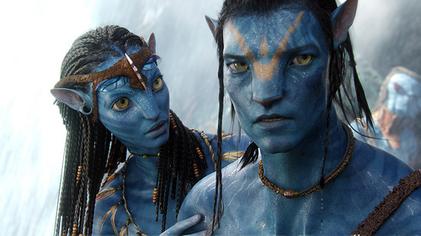
Avatar is a 2009 American science-fiction adventure film written and directed by James Cameron. Set on the lush, habitable moon called Pandora, the narrative follows Jake Sully, a paraplegic former marine who takes part in an "avatar" program that allows humans to inhabit genetically engineered Na'vi bodies. The film blends live-action performances with extensive computer-generated imagery to depict Pandora's bioluminescent ecosystems and the ten-foot-tall Na'vi. Upon release, Avatar attracted widespread attention for its visual ambition and immersive stereoscopic 3-D presentation and quickly became a major box-office phenomenon.
Image gallery
9 Images


Development and production
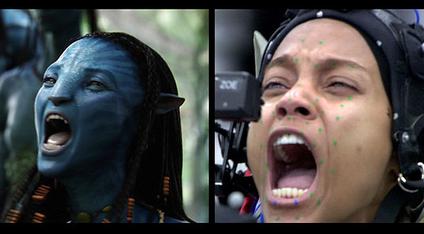
James Cameron conceived the story in the 1990s but postponed full production until visual effects and motion-capture technologies had advanced sufficiently. The project made extensive use of performance-capture techniques to record actors' facial expressions and body movements, enabling detailed digital characters whose performances were derived from the original cast. Cameron and his team also developed a virtual camera system that allowed the director to frame and move through digital environments in real time while shooting the actors’ performances.
Technical innovation
Avatar was widely cited as a milestone in cinematic technology. It combined stereoscopic 3-D photography with advanced performance capture and large-scale computer-generated environments. The film’s technical achievements included detailed creature and environment design, realistic motion and facial animation, and a production pipeline that integrated live-action and digital elements. These techniques influenced subsequent major productions and contributed to renewed interest in event-style 3-D theatrical releases.
Plot and themes
In broad terms, Avatar explores themes of cultural contact, colonization, and environmental stewardship. The human protagonists arrive on Pandora to extract a valuable mineral, creating conflict with the native Na'vi, who maintain a deep spiritual and ecological relationship with their world. Jake Sully’s immersion in Na'vi life prompts moral transformation, and the film frames the struggle over Pandora as both a personal story of identity and a larger allegory about exploitation of natural resources and resistance to cultural displacement.
Release and box office
Avatar premiered in December 2009 and was released in traditional 2-D and stereoscopic 3-D formats. It achieved exceptional commercial success and, at the time of its initial run, became the highest-grossing film worldwide. The film’s box-office performance was driven by strong international receipts and the appeal of its 3-D presentation, which many audiences regarded as a distinctive cinematic experience. Production and marketing costs were substantial, reflecting the film’s extensive visual effects and global distribution strategy.
Critical reception and awards
Critical response highlighted Avatar’s technical achievements and visual spectacle while offering mixed views on the familiarity of its narrative and some thematic elements. Reviewers praised the film’s production design, visual effects and immersive cinematography; some criticism focused on story structure and perceived parallels to earlier stories about colonialism and indigenous resistance. The film received multiple major awards and nominations and won several industry honors for its technical aspects, including awards recognizing art direction, cinematography and visual effects.
Cast and performances
The principal cast includes Sam Worthington as Jake Sully and Zoë Saldaña as Neytiri, supported by actors such as Sigourney Weaver, Stephen Lang, Michelle Rodriguez and Giovanni Ribisi. Performances were captured using advanced motion- and facial-capture systems, so actors often worked in performance-capture stages and later contributed to both the physical and vocal realization of their characters in post-production.
Legacy and cultural impact
Avatar’s influence extended beyond its box-office record: it helped popularize advanced performance-capture workflows and encouraged the wider adoption of stereoscopic 3-D in mainstream cinema for a period. The film also sparked discussion about environmentalism, indigenous representation, and the responsibilities of media in portraying cultural conflicts. Its vivid depiction of an interconnected natural world inspired both artistic responses and debates about the film’s messaging and symbolism.
Sequels and continuing franchise
Following the film’s success, James Cameron and the production team announced plans for multiple sequels to continue the story on Pandora. Sequels were announced in the mid-2010s, with release schedules set for the 2020s. Production on follow-ups involved extensive technical planning to extend the visual and narrative scope of the original film.
Further information and references
For more details on production notes, technical breakdowns, cast interviews and critical analysis, consult the following resources and official pages:
- Official production page
- Technical overview of visual effects
- Film synopsis and cast list
- Interview with principal cast members
- Profile of Sam Worthington
- Director James Cameron on the making of Avatar
- Director's filmography and related works
- Early drafts and story development notes
- History of motion-capture technology used
- Budget and box-office analysis
- Release formats and 2-D/3-D distribution
- Contemporary reviews and criticism
- Box-office milestone reporting
- Comparison with earlier Cameron films
- Announcements about sequels
- Details on sequel release timing
- Production updates for follow‑up films
- Behind-the-scenes visual effects breakdowns
- Cultural and environmental themes analysis
- Awards and nominations overview
- Further academic and critical resources
Questions and answers
Q: What is Avatar?
A: Avatar is a 2009 American science fiction adventure movie.
Q: Who are the two main characters in Avatar?
A: The two main characters in Avatar are played by Sam Worthington (Jake) and Zoë Saldaña (Neytiri).
Q: Who directed Avatar?
A: Avatar was directed by James Cameron.
Q: Why did James Cameron start to develop the movie Avatar 12 years after writing a story about Pandora?
A: James Cameron started to develop the movie Avatar 12 years later, in early 2006, because the level of technology at the time was not good enough.
Q: How much did it cost to make and market the movie Avatar?
A: It cost $280–310 million to make Avatar and $150 million for marketing.
Q: When was Avatar released in the United States?
A: Avatar was released in the United States on December 18, 2009.
Q: Has Avatar been nominated for any awards?
A: Yes, Avatar has been nominated for 11 Academy Awards and eight BAFTA awards.
Tags
Related articles
Author
AlegsaOnline.com Avatar (2009 film) Leandro Alegsa
URL: https://en.alegsaonline.com/art/7686
Sources
- bbfc.co.uk : "BBFC rating and classification details for Avatar"
- thewrap.com : "'Avatar's' True Cost – and Consequences"
- boxofficemojo.com : "Avatar (2009) – Box Office Mojo"
- the-numbers.com : "Avatar"
- news.bostonherald.com : "James Cameron wows Comic Con with 3-D 'Avatar'"