
Pica, Chile: Oasis town in the Atacama Desert
Pica is an oasis town in Chile's Tarapacá Region, noted for its distinctive limón de Pica, a warm thermal spring, colonial‑era architecture and a small agricultural and tourism economy in the Atacama.
Overview
Pica is a small oasis town and municipality in the province of Tamarugal, Tarapacá Region, northern Chile (rough coordinates 20°29′S, 69°20′W). Located within the hyper‑arid Atacama Desert, the town sits where groundwater and traditional irrigation enable pockets of cultivation. Pica is widely known across Chile for the so‑called "limón de Pica," a local citrus fruit valued for its aroma and flavor. The settlement functions as a local service centre for surrounding agricultural land and for visitors attracted by its thermal spring and desert scenery.
Image gallery
6 Images


Geography and climate
Pica occupies a true oasis: cultivated fields, orchards and gardens cluster around natural water sources and channels. The surrounding landscape is starkly desertic, with dry hills, salt flats and broad horizons. The climate is extremely dry, with strong sunlight and large diurnal temperature ranges; these conditions influence local agriculture and give many fruits and vegetables a concentrated flavor.
History and built character
The town grew as a stop on inland routes across the northern deserts and has visible layers of colonial and republican architecture. Its compact historic centre includes adobe houses, narrow streets and public spaces centered on a traditional plaza. A notable religious landmark is the modest Iglesia San Andrés, important to local community life. 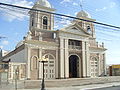
Economy, agriculture and tourism
Agriculture remains a key part of the local economy: irrigated plots produce citrus, including the limón de Pica, table grapes, vegetables and forage. Small-scale commerce and services support residents and visitors. Tourism has grown around the thermal baths — a warm spring with surface temperatures often reported near 40 °C — cultural events and the appeal of an inhabited oasis in the Atacama. 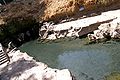
Main places and attractions
- Main square and streets — the plaza is the town's social hub and a focal point for festivals and markets.

- Iglesia San Andrés — parish church and local gatherings.
- Thermal baths — public and private pools fed by warm groundwater used for relaxation and tourism.
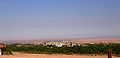
- Scenic viewpoints — panoramic desert vistas where the oasis contrasts sharply with the surrounding aridity.
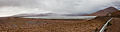
- Regional connections — the wider Tarapacá region hosts large mining operations that influence transport, employment and infrastructure in the area; mining activity is a notable element of the regional economy.
Challenges and outlook
Pica faces typical challenges for desert oases: water management, maintaining productive irrigation, and balancing tourism with local life. Regional economic dynamics, including mining and infrastructure projects, affect opportunities and pressures on the town. Local identity remains strongly tied to agriculture, traditional architecture and the thermal springs, which continue to attract visitors seeking both relaxation and a glimpse of oasis life in the Atacama.


References
- ↑ Mapa Interactivo - Region de Tarapacá. Instituto Nacional de Estadísticas, retrieved 11 January 2014 (click on Pica (bottom left) via the "ocultar regiones"/"I Región" tab).
Related articles
Author
AlegsaOnline.com Pica, Chile: Oasis town in the Atacama Desert Leandro Alegsa
URL: https://en.alegsaonline.com/art/76709
Sources
- ine.cl : Demographic map for Pica