
Phytoplasma: obligate plant‑pathogenic bacteria
Phytoplasmas are wall‑less, phloem‑limited bacteria that infect many plants, spread by sap‑feeding insects, cause symptoms like yellowing and witches'‑broom, and are difficult to culture in laboratory media.
Overview
Phytoplasmas are a group of insect‑transmitted, obligate bacterial pathogens of plants. They are associated with a wide range of diseases that reduce yield and quality in trees, ornamentals and many crops, including reports from sugarcane, sandalwood and coconut. Infected plants commonly show symptoms such as leaf yellowing, stunting, proliferation of shoots ("witches'-broom") and reproductive failure.
Image gallery
10 Images


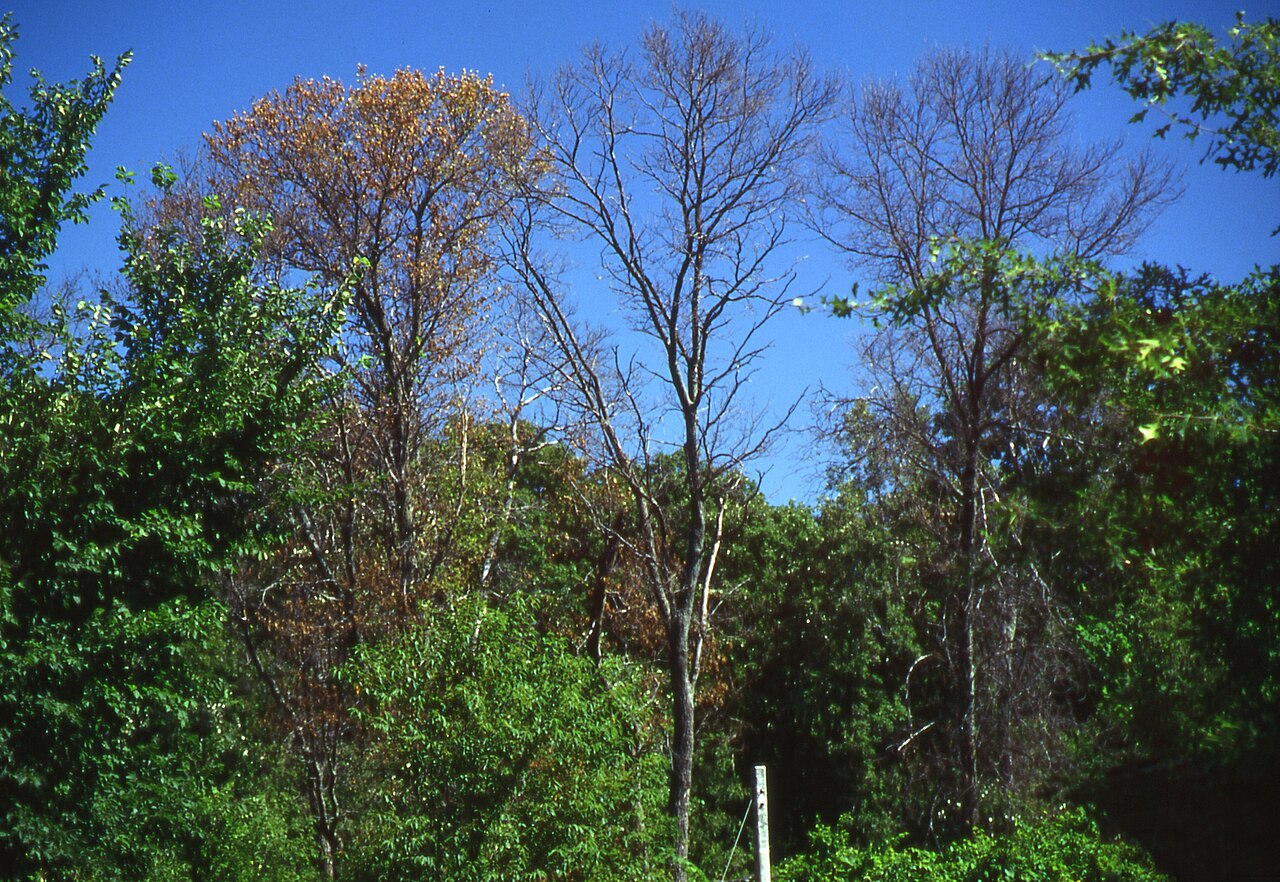


Biology and classification
Phytoplasmas are small, wall‑less bacteria placed with other related organisms in the Mollicutes. They live primarily within the phloem tissue of their host plants and so are described as phloem‑limited. Because they cannot yet be grown in conventional cell‑free culture, many recognized taxa carry the provisional label Candidatus, for example Candidatus Phytoplasma. Their biology is constrained by reduced genomes and reliance on host metabolism.
Discovery and naming
These pathogens were first recognized in the mid‑20th century and historically called mycoplasma‑like organisms (MLOs). Electron microscopy in the 1960s and later molecular methods clarified their bacterial nature. The requirement that they be designated as Candidatus taxa stems from the inability to culture them in vitro and meet formal bacteriological naming rules.
Transmission and vectors
Phytoplasmas are transmitted between plants by sap‑feeding insects. Typical vectors include leafhoppers, planthoppers and psyllids that acquire the pathogen when feeding on infected phloem and later inoculate healthy plants. Vector control is therefore central to disease management. For further reading about insect interactions see vector biology resources.
Symptoms, diagnosis and impact
Common disease names include "yellows", "stunting" and "decline" syndromes. Diagnosis relies on a combination of symptom observation, microscopic detection and molecular tests such as PCR and gene sequencing because phytoplasmas cannot be cultured. Their impact is important in both agriculture and forestry owing to crop losses and long‑term declines; affected hosts and regions are discussed in targeted reports like those covering obligate parasite systems and specific crop cases such as phloem diseases.
Management and notable facts
There is no single cure for phytoplasma infection. Management emphasizes removal of infected plants (roguing), use of disease‑resistant varieties where available, controlling insect vectors with integrated pest management and quarantines to limit spread. Molecular surveillance and better understanding of host–vector–pathogen interactions remain active research areas. For introductions and extension materials see general guides at mycoplasma‑like organism summaries and specialist overviews at disease portals or crop‑specific pages.
- Key features: phloem‑limited, no cell wall, insect‑vectored.
- Diagnostic tools: microscopy, PCR, sequencing.
- Main responses: sanitation, vector control, resistant varieties.
Questions and answers
Q: What are phytoplasmas?
A: Phytoplasmas are a type of parasitic bacteria.
Q: Which plants are affected by phytoplasmas?
A: Phytoplasmas are pathogens of economically important plants, including coconut, sugarcane, and sandalwood.
Q: Where do phytoplasmas infect in plants?
A: Phytoplasmas are obligate parasites of plant phloem tissue.
Q: How are phytoplasmas transmitted?
A: Phytoplasmas are transmitted by insects which inject them into the plant cells.
Q: When were phytoplasmas discovered and what were they originally named?
A: Phytoplasmas were discovered by scientists in 1967 and were named mycoplasma-like organisms or MLOs.
Q: Can phytoplasmas be grown in laboratory conditions?
A: No, phytoplasmas cannot be grown in vitro (in laboratory conditions).
Q: How are phytoplasmas described in terms of difficulty?
A: Phytoplasmas are described by the special term "Candidatus", reserved for such difficult organisms.
Related articles
Author
AlegsaOnline.com Phytoplasma: obligate plant‑pathogenic bacteria Leandro Alegsa
URL: https://en.alegsaonline.com/art/76668
Sources
- doi.org : 10.1099/ijs.0.02838-0
- pubmed.ncbi.nlm.nih.gov : 15280265
- doi.org : 10.3186/jjphytopath.33.259