
Phrygian cap (liberty cap)
A soft, conical cap with a forward-bent tip, associated with peoples of Anatolia and the Balkans in antiquity and later adopted as a symbol of liberty, republicanism and national personifications such as Marianne.
The Phrygian cap, commonly called the "liberty cap," is a soft, brimless headcovering shaped as a cone whose tip is typically bent forward. In ancient art and literature the cap served as a visual shorthand for people from regions of Anatolia and parts of the Balkans, and for figures perceived as "eastern" or non-Roman. Its distinctive silhouette—close-fitting at the base with a pointed crown that droops forward—makes it immediately recognizable in sculptures, reliefs, coins and painted representations from antiquity through modern iconography.
Image gallery
10 Images
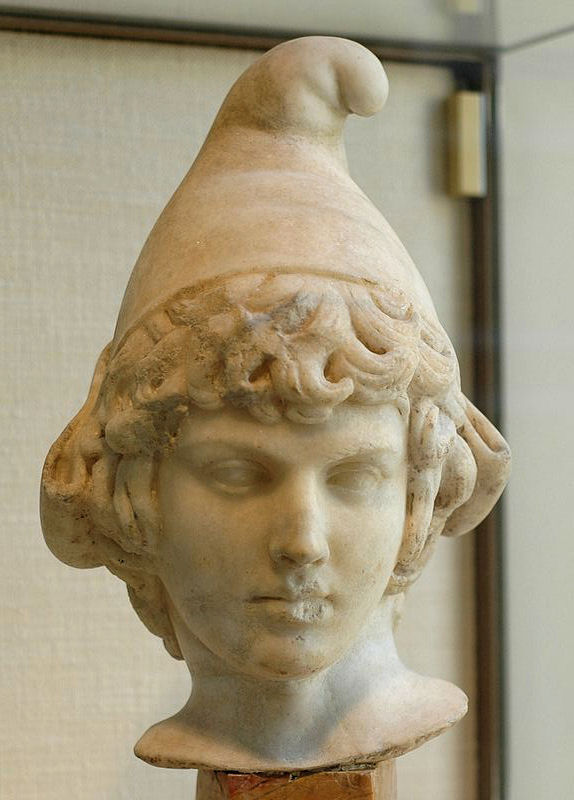




Form, materials and appearance
Traditionally the cap is shown as made of flexible material such as felt, leather or woven cloth. Unlike the rounded Roman pileus, which is hemispherical and associated specifically with freed slaves of Rome, the Phrygian cap has a pronounced taper and a bent point. Artistic conventions have produced many variations: some depictions show a long, floppy tip; others a shorter, triangular shape. The cap was seldom a high-status crown but a regional or functional headgear in visual sources.
Antiquity and cultural associations
Classical authors and artists associated the pointed cap with peoples of eastern Anatolia—most notably Phrygia—and with other neighboring territories. In Greek and Roman visual culture the cap could mark a character as foreign, a traveler, a merchant or a mythic figure originating beyond the Greco-Roman world. Over time the form survived in artistic memory more than as continuous everyday dress: its persistence owes much to its usefulness as a signifier in narrative and allegorical imagery.
Revival in Renaissance and early-modern emblematic art
From the Renaissance onward, European artists and illustrators revived classical motifs and personifications. Emblem books, political engravings and coin collectors' handbooks reintroduced the iconography of Liberty and other virtues. In some northern European traditions artists blended or substituted headgear forms: the Roman pileus and the more exotic, pointed cap sometimes became conflated in prints and allegorical scenes, producing the visual ancestor of the later "liberty cap."
Adoption as a symbol of freedom and republicanism
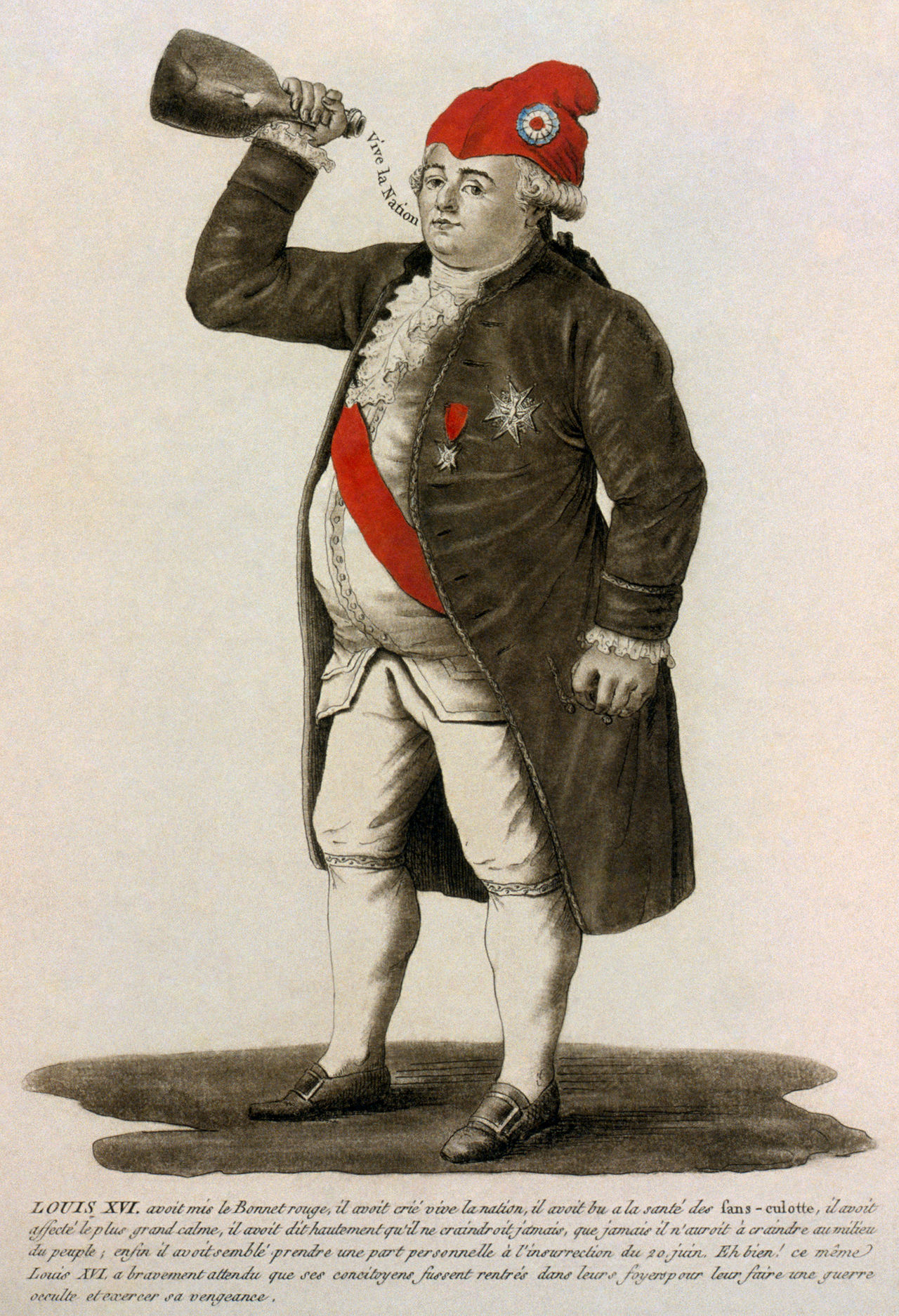
During the late 18th century the cap acquired overt political meaning. Revolutionary movements in Europe and the Americas used a hat resembling the Phrygian shape to signify emancipation, popular sovereignty and resistance to monarchical power. In this role the cap often replaced a crown in civic seals, coats of arms and revolutionary banners, becoming an emblem of the republican ideal rather than a literal piece of clothing worn by most citizens.
Heraldic, national and civic uses
The cap appears in the heraldry and seals of republics and states that wished to emphasize their break with monarchy. It was adopted by political clubs, used on medals and coins, and placed atop pikes or poles as a rallying symbol. Several national personifications—most famously France's Marianne—are shown wearing or accompanied by the cap to signal liberty, equality and national sovereignty. The emblem also travelled beyond Europe and was incorporated into some Latin American republican symbols (for example in the arms of certain countries) and into early American iconography in various civic contexts.
Modern appearances and cultural legacy
Today the Phrygian cap remains a potent visual sign in historical commemorations, numismatics, public monuments and graphic design. It is referenced in discussions of revolutionary symbolism and appears in museum displays that explain the visual language of liberty. Contemporary portrayals often emphasize the cap's layered history: an ancient regional headpiece, a Renaissance emblem, and an 18th–19th century symbol of republicanism.
Common misconceptions
Two frequent clarifications are important. First, the classic Roman symbol of a freed slave was the pileus, not the pointed Phrygian cap. Second, the modern identification of the Phrygian cap with liberty grew primarily from artistic and political convention rather than from uninterrupted popular use of that exact hat by people who claimed its meaning.
Further reading and resources
Questions and answers
Q: What is a Phrygian cap?
A: A Phrygian cap is a soft cone-shaped hat with the apex bent over, which was thought to be associated with many different peoples in Eastern Europe and Anatolia, including Phrygia, Dacia, and the Balkans.
Q: What did the Phrygian cap come to mean during the French Revolution?
A: During the French Revolution, the Phrygian cap came to symbolize freedom and the pursuit of liberty.
Q: What was originally used as a symbol of freedom in Roman iconography?
A: The original symbol of freedom in Roman iconography was the pileus, or felt cap of freed slaves. This was also associated with Libertas, the Roman goddess of liberty.
Q: In what form was the "cap of liberty" most often used in 16th century Netherlands?
A: In 16th century Netherlands, the "cap of liberty" was most often used in the form of a hat that was popular at that time.
Q: How did it become identified as a symbol for republican government?
A: It became identified as a symbol for republican government because it began to be used in place where crowns would usually be placed on coats of arms under monarchies.
Q: Who is commonly depicted wearing a Phrygian cap?
A: National personifications such as France's Marianne are usually depicted wearing a Phrygian cap.
Related articles
Author
AlegsaOnline.com Phrygian cap (liberty cap) Leandro Alegsa
URL: https://en.alegsaonline.com/art/76624