
Phalkot — Union Council in Abbottabad District
Phalkot is a rural union council in Abbottabad District, Khyber Pakhtunkhwa, Pakistan. It comprises several villages, has a predominantly Awan and Dhund Abbasi population, and features hilly terrain and subsistence livelihoods.
Overview
Phalkot is a union council situated within Abbottabad District of the province of Khyber Pakhtunkhwa in Pakistan. As a basic unit of local government, the council brings together a number of small settlements and hamlets for administrative purposes. The community is largely rural and characterized by traditional village life.
Image gallery
1 Image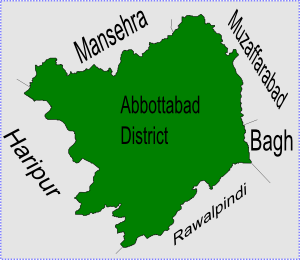
Geography and population
The area around Phalkot is hilly, forming part of the sub-Himalayan terrain that defines much of Abbottabad District. Vegetation, terraced fields and small watercourses are typical features. The local population includes a majority of people from the Awan community and a significant number of Dhund Abbasi families. Languages commonly spoken reflect the region's heritage and include Hindko and other regional dialects.
Economy and services
Economic life in Phalkot is mainly based on agriculture, livestock rearing and small-scale trade. Many households rely on subsistence farming and seasonal work, while remittances from family members working elsewhere also contribute to incomes. Public services such as primary schools, basic health facilities and rural roads are present but often limited in scale and quality.
History and culture
The settlements in and around Phalkot have grown from village communities with long-standing social ties and local customs. Cultural life tends to revolve around family networks, religious observances and agricultural calendars. Traditional crafts, music and cuisine reflect the broader patterns of the Abbottabad region.
Administration, development and challenges
As a union council, Phalkot plays a role in local governance, planning and delivery of community services. Development priorities commonly include improving road connections, expanding education and health access, and supporting sustainable livelihoods. Like many rural councils, Phalkot faces challenges such as limited infrastructure, seasonal isolation and pressures from migration to larger cities.
Notable facts
- Phalkot's hilly landscapes offer local scenic value and potential for small-scale nature tourism.
- The social composition, with Awans and Dhund Abbasis predominating, shapes local customs and leadership patterns.
- Continued investment in roads, schools and health services is important for improving living standards.
Questions and answers
Q: How many Union Councils are there in Abbottabad District?
A: There are 51 Union Councils in Abbottabad District.
Q: What is Phalkot?
A: Phalkot is one of the 51 Union Councils in Abbottabad District.
Q: What is the demographic makeup of Phalkot?
A: Most of the people in Phalkot are Awans with some Dhund Abbasis.
Q: What is the economic status of the people in Phalkot?
A: Most of the people in Phalkot are poor and lead a simple life.
Q: What province is Phalkot located in?
A: Phalkot is located in the Khyber Pakhtunkhwa province of Pakistan.
Q: What is the significance of Awans and Dhund Abbasis in Phalkot?
A: Awans and Dhund Abbasis are two of the primary ethnic groups in Phalkot.
Q: Are there any specific religious affiliations in Phalkot?
A: The given text does not provide information regarding the religious affiliations in Phalkot.
Related articles
Author
AlegsaOnline.com Phalkot — Union Council in Abbottabad District Leandro Alegsa
URL: https://en.alegsaonline.com/art/76326
Sources
- abbottabad.gov.pk : Phalkot Union Council
- abbottabad.sdnpk.org : Administrative Units of District Abbottabad
- fallingrain.com : Falling Rain Genomics - Location of Phalkot (Malsa)