
Petra: the rock-cut capital of the Nabataeans
Petra is an ancient archaeological city in southern Jordan, famed for its rock-cut architecture and hydraulic engineering. Once the Nabataean capital, it is a UNESCO World Heritage site and major tourist destination.
Overview
Petra is an ancient city carved into sandstone cliffs, renowned for monumental façades, tombs and elaborate waterworks. Its Arabic name is shown in local sources as البتراء (Al-Batrāʾ) and it appears in Ancient Greek as Πέτρα. Petra served as the principal city of the Nabataeans and later passed under Roman and Byzantine influence; its preserved architecture illustrates a blend of local and Mediterranean forms.
Image gallery
10 Images





Location and landscape
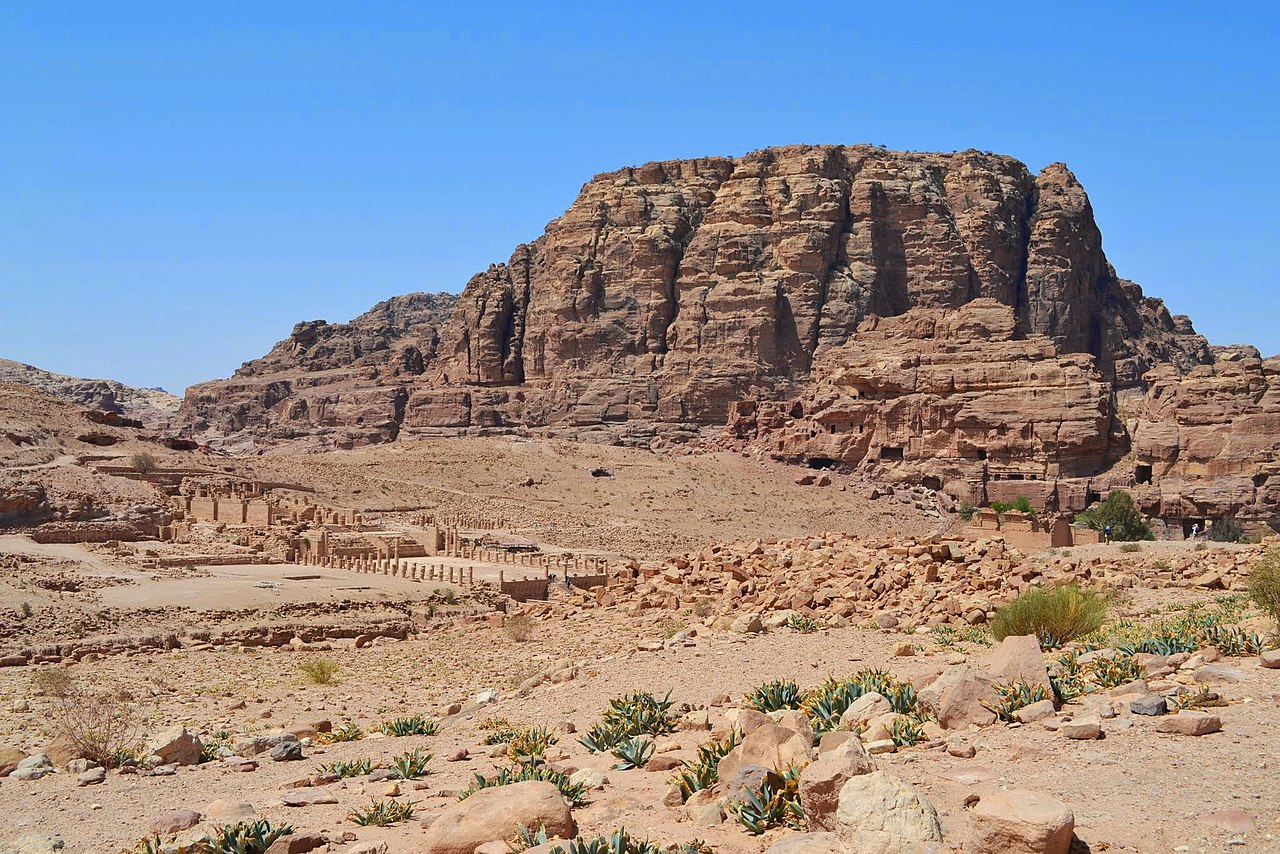
The site lies within modern Jordan, in a rocky basin among the mountains that stretch from the Dead Sea to the Gulf of Aqaba. Approached through a narrow, dramatic gorge known as the Siq, the city takes advantage of natural defences and the malleable sandstone geology, which yields the distinctive colours and allowed extensive rock-cut work. The basin setting has influenced settlement patterns and the management of runoff and springs (basin studies).
History and development
From about the late first millennium BCE Petra grew as the centre of the Nabataean kingdom, a polity that prospered through control of caravan trade in spices, incense and other luxury goods. The Nabataeans became noted for their expertise in harvesting seasonal water, carving cisterns, channels and dams to store and distribute water in an arid environment. After Roman annexation in the first century CE the city adopted new public monuments but gradually declined due to earthquakes, shifting trade routes and changing political circumstances. European travellers reintroduced Petra to wider attention in the early 19th century.
Main monuments and features
- Al-Khazneh (The Treasury) – a richly ornamented rock façade often used as Petra's emblem.
- Ad-Deir (The Monastery) – a monumental carved chamber set high above the valley.
- Qasr al-Bint – one of the few freestanding temple structures at the site.
- Royal tombs and façades – funerary complexes and facades cut into cliff faces.
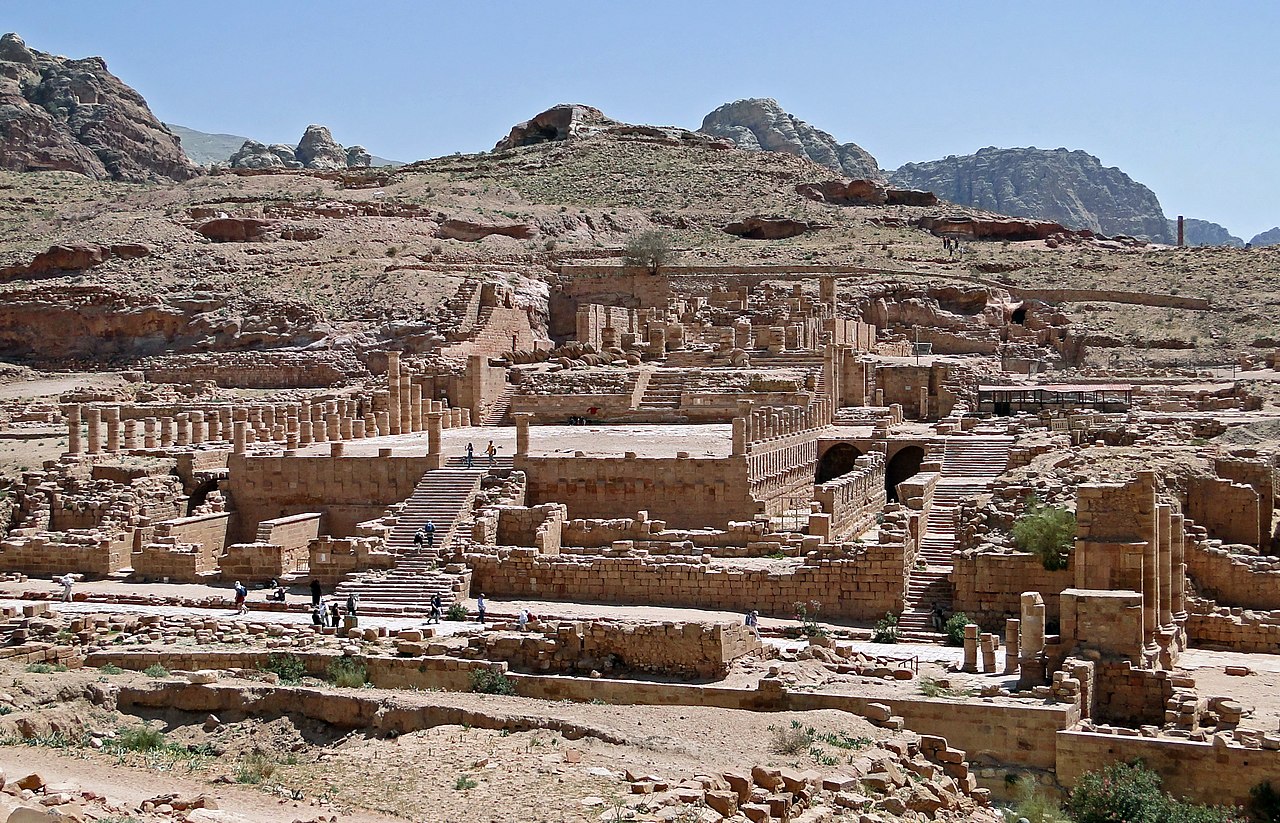
- Roman theatre and colonnaded streets – evidence of later urban phases and public life.
- Hydraulic installations – an extensive system of channels, cisterns and dams that sustained the population.
Conservation, research and visiting
Petra was inscribed as a UNESCO World Heritage site in recognition of its cultural and historical importance. It remains a major destination for visitors, which supports local economies but also presents conservation challenges: soft sandstone is vulnerable to weathering, water erosion and visitor impact. Archaeological research, preservation projects and community engagement continue to guide management of the site, balancing tourism, scholarship and the needs of nearby communities. For further orientation and regional context consult sources on the site's geography and history via the regional links provided above.
Questions and answers
Q: What is Petra?
A: Petra is a historical and archaeological city located in southern Jordan.
Q: What is the meaning of the name Petra?
A: The name Petra means "stone" or "rock" in Greek.
Q: Which languages is the name Petra derived from?
A: The name Petra is derived from the Greek language.
Q: Where is Petra located?
A: Petra is located in a basin among the mountains that run from the Dead Sea to the Gulf of Aqaba in southern Jordan.
Q: What is the significance of Petra?
A: Petra is significant for its historical and archaeological importance and is a UNESCO World Heritage site.
Q: What is the unique feature of Petra?
A: The unique feature of Petra is the architecture carved out of the rock, including the famous Treasury building.
Q: Is Petra only significant for its architecture?
A: No, Petra also has a significant history as a trading and caravan center during the Nabataean era.
Related articles
Author
AlegsaOnline.com Petra: the rock-cut capital of the Nabataeans Leandro Alegsa
URL: https://en.alegsaonline.com/art/76219
Sources
- petranationaltrust.org : "Management of Petra"
- books.google.com : Retrieving the Past: Essays on Archaeological Research and Methodolog
- nytimes.com : "ART REVIEW; Rose-Red City Carved From the Rock"
- whc.unesco.org : "UNESCO advisory body evaluation"