
Persian blue
Persian blue is a deep, vivid blue historically used in Persian ceramics and architectural tiles, associated with lapis lazuli and prominent in Iranian and Middle Eastern decorative arts.
Overview
Persian blue is a deep, luminous blue hue long associated with Persian and broader Middle Eastern decorative arts. The name evokes the intense blues used in glazed ceramics and monumental tiles that cover domes, iwans and walls of mosques and palaces. The color is closely linked to the historic use of the semi‑precious stone lapis lazuli and to pigments and glazes developed in regions that are today part of Iran and its neighbors.
Image gallery
2 Images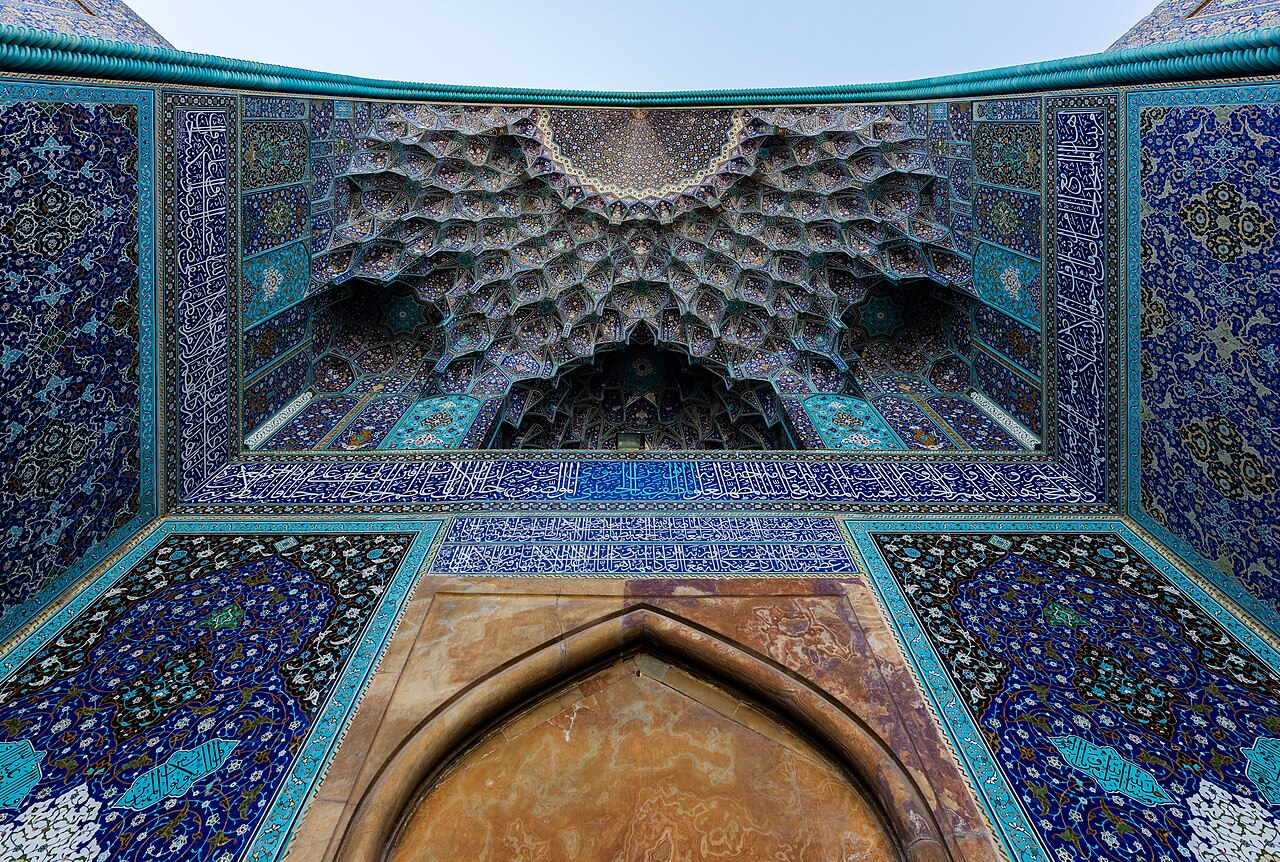

Characteristics
Persian blue is typically darker and more saturated than common azures; it can appear cool or slightly warm depending on the materials and techniques used. Traditional examples show a depth and slight translucence when used in glazes, while painted or printed versions may vary in hue. Historically, both mineral‑based pigments derived from lapis and metal‑based pigments such as cobalt were used to obtain durable deep blue surfaces.
History and origin
The association of a vivid blue with Persia reflects a long history of trade in lapis and the exchange of glazing techniques. Lapis lazuli, quarried in part from regions now in Afghanistan, supplied a prized ultramarine blue pigment. Craftspeople across the Islamic world refined ceramic glazes and tilemaking methods so that large architectural surfaces could be covered with coherent fields of deep blue. The use of the English name "Persian blue" is recorded in early modern sources, with an instance noted in or around 1669, when European interest in Eastern materials and colors was growing.
Cultural importance and symbolism
In architecture and decorative arts, Persian blue has been associated with the sky, spirituality and the infinite, which made it a favored color for religious buildings and devotional objects. It appears across media — from glazed pottery and friezes to illuminated manuscripts, carpets and metalwork — where it functions both as a dominant field color and as an accent to gold, white and other pigments.
Notable examples
- The interior tilework of the Shah Mosque in Isfahan is often cited as a striking example of large‑scale use of deep blue tiles, where the hue contributes to a unified, luminous interior field.
- Smaller objects such as bowls, plates and mosque lamps demonstrate how potters controlled glaze composition and firing to achieve variations that are all commonly described as Persian blue.
Production, pigments and conservation
Historically, natural ultramarine derived from ground lapis produced a rich, costly blue. Later developments included the introduction of synthetic ultramarine and cobalt‑based pigments, which made similar hues more widely available. In conservation and study, experts examine glazes, kiln residues and pigment particles to trace materials and techniques; the visual appearance of Persian blue can change with wear, restoration, or exposure to light and pollution.
Modern uses and legacy
Today Persian blue remains a reference shade for designers, historians and artisans seeking a saturated, cultural blue. Contemporary ceramics, textiles and digital palettes often invoke the term while acknowledging that exact shades vary regionally and historically. For those seeking further information, specialist conservation literature, museum catalogues and studies on lapis lazuli and historic glazing provide detailed technical and visual resources; many online and printed resources discuss these topics in depth and may be found through relevant institutional pages and bibliographies.
Questions and answers
Q: What is Persian blue?
A: Persian blue is a color named after the blue color of some Persian pottery and the color of tiles used in and on mosques and palaces in Iran and in other places in the Middle East.
Q: What is the origin of Persian blue color?
A: Persian blue is a representation of the color of the mineral lapis lazuli which comes from Persia and Afghanistan.
Q: What is the meaning of the color azure?
A: The color azure is also named after the mineral lapis lazuli which represents the color of Persian blue.
Q: When was Persian blue first recorded as a color name in English?
A: The first recorded use of Persian blue as a color name in English was in 1669.
Q: Which mosque in Iran is decorated with Persian blue colored tiles?
A: The interior of the Shah Mosque in the city of Isfahan in Iran is lavishly decorated with Persian blue colored tiles.
Q: What is the significance of Persian blue colored tiles in Iranian architecture?
A: Persian blue colored tiles are extensively used in Iranian architecture, particularly in mosques and palaces, and represent a symbol of luxury and opulence.
Q: What is the source of the mineral lapis lazuli?
A: The mineral lapis lazuli which represents the color of Persian blue comes from Persia and Afghanistan.
Related articles
Author
AlegsaOnline.com Persian blue Leandro Alegsa
URL: https://en.alegsaonline.com/art/75945