
Perry Rhodan — long‑running German science fiction series
Perry Rhodan is a long-running German space‑opera series created in 1961. It spans serialized weekly novellas, novels and spin-offs, exploring utopian futures, alien contact and Cold War and New Age-era themes.
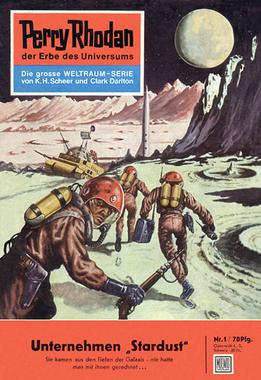
Perry Rhodan is a serialized German science fiction franchise that began published since 1961. Conceived by Karl‑Herbert Scheer and Walter Ernsting (who wrote as Clark Darlton), it follows the adventures of the eponymous astronaut and the long historical arc that unfolds after humanity gains access to alien technology. The series is notable for its continuity, shared authorship and the scope of its imagined future.
Image gallery
3 Images

Overview and main themes
The stories form a sweeping space opera that moves from near‑future Earth drama to galactic politics, cosmic entities and metaphysical ideas. Plotlines often reflect contemporary concerns: the early cycles echo the optimism and tensions of the 1960s and the global strategic anxieties of the Cold War, later material incorporates motifs popular in the 1970s and influences associated with the New Age. By the 1980s many story arcs engaged themes that paralleled elements of the broader peace movement and debates about technology and society.
Format, structure and production
- Originally released as short, regular serialized novellas, the series is written by a rotating team of authors and editors who maintain continuity across arcs.
- Stories are grouped into cycles or phases; each cycle presents a central conflict or mystery and may run for dozens of issues.
- Beyond the weekly installments, material has been collected in paperback and special editions and expanded into audio dramas, comics and reference works.
The production method—collaborative, planned long term and serialized—lets the fictional timeline advance through generations while accommodating new writers and shifting cultural interests. That collaborative model is a key reason the series could sustain decades of publication.
History, influence and spin‑offs
From its origin in the early 1960s, Perry Rhodan grew into one of the best‑known German popular‑culture properties. It helped shape German science fiction by providing a continuous, shared universe where authors experimented with ideas from hard science fiction to mysticism. The franchise has spawned many spin‑offs, tie‑in publications and devoted fandom communities that preserve and analyze its continuity.
Reception and significance
Critics and readers have taken varied views: some praise its imaginative breadth and optimism; others point to formulaic elements typical of pulp serials. Regardless, its commercial longevity and cultural presence make Perry Rhodan an important phenomenon in European speculative fiction, a mirror of several postwar decades and a training ground for writers. For further context and resources see entries and fan sites linked in specialist bibliographies and archives.
For more reading, see general overviews and databases that collect publication histories and critical essays: German sources, genre studies, and dedicated timelines that note the series' beginning when it was published since 1961. Historical context is discussed in works dealing with the 1960s, Cold War culture, the 1970s social shifts, New Age trends and the peace movement of the 1980s.
Questions and answers
Q: What is Perry Rhodan?
A: Perry Rhodan is a German science fiction series that has been published since 1961.
Q: What kind of themes does Perry Rhodan cover?
A: Perry Rhodan covers nearly every theme that has ever appeared in science fiction.
Q: Has Perry Rhodan faced any criticism from outside sources?
A: Yes, Perry Rhodan has faced criticism from people outside the series.
Q: Despite the criticism, what can be said about Perry Rhodan's commercial success?
A: Perry Rhodan's commercial success during several decades has become a literary phenomenon in itself.
Q: What does Perry Rhodan's story line reflect?
A: Perry Rhodan's story line reflects the 1960s Cold War, 1970s New Age, and 1980s peace movement.
Q: What kind of influence has Perry Rhodan had on German writers in the field?
A: Perry Rhodan has an important influence on German writers in the field.
Q: Is Perry Rhodan still being written?
A: Yes, the writing of the series still goes on.
Related articles
Author
AlegsaOnline.com Perry Rhodan — long‑running German science fiction series Leandro Alegsa
URL: https://en.alegsaonline.com/art/75923