
Pérotin: Notre Dame School Composer and Pioneer of Polyphony
Pérotin, active c. 1200, was a medieval composer of the Notre Dame school who advanced three‑ and four‑voice organum and contributed to the Magnus Liber with works such as Viderunt omnes and Sederunt principes.
Overview
Pérotin (active c. 1200) is the conventional name given to a medieval composer associated with the Notre Dame school of polyphony. He was probably French and worked in or near Paris during the late 12th century and early 13th century. Documentary evidence for his life is scant; the name Pérotin (Latinized as Perotinus) may be a diminutive or a later editorial ascription rather than a full legal name recorded in surviving registers.
Image gallery
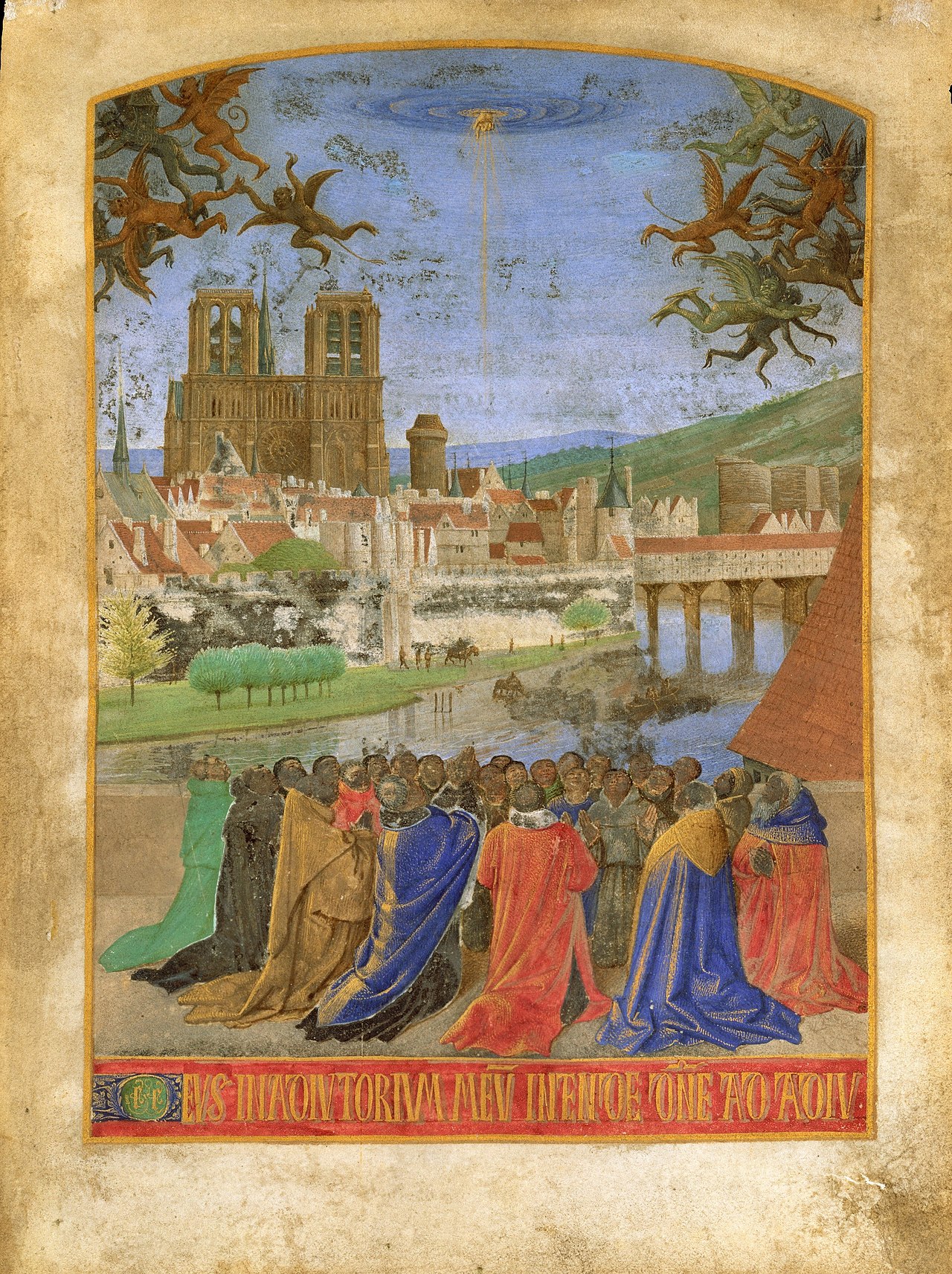
6 Images




Corpus and the Magnus Liber
Pérotin is best known for works preserved in the Magnus Liber (the "Great Book"), a collection of organum and related repertory compiled and expanded at Notre Dame. Editors and scholars in later centuries attributed specific three- and four-voice pieces to him; among the most famous attributed works are Viderunt omnes and Sederunt principes. These pieces exemplify the expansion of polyphony from two voices into more complex textures.
Style and technique
Musically, Pérotin extended the practice of organum by writing sustained, often melismatic tenor lines beneath one or more higher voices that move more rapidly. The resulting textures exploit consonances produced by parallel and oblique motion and by careful voice-leading across long durations. Compositional organization relied on the system of rhythmic modes, a set of repeating rhythmic patterns notated through ligature groupings rather than modern mensural note values. Performers and scholars reconstruct tempo and proportional relationships from these modal cues.
Notation and interpretation
Notation of the period captures relative durations and melodic outlines but leaves many practical details to interpretation. Modern editions and recordings use informed conjecture about articulation, tempo, vowel shaping and ensemble balance. The tenor often preserves a plainchant fragment that functions as a structural foundation; upper voices form florid counterpoint above that sustained chant. These techniques allow extended harmonic sonorities and emergent resonances when sustained pitches align.
Sources, attribution and scholarship
Attempts to identify a historical person named Pérotin in cathedral documents, including the Notre Dame archives, have produced no definitive match. Much of what is ascribed to Pérotin rests on stylistic judgment and the attributions of later medieval and Renaissance copyists. Scholars debate the extent to which the corpus represents a single author versus a circle of composers sharing practices at Notre Dame. The relationship between Pérotin and earlier figures such as Léonin remains a subject of research and careful qualification.
Notable works and characteristics
- Viderunt omnes – commonly transmitted as a four-voice setting of the gradual for Christmas; notable for long sustained tenor and rich upper-voice writing.
- Sederunt principes – another multi-voice setting showing sectional contrast and rhythmic elaboration.
- Numerous clausulae and three-voice organa that exemplify modal rhythm and contrapuntal technique.
Historical context and influence
Pérotin worked in a period of intense musical innovation. The Notre Dame school developed methods of measured rhythm, independent voices and sectional composition that influenced later medieval polyphony and the trajectory of Western art music. In modern times some composers and musicologists have pointed to affinities between medieval organum and later musical aesthetics: 20th-century observers noted textural and processual resemblances to practices in the 20th-century avant-garde and the minimalist movement. For example, Steve Reich and others have acknowledged a broad interest in early polyphonic patterns among many sources that shaped their thinking, though such connections are comparative rather than direct lines of descent.
Performance and modern reception
Modern performances aim to balance historical evidence with contemporary musical sensibility. Ensembles specializing in medieval music use reconstructed vocal techniques, modal rhythms and historically informed pronunciation to present these works. Recordings and scholarly editions have increased public awareness of Pérotin's repertory and of Notre Dame polyphony more generally.
Legacy
Because only a limited number of pieces can be attributed with confidence, Pérotin's reputation rests on his perceived role in advancing compositional technique rather than on a large surviving catalogue. The works associated with him remain key examples in the study of early polyphony and continue to be taught, performed and recorded as milestones in the development of Western music.
Questions and answers
Q: Who was Pérotin?
A: Pérotin was a medieval composer who lived around 1200.
Q: Where did he work?
A: He worked in or around Paris in the late 12th century to early 13th century.
Q: What is the Magnus Liber?
A: The Magnus Liber is a very important collection of polyphonic music written by the composer Léonin.
Q: What type of music did Pérotin write?
A: Pérotin wrote three and four voice music of a type called organum, which was an important development in Western music. He also wrote polyphonic style music with one voice singing incredibly slowly while another sang something much faster on top.
Q: Are there any records of his name at Notre Dame Cathedral?
A: No, people have tried to find out who he was by studying the archives of Notre Dame Cathedral, but his name has not been found there. It is believed that he used the name Pérotin for his compositions and had another name as well.
Q: Was Léonin possibly Pérotin's teacher?
A: It is possible that Léonin may have been Pérotin's teacher, but this cannot be confirmed as we do not know for sure.
Q: How has Pérotins' music influenced modern composers?
A:Pérotins' music has been an influence on some 20th century composers who wrote minimalist music such as Steve Reich.
Related articles
Author
AlegsaOnline.com Pérotin: Notre Dame School Composer and Pioneer of Polyphony Leandro Alegsa
URL: https://en.alegsaonline.com/art/75891