
Period 1 elements — hydrogen and helium
Overview of the first period of the periodic table, explaining why it contains only hydrogen and helium, their electron structure, chemical behavior, isotopes, classification issues, and uses.
The first period of the periodic table is the topmost row and contains only two elements: hydrogen and helium. This unusually short period follows directly from the quantum structure of atoms. At the principal quantum level n = 1 there is a single subshell, the 1s orbital, which can accommodate at most two electrons. As the atomic number increases from one to two, the 1s subshell becomes occupied and no further distinct orbital is available at the same principal level, so the row ends after helium. For a general orientation see an element overview and summaries of the first period.
Image gallery
3 Images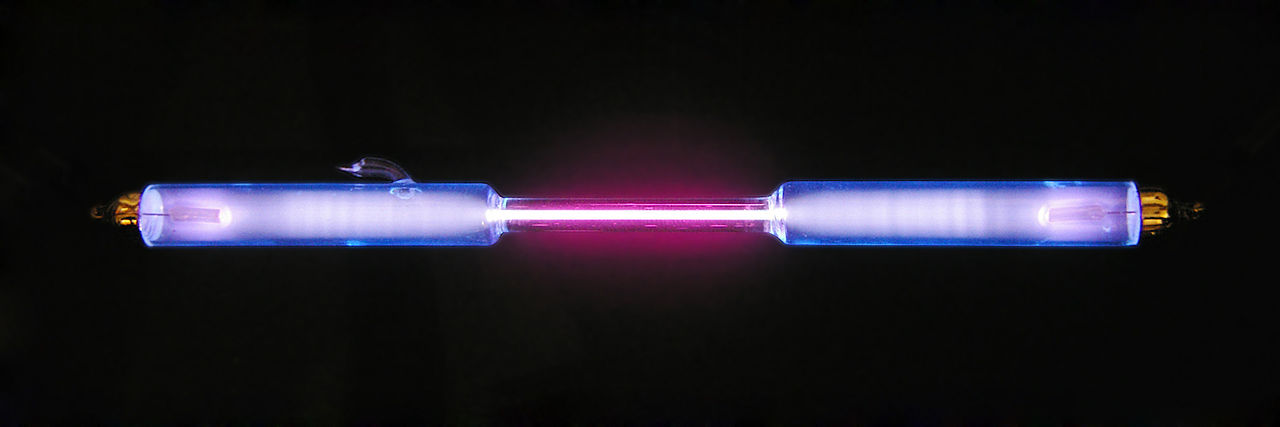
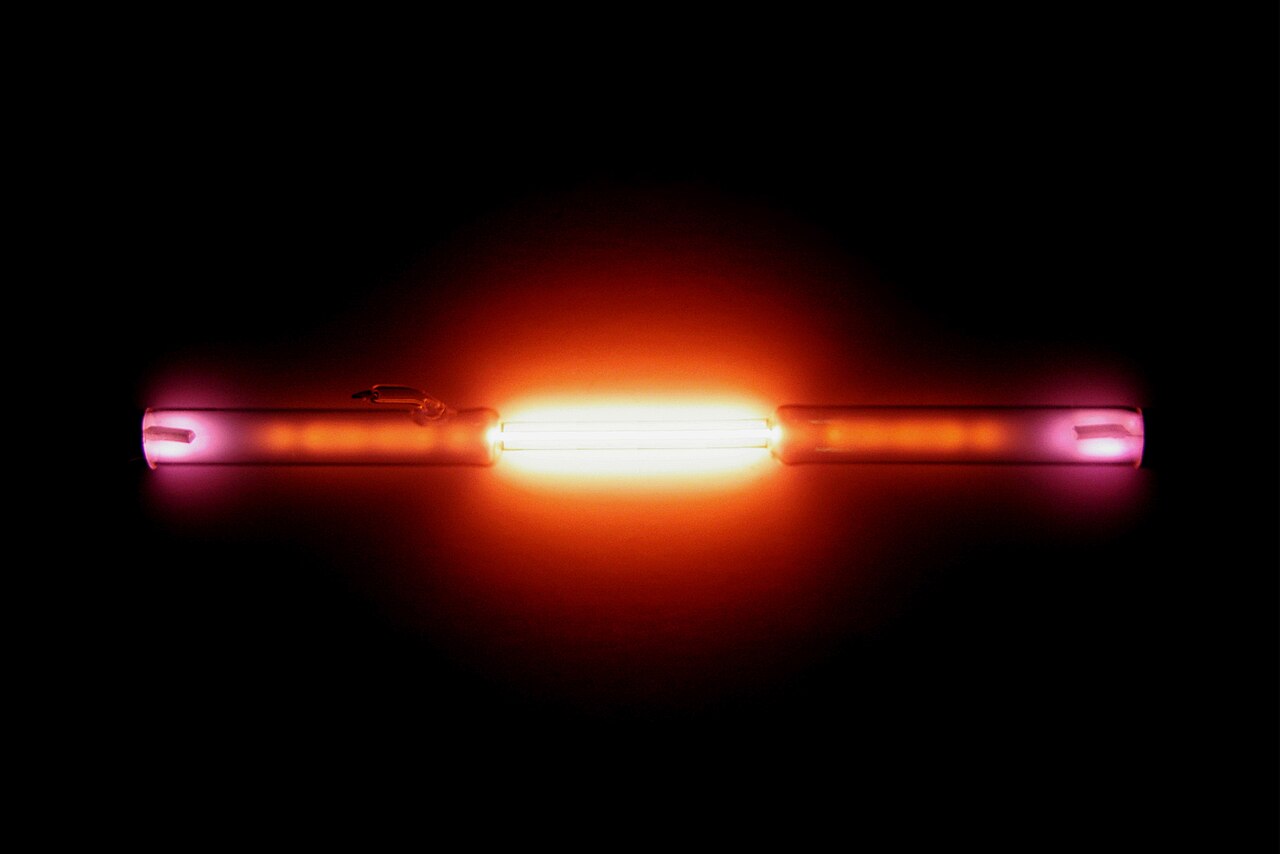

Basic atomic characteristics
Hydrogen normally has one proton and one electron, with its electron in the 1s orbital; helium has two protons and a filled 1s2 electron pair. The rule that applies to these light atoms is sometimes called the duet rule: a filled valence shell corresponds to two electrons rather than the octet used to describe many heavier atoms. The quantum-mechanical explanation depends on allowable orbital types at the lowest energy level; see references on the 1s orbital and general descriptions of atomic orbitals.
Chemical behavior and classification
Despite their proximity in the periodic table, hydrogen and helium behave very differently chemically. Hydrogen commonly forms diatomic H2 molecules and can act as a reducing agent or as a proton donor/acceptor in some reactions; its chemistry overlaps with several groups and this produces longstanding classification questions. Hydrogen is often placed above the alkali metals because it has a single valence electron, yet it can also accept an electron in ways reminiscent of the halogens. Helium, in contrast, is chemically inert under ordinary conditions and is grouped with the noble gases. For structural context, consult entries on groups and the overall periodic table.
Isotopes, abundance and natural roles
Both elements have important isotopes with distinct roles. Hydrogen occurs mainly as protium, with heavier isotopes deuterium and tritium found in nature and laboratory contexts; helium has stable isotopes produced in stellar nucleosynthesis and by radioactive decay. Cosmically, hydrogen is the most abundant element in the universe and fuels stellar processes, while helium is the second most abundant element and a major product of stellar fusion.
Practical uses and importance
Hydrogen is central to chemistry, energy research and industrial chemistry, and it appears widely in organic and inorganic compounds. Helium’s low boiling point and chemical inertness make it valuable for cryogenics, controlled atmospheres and gas mixtures in technical applications. Both elements are therefore fundamental to fields ranging from astrophysics to materials science.
Summary and further reading
- Electronic limit: Period 1 contains only two elements because only the 1s orbital is available at the first principal level.
- Duet rule: Stability for these atoms is achieved with two valence electrons rather than an octet.
- Placement: Hydrogen’s behaviour makes its group placement ambiguous in some pedagogical tables; helium is consistently treated as a noble gas.
For concise introductions and classroom materials consult educational guides on the first period, general resources about the periodic table, and summaries of valence concepts such as valence electrons. Further reading on orbital theory and atomic structure is available in standard textbooks and outreach materials; see discussions of the orbital model and the 1s orbital for technical background.
Questions and answers
Q: What is a period 1 element?
A: A period 1 element is an element in the first row of the periodic table.
Q: How are elements arranged in the periodic table?
A: Elements in the periodic table are arranged in rows to show repeating properties of the elements. As atomic number increases, different properties emerge. A new row begins when chemical properties repeat and elements within a group have similar properties.
Q: How many elements are there in period 1?
A: There are only two elements in period 1 - hydrogen and helium.
Q: Why is there less elements in period 1 compared to other periods?
A: This can be explained by modern theories of atomic structure which state that this period fills up the 1s orbital and follows the duet rule, meaning it only needs two electrons to complete its valence shell so can only hold two electrons both in the 1s orbital. Therefore, it can only have two elements.
Q: What does quantum physics explain about period 1?
A: Quantum physics explains why there is less elements in period 1 compared to other periods - this is because it fills up the 1s orbital and follows the duet rule, meaning it only needs two electrons to complete its valence shell so can only hold two electrons both in the 1s orbital.
Q: What does 'duet rule' mean?
A: The 'duet rule' means that a period one element only needs two electrons to complete its valence shell so can only hold two electrons both in the 1s orbital.
Q: What happens when chemical properties repeat? A: When chemical properties repeat, a new row begins on the periodic table as different properties emerge with increasing atomic number.
Related articles
Author
AlegsaOnline.com Period 1 elements — hydrogen and helium Leandro Alegsa
URL: https://en.alegsaonline.com/art/75814
Sources
- en.wikibooks.org : Period 1 elements
- books.google.com : Organic Chemistry Demystified