
Pennsylvania Station (New York City)
Major rail hub beneath Madison Square Garden in Midtown Manhattan. Serves Amtrak, Long Island Rail Road, and New Jersey Transit and is the busiest train station in the United States.
Pennsylvania Station, commonly called Penn Station, is a principal intercity and commuter rail terminal in Midtown Manhattan. It lies beneath Madison Square Garden between Seventh and Eighth Avenues and between 31st and 34th Streets. The complex handles hundreds of thousands of passengers on a typical weekday and functions as a critical transfer point linking long‑distance, regional and local rail services with New York City's transit network. For official service details see station information.
Image gallery
4 Images


Layout and services
The station is primarily an underground complex composed of concourses, ticketing areas and multiple platforms. It serves three main rail operators: Amtrak (intercity), the Long Island Rail Road (commuter) and New Jersey Transit (commuter). The facility connects with several New York City Subway lines and is within walking distance of other transit options. For broader context about the city, see New York City.
History and development
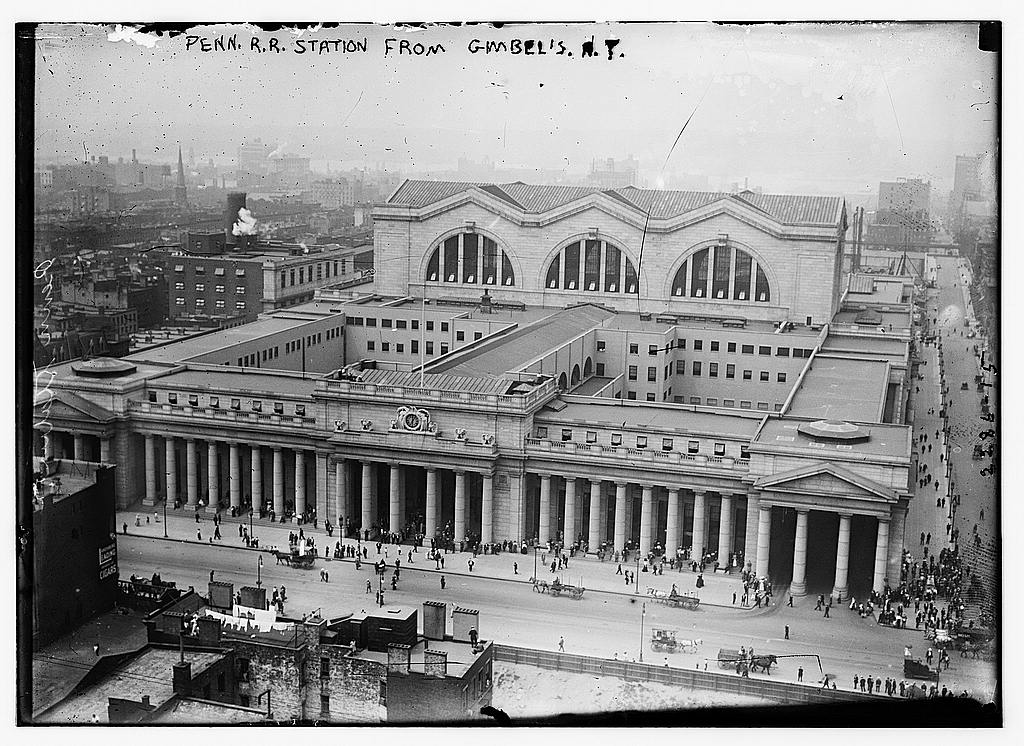
Penn Station's history stretches back to the early 20th century, when the original above‑ground Pennsylvania Railroad terminal was completed as a monumental Beaux‑Arts structure. That building was demolished in the 1960s and replaced by the current below‑grade station and the arena above it. The demolition was influential in the rise of the architectural preservation movement in the United States and led to stronger protections for historic landmarks.
Modern improvements
In recent decades the station has seen substantial renovation and expansion efforts to address overcrowding and improve passenger amenities. A major addition, the Moynihan Train Hall, repurposed the nearby Farley Post Office building to provide a new Amtrak concourse and public space, improving circulation and customer experience. Ridership and operational statistics are tracked by transit authorities; see ridership reports.
Importance and notable facts
- Penn Station is the busiest rail facility in the United States and a primary commuter gateway to Manhattan.
- Its location beneath a major arena and its dense urban setting make expansion complex and costly.
- The station contrasts with Grand Central Terminal, which serves different regional lines and preserves a largely above‑ground historic concourse.
Penn Station's role extends beyond transportation: it is a focal point for daily economic activity, urban planning debates and ongoing efforts to modernize New York City's rail infrastructure. For information about the arena above the station, see Madison Square Garden.
Questions and answers
Q: What is Pennsylvania Station?
A: Pennsylvania Station (also known as Penn Station) is a large train station in New York City.
Q: Where is Pennsylvania Station located?
A: Pennsylvania Station is located in Midtown Manhattan, between Seventh and Eighth Avenues and 31st and 34th Streets, and is underneath Madison Square Garden.
Q: How many people use Pennsylvania Station every day?
A: Over 600 thousand people use Pennsylvania Station every day.
Q: Who are the main users of Pennsylvania Station?
A: Many of the main users of Pennsylvania Station are commuters travelling to and from work or school.
Q: What is the significance of Pennsylvania Station?
A: Pennsylvania Station is the busiest train station in the United States.
Q: Is Pennsylvania Station solely a train station?
A: No, Pennsylvania Station is also located underneath Madison Square Garden.
Q: What is the area around Pennsylvania Station known as?
A: The area around Pennsylvania Station is known as Midtown Manhattan.
Related articles
Author
AlegsaOnline.com Pennsylvania Station (New York City) Leandro Alegsa
URL: https://en.alegsaonline.com/art/75593