
Peking Man (Homo erectus pekinensis)
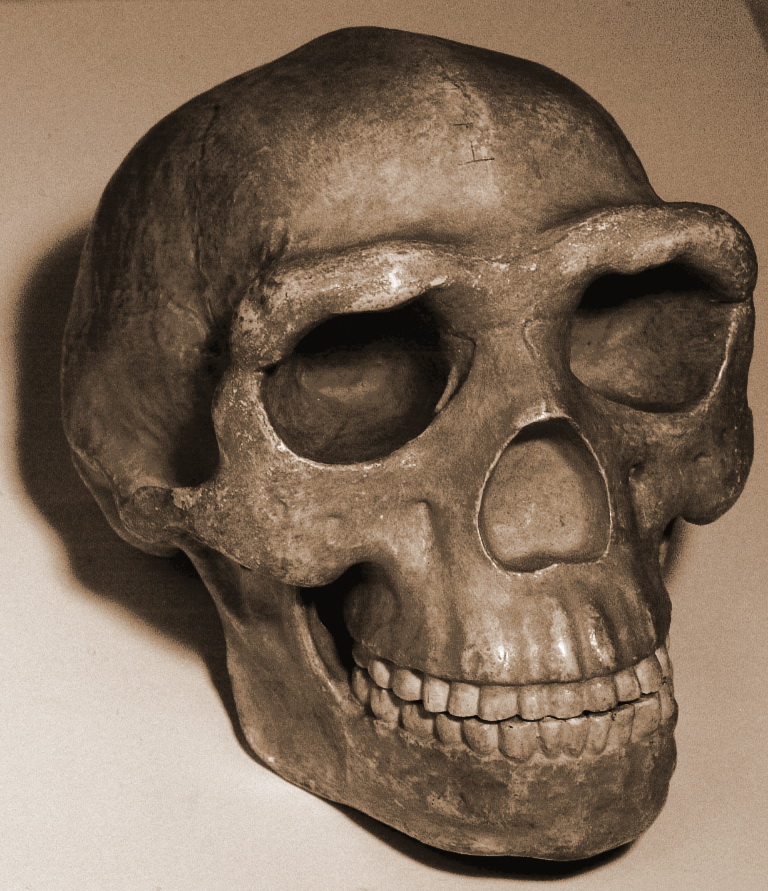
Hominin fossils from Zhoukoudian near Beijing, long attributed to Homo erectus pekinensis. Key evidence for Middle Pleistocene occupation in East Asia; originals lost in 1941, casts and records remain.
Overview
Peking Man is the informal name given to a group of fossil hominins described as Homo erectus pekinensis. The remains were recovered during systematic excavations at Zhoukoudian between 1923 and 1937, a cave system located near present‑day Beijing in China. These fossils are among the best known early human finds from East Asia and have played a central role in reconstructing the human past in the region.
Image gallery
10 Images




Physical characteristics
The Peking Man material shows features typical of erectus‑grade hominins: a thick and robust skull with pronounced brow ridges, large jaws and teeth, and a brain size intermediate between earlier Homo species and later Homo sapiens. Although the bones indicate a body form broadly similar to modern humans in proportions, cranial morphology and dental traits are more primitive. Most original specimens are known today through detailed descriptions and high‑quality casts made before the originals were lost.
Discovery and dating
Excavations at Zhoukoudian in the 1920s and 1930s recovered multiple skull fragments, teeth and other skeletal remains along with stone tools and faunal bones. The finds were extensively studied by an international team of researchers. Radiometric work in recent decades has placed the Zhoukoudian deposits in the mid to late Middle Pleistocene. A 26Al/10Be burial dating study has suggested ages in the range of about 680,000–780,000 years, with other analyses converging on an age of roughly three‑quarters of a million years.
Behavior, technology and site evidence
Stone flakes and simple tools associated with the site show that these hominins manufactured and used stone implements. The site also contains concentrations of ash and burnt bone that some researchers interpret as evidence for controlled use of fire, though interpretations remain debated and depend on taphonomic and contextual analyses. No clear symbolic artifacts or art have been reliably attributed to Peking Man, and evidence of deliberate burials is absent.
Significance and unresolved questions
Peking Man occupies an important position in understanding hominin evolution in East Asia. The fossils demonstrate the presence of erectus‑grade populations in northern China during the Middle Pleistocene and provide comparative data for anatomy, tool use and site occupations. Important questions remain: the degree of biological relationship between these populations and later humans in Asia, possible genetic links with groups such as the Denisovans, and the extent to which behaviors like fire use were habitual. The original fossils disappeared in 1941 during transport for safekeeping amid the Second World War; modern knowledge relies on casts, photographs and contemporary descriptions.
Key points
- Peking Man is usually classified as Homo erectus pekinensis, a regional sample of Homo erectus.
- Excavated at Zhoukoudian near Beijing, China during 1923–1937.
- Current dating places the remains at roughly 680,000–780,000 years old using cosmogenic nuclide methods and other approaches.
- Evidence includes skull fragments, teeth, stone tools and burned deposits; original fossils were lost in 1941, but casts and records survive.
For further general background on the species and site, consult accessible summaries and museum displays that reproduce casts and contextual material for public study. Specialized literature and regional paleoanthropological reviews provide detailed analyses of anatomy, stratigraphy and dating methods used at Zhoukoudian.
Questions and answers
Q: What is Peking Man?
A: Peking Man is an example of Homo erectus, with remains found in China.
Q: Where were the remains of Peking Man found?
A: The remains were first found between in 1923 and 1937 during excavations at Zhoukoudian near Beijing, in China.
Q: When were the finds of Peking Man dated to approximately?
A: The finds were dated from roughly 750,000 years ago.
Q: What is the new 26Al/10Be dating for Peking Man's remains?
A: The new 26Al/10Be dating suggests the remains are in the range of 680,000-780,000 years old.
Q: How did Peking Man look and what did they use?
A: Peking Man looked similar to modern humans and Neanderthals, and used stone tools. Most likely fire was used.
Q: Do we know if interbreeding occurred between Homo erectus and Homo sapiens?
A: It is currently unknown if interbreeding occurred between Homo erectus and Homo sapiens.
Q: Are there any religious or symbolic findings associated with Peking Man?
A: No religious or symbolic findings are yet associated with this subspecies.
Related articles
Author
AlegsaOnline.com Peking Man (Homo erectus pekinensis) Leandro Alegsa
URL: https://en.alegsaonline.com/art/75475
Sources
- news.bbc.co.uk : "'Peking Man' older than thought"
- ui.adsabs.harvard.edu : 2009Natur.458..198S
- doi.org : 10.1038/nature07741
- worldcat.org : 0028-0836
- pubmed.ncbi.nlm.nih.gov : 19279636