
Peckham — district in southeast London
Peckham is a diverse district in southeast London within the Borough of Southwark, known for its Saxon place name, Rye Lane market, Peckham Rye Park, notable public housing estates, and a growing cultural scene.
Overview
Peckham is an urban district in southeast London, historically part of Camberwell and now administered within the London Borough of Southwark. It is a densely settled area with a multicultural population and a mix of residential streets, commercial thoroughfares and green spaces. For a simple locator see the local map and the district's position in southeast London.
Image gallery
9 Images




Name and early history
The place-name "Peckham" derives from Old English, commonly interpreted as a homestead or village by the River Peck. The stream once flowed through the area but was culverted and covered over in the 19th century. Archaeological finds indicate human activity here long before the Saxon name was recorded, including traces suggesting Roman-period occupation on the surrounding high ground.
Medieval record and governance
Peckham appears in surviving medieval documents and was listed in the Domesday Book of 1086 under a variant spelling. At that time local landholdings were tied into the Norman feudal system and church administration: some lands were held by churchmen such as the Bishop of Lisieux under tenants-in-chief like Odo of Bayeux. Over centuries the district evolved from a rural manor and small village into a suburban parish and, with London's expansion, into an inner-city neighbourhood.
Urban development and housing
From the 18th and 19th centuries onward Peckham urbanised rapidly as London expanded. Victorian-era streets and later 20th-century residential developments coexist across the area. Peckham contains significant public housing estates that were constructed in the post-war period; these estates have shaped local demographics and social policy debates and have been the focus of regeneration schemes in recent decades.
Culture, economy and public spaces
Peckham is notable for several local landmarks and amenities. Rye Lane is a long shopping street and market area that serves as a commercial spine; Peckham Rye Park and Common is a large green space valued for recreation. In recent years the area has developed a visible arts and creative scene, with galleries, repurposed industrial buildings used as studios, community projects and independent eateries contributing to a changing local economy.
Transport and connections
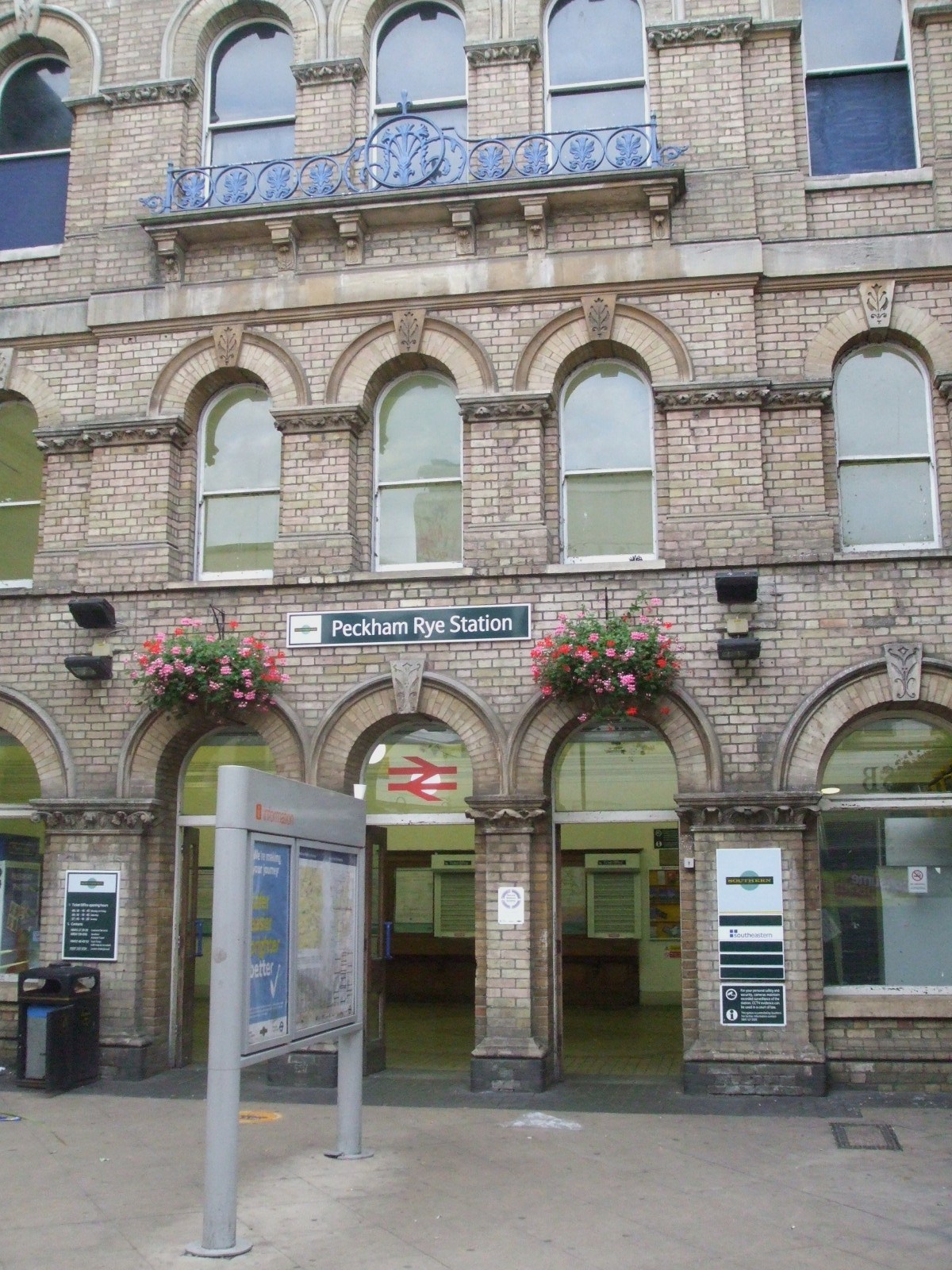
Transport links give Peckham good connections to central London and neighbouring suburbs, with railway and bus services carrying commuters and visitors. These links helped transform the district from a peripheral parish into an integrated part of the metropolitan area.
Notable features and distinctions
- Historic name reflecting the River Peck and early settlement.
- Documented in medieval records and transformed by London's growth.
- Mix of Victorian housing, modern developments and important public estates.
- Strong local markets, parks and a growing arts and cultural scene.
Peckham's story is one of long habitation, industrial and suburban development, social change and contemporary cultural renewal. For administrative information see the local borough page for the London Borough of Southwark, and for historic references consult medieval and Domesday-era sources linked above.
Questions and answers
Q: Where is Peckham located?
A: Peckham is located in southeast London.
Q: What borough is Peckham in?
A: Peckham is in the London Borough of Southwark.
Q: How many people live in Peckham?
A: About 15,000 people live in Peckham.
Q: What is the meaning of the name "Peckham"?
A: "Peckham" is a Saxon place name that means the village of the River Peck.
Q: What evidence suggests earlier Roman occupation in the Peckham area?
A: Archaeological evidence indicates earlier Roman occupation in the Peckham area.
Q: When was the River Peck closed over?
A: The River Peck was closed over in 1823.
Q: What kind of area is Peckham?
A: Peckham is a "deprived area" with a large ethnically diverse public housing estate.
Related articles
Author
AlegsaOnline.com Peckham — district in southeast London Leandro Alegsa
URL: https://en.alegsaonline.com/art/75386
Sources
- news.bbc.co.uk : "Changing face of Damilola estate"
- theguardian.com : "The inside story of gang life in Peckham"
- bbc.co.uk : "London riots: 'Everyone was very fired up'"