
Patriot Day (September 11) — United States Day of Remembrance
Patriot Day, observed each September 11 in the United States, honors those killed in the 2001 terrorist attacks through flags at half-staff, moments of silence, memorials and community remembrance.
Overview
Patriot Day is a United States observance held every year on September 11 to remember the nearly 3,000 people who died in the terrorist attacks of 2001. Commonly referred to in everyday speech as "9/11," the date has become a national moment for mourning, reflection and public commemoration. The day is intended to honor victims, recognize first responders and encourage acts of service and community support.
Image gallery
3 Images

History and legal establishment
The observance was created soon after the attacks. In October 2001, the U.S. House of Representatives approved a joint resolution designating September 11 as Patriot Day; the measure passed by an overwhelming margin. The resolution requested that the President formally designate the date each year for remembrance. The President signed the legislation into law later that year and issued proclamations to establish annual observance. These steps gave Patriot Day the status of a national day of remembrance rather than a federal holiday.
Customs and official practices
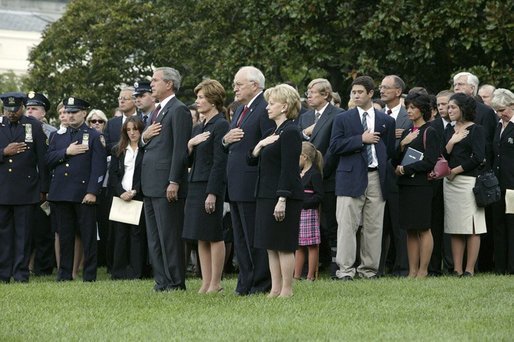
Federal practice and common custom on Patriot Day include lowering the American flag to half-staff on government buildings and private residences, holding memorial ceremonies, and observing moments of silence. The President often asks Americans to pause at a specific time tied to the attacks to honor those who were killed. Many communities organize public readings of victims' names, interfaith services, and educational programs that explore the events and their consequences.
Public response and community activities
Beyond official acts, Patriot Day has inspired a broad range of civic responses. Cities with direct ties to the events host large public memorials and exhibitions; museums and memory projects preserve testimonies and artifacts. Since the late 2000s, volunteer and service organizations, together with federal encouragement, have promoted service projects on or around September 11 as a way to turn remembrance into community action.
Notable facts and distinctions
Patriot Day is not a federal paid holiday: government offices and most businesses remain open, but many institutions mark the date with commemorations. The observance focuses on remembrance and respect rather than political debate, and communities typically tailor ceremonies to local needs while maintaining a common national theme of honoring victims and responders.
References and resources
- General information about the United States observance
- Details on the victims and the 2001 attacks
- Text of the House joint resolution
- Presidential role and proclamations
- Statements and materials from President George W. Bush
- Guidance on flag display and symbolism
- Protocol for flying flags at half-staff
- U.S. government observance practices
- Information on national moments of silence
- Context on the World Trade Center and related memorials
Questions and answers
Q: What is Patriot Day?
A: Patriot Day is a day of remembrance in the United States that happens on September 11 of each year to remember the 2,977 killed in the September 11, 2001 attacks.
Q: How did Patriot Day become an official day?
A: The U.S. House of Representatives Joint Resolution 71 was approved by a vote of 407–0 and President George W. Bush signed it into law on December 18, 2001 (as Public Law 107-89).
Q: What does President Bush ask Americans to do on this day?
A: On this day, President Bush asks Americans to fly the American flag at half-staff at individual American homes, at the White House, and on all U.S. government buildings home and abroad as well as observe a moment of silence beginning at 8:46 A.M. (Eastern Daylight Time).
Q: When did President Bush proclaim September 11th as Patriot Day?
A: President Bush proclaimed September 11th 2002 as Patriot Day on September 4th 2002.
Q: What happened at 8:46 A.M.?
A: At 8;46 A.M., the first plane struck the North Tower of the World Trade Center on September 11th 2001.
Q: Who created Patriot Day?
A: The U.S House of Representatives created Patriot Day by passing Joint Resolution 71 which was then signed into law by President George W Bush in December 18th 2001 (as Public Law 107-89).
Related articles
Author
AlegsaOnline.com Patriot Day (September 11) — United States Day of Remembrance Leandro Alegsa
URL: https://en.alegsaonline.com/art/75064