
Pato: Argentina’s traditional mounted ball game
Pato is Argentina's national equestrian team sport, played on horseback. Blending elements of polo and ball-handling games, it evolved from rural gaucho contests into a regulated modern sport with distinct equipment and rules.
Overview
Pato is a team sport played on horseback and officially recognised as the national sport of Argentina. The modern game combines elements drawn from mounted ball sports such as polo and from ball-handling contests resembling basketball, while keeping features rooted in rural Argentine tradition. Riders work to control and move a specialised ball toward the opponent's goal while demonstrating horsemanship, teamwork and close physical contest.
Image gallery
5 Images


History and origins
The name pato is the Spanish word for "duck", reflecting the sport’s earliest—and now largely legendary—forms that used a live duck inside a basket as the object of play. Written accounts of pato date back to at least the early 17th century, and for much of its history the game was played informally across ranchlands. Matches could extend between estancias and attracted local riders, especially gauchos, the horsemen of the Argentine countryside.
Because early contests were often violent and chaotic, pato was periodically banned by authorities during the 18th and 19th centuries; historical reports recount serious injuries and fatal incidents linked to disputes arising from matches. In the 20th century, efforts to regulate and civilise the sport culminated in a formal set of rules developed by figures associated with rural communities. In 1953, President Juan Perón declared pato the national game, recognising its cultural significance.
Rules and play
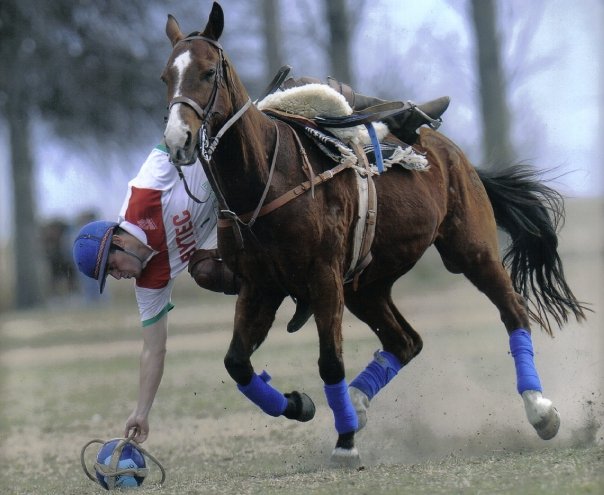
Modern pato is governed by formal rules intended to balance competition with safety. Teams of mounted players compete to gain possession of a ball designed to be grasped during riding; the ball typically has handles or straps to permit secure handling at speed. Players pass the ball among teammates while riding and attempt to score by sending it through a goal structure at the opponent’s end of the field. Close physical contests for the ball are permitted under regulated conditions; referees enforce rules about dangerous riding, fouls and fair play.
Matches are organised with clear start and stop procedures, and timekeeping, substitutions and penalties are defined to keep play orderly. The emphasis in play is on riding skill, coordinated passing and safe contesting of possession rather than on brute force.
Equipment and safety
Equipment in pato reflects its equestrian nature. Horses are specially trained for agility, responsiveness and calm under physical contact. The ball is made to allow riders to take hold securely while mounted. Players wear riding helmets and protective clothing appropriate for mounted sports; tack and bridling meet standards that prioritise horse control and rider safety. Modern rule sets include measures to reduce the risk of severe injury to both riders and horses.
Cultural significance and organisation
Although pato is the national sport, its everyday popularity differs from that of football, which dominates Argentine spectator and grassroots participation. Pato remains closely associated with rural culture, horsemanship and the traditions of the pampas. Clubs and riding schools keep the game alive through regional competitions, demonstrations and festivals that celebrate equestrian skills and gaucho heritage. The sport also appears in Argentine art, literature and regional celebrations as a symbol of national countryside identity.
Terminology and legacy
The word pato preserves the game’s historic link to its early—and now discontinued—use of a live duck. Over centuries the activity transformed from a rough, informal contest into an organised sport with codified rules, specialised equipment and an emphasis on safety and fair play. Today pato is presented as both a competitive discipline and a living cultural tradition that reflects Argentina’s ranching past.
Comparisons and further reading
For context, readers often compare pato with other mounted team sports such as polo and with ball-handling field games like basketball, since pato borrows tactical and handling elements from both. Historical and cultural materials on Argentina, the Spanish language and gaucho life provide useful background: see general resources on Argentina, the Spanish term origins, the word "duck", the role of gauchos in shaping rural games, and the mid-20th-century recognition by figures such as Juan Perón for broader national context.
Those seeking more detail about current rules, equipment standards and competition calendars should consult official pato organisations and regional riding clubs, which publish up-to-date regulations and guidance for players and organisers.
Questions and answers
Q: What is Pato?
A: Pato is a game played on horseback that combines ideas from polo and basketball. It is the national sport of Argentina.
Q: What does "Pato" mean in Spanish?
A: "Pato" means "duck" in Spanish.
Q: How long has Pato been around?
A: Pato has been written about since 1610.
Q: How did early versions of Pato differ from modern versions?
A: Early versions of Pato used a live duck inside a basket instead of a ball. The playing field would often go between neighboring ranches, and the first team to reach its own ranch house with the duck was the winner.
Q: Why was Pato banned several times in its history?
A: Pato was banned several times due to violence, including harm to the duck and injuries or deaths of players, such as being trampled underfoot or engaging in knife fights.
Q: When were modern rules added to Pato?
A: Modern rules based on polo were added to Pato during the 1930s by ranch owner Alberto del Castillo Posse.
Q: When did Pato become Argentina's national game?
A: President Juan Perón made Pato Argentina's national game in 1953.
Related articles
Author
AlegsaOnline.com Pato: Argentina’s traditional mounted ball game Leandro Alegsa
URL: https://en.alegsaonline.com/art/75018
Sources
- commons.wikimedia.org : Pato
- glin.gov : "Argentina Decree Nº 17468 of 16/09/1953"
- educar.org : "Historia del pato"
- en.argentina.ar : "Pato, Argentina's national sport"
- online.wsj.com : "In Soccer-Mad Argentina, the National Sport Is a Lame Duck"
- folkloredelnorte.com.ar : "Reglamento oficial del juego de pato"