
Parliament of England
The Parliament of England was the elected and hereditary assembly that developed from medieval councils into the legislature of the Kingdom of England until the 1707 Union.
The Parliament of England was the principal representative assembly and legislative institution of the Kingdom of England from its medieval beginnings until 1707. It emerged gradually from royal councils and feudal gatherings, expanding the role of commoners and nobles in advising the monarch. Over centuries it acquired powers to grant taxation, pass laws and scrutinize royal administration, becoming a central feature of English political life.
Image gallery
6 Images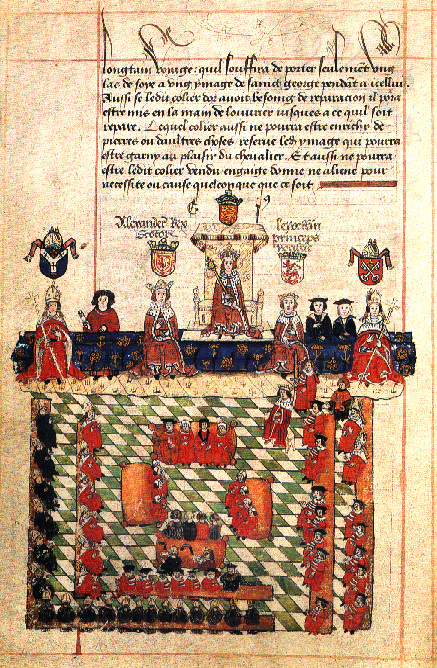


Origins and development
Its roots lie in early medieval practice when kings consulted magnates and clergy. By the 13th and 14th centuries those meetings evolved into a more regular assembly, often separated into two houses: the Lords (bishops and peers) and the Commons (knights and burgesses). Practices such as petitioning the crown, approving subsidies and debating grievances shaped parliamentary procedure and the balance between crown and representatives.
Composition, functions and procedures
The Parliament combined hereditary or appointed members with elected representatives. Typical functions included:
- Granting taxation requested by the sovereign;
- Passing statutes and statutes declaratory of rights;
- Presenting petitions and complaints to the crown;
- Holding committees to examine local and national matters.
Formal processes such as writs of summons, rolls of proceedings and the emergence of parliamentary privilege developed gradually, forming the institutional framework familiar in later British parliamentary practice.
Role, significance and notable facts
Parliament played a key role in constitutional change: it was central to disputes over royal authority in the 17th century, the Civil War, and the Glorious Revolution which affirmed parliamentary supremacy. Its evolving authority contributed to modern concepts of representative government and the rule of law. While England no longer has a separate legislature, its parliamentary traditions underpin later institutions.
Union and legacy
The existence of the Parliament of England ended with the Act of Union 1707, after which its membership and functions were subsumed into the Parliament of Great Britain and, after later developments, the Parliament of the United Kingdom. Other nations in the British Isles — Scotland, Wales and Northern Ireland — have their own devolved bodies in modern times through processes of devolution, but England itself does not possess a distinct devolved legislature and remains represented directly in the UK Parliament.
Questions and answers
Q: What was the Parliament of England?
A: The Parliament of England was the legislature of the Kingdom of England.
Q: When did the Parliament of England end its existence?
A: The existence of the Parliament of England ended in 1707.
Q: What replaced the Parliament of England?
A: After the Act of Union 1707, the Parliament of Great Britain became the main part of the government, and later became known as the Parliament of the United Kingdom.
Q: Which nations of the United Kingdom have their own legislature?
A: Scotland, Wales, and Northern Ireland all have their own legislature.
Q: What is devolution?
A: Devolution is the transfer of power from a central government to local governments.
Q: Does England have a legislature today?
A: No, England does not currently have its own legislature.
Q: What is the historical importance of the Parliament of England?
A: The Parliament of England played a significant role in the development of representative government and constitutional law in the United Kingdom.
Related articles
Author
AlegsaOnline.com Parliament of England Leandro Alegsa
URL: https://en.alegsaonline.com/art/74743
Sources
- parliament.the-stationery-office.co.uk : Davies, M. (2003). Companion to the Standing Orders and guide to the Proceedings of the House of Lords, 19th ed.