
Parker Solar Probe
NASA robotic probe launched in 2018 to study the Sun's outer atmosphere and solar wind, approaching within ~6.2 million km and setting records for spacecraft speed.
Overview
The Parker Solar Probe is a NASA robotic spacecraft designed to fly into the Sun's outer atmosphere (the corona) and make the closest in situ measurements of the solar environment ever attempted. Launched in August 2018, the mission aims to sample the plasma, magnetic fields and energetic particles near the Sun and to improve understanding of how the corona is heated and how the solar wind is accelerated. For an official mission overview see the mission page.
Image gallery
10 Images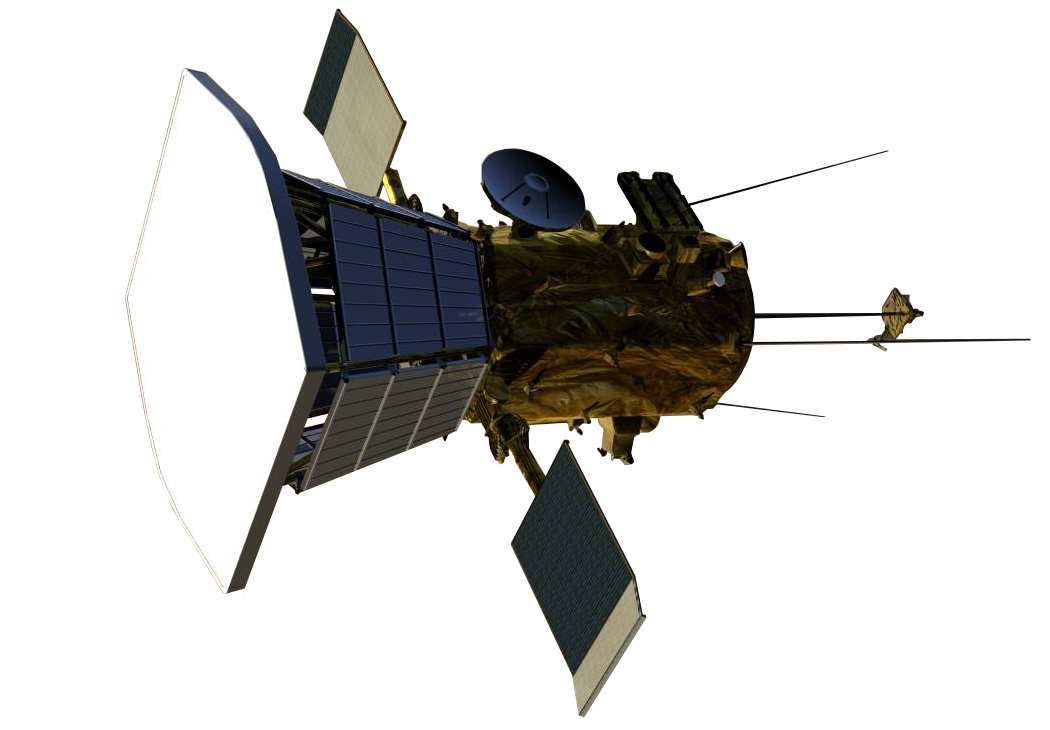


Key characteristics
The spacecraft is protected by a reinforced carbon–carbon heat shield that keeps instruments at near-room temperatures while the front faces temperatures of thousands of degrees. At closest approach it will pass to within about 8.86 solar radii — roughly 6.2 million kilometers (3.85 million miles) from the Sun's "surface" — and will reach record speeds (around 700,000 km/h or 430,000 mph). The probe was launched on a heavy-lift vehicle; technical and launch details are available via the launch information resources.
Scientific instruments
Parker carries four instrument suites that work together to measure the local environment and image the corona:
- FIELDS — measures electric and magnetic fields and waves.
- SWEAP — counts and characterizes solar wind electrons, protons and heavier ions.
- WISPR — a visible-light imager that captures the structure of the corona and solar wind.
- ISʘIS (Integrated Science Investigation of the Sun) — detects energetic particles from the Sun.
Mission profile and trajectory
The probe follows an elliptical orbit that repeatedly brings it closer to the Sun. A series of gravity assists at Venus gradually lower the spacecraft's perihelion so it can sample progressively nearer regions of the corona. That trajectory strategy allows multiple close approaches without carrying prohibitively large amounts of fuel.
Scientific goals and importance
Major objectives include solving why the corona is millions of degrees hotter than the Sun's visible surface, discovering the mechanisms that accelerate the solar wind, and tracing how energetic particles are produced and propagated. In situ measurements taken within the corona complement remote solar observations and improve models that help predict space weather and its effects on Earth and spacecraft.
Notable facts and legacy
Parker Solar Probe is the fastest human-made object and the first NASA spacecraft named for a living person, honoring astrophysicist Eugene N. Parker for his work on the solar wind. Its findings are already reshaping ideas about fine-scale magnetic structures and plasma behavior near the Sun. For background on the Sun and the corona see the corona overview and general solar resources at the Sun information. Data and mission updates can be accessed through the data and science portals.
Questions and answers
Q: What is Parker Solar Probe?
A: Parker Solar Probe is a NASA robotic space probe heading towards the outer corona of the Sun.
Q: How close will it get to the surface of the Sun?
A: It will reach to within 8.86 solar radii (6.2 million kilometers or 3.85 million miles) from the "surface" of the Sun.
Q: Is it currently the fastest spacecraft ever built?
A: Yes, it is currently the fastest spacecraft ever built and will travel, at closest approach, as fast as 700,000 km/h (430,000 mph).
Q: What type of mission is Parker Solar Probe on?
A: Parker Solar Probe is on a mission to explore and study the outer corona of the Sun.
Q: Where was Parker Solar Probe launched from?
A: Parker Solar Probe was launched from Cape Canaveral Air Force Station in Florida in August 2018.
Q: How long has it been travelling for?
A: It has been travelling since August 2018 and is expected to complete its mission by 2025.
Q: How much data does it collect during its journey? A:Parker Solar Probes collects vast amounts of data about solar winds and other phenomena related to our star's atmosphere during its journey around the sun.
Related articles
Author
AlegsaOnline.com Parker Solar Probe Leandro Alegsa
URL: https://en.alegsaonline.com/art/74715
Sources
- theguardian.com : "Parker Solar Probe: set the controls for the edge of the sun..."
- nytimes.com : "NASA Delays Parker Solar Probe Launch"
- nytimes.com : "Newly Named NASA Spacecraft Will Aim Straight for the Sun"
- solarprobe.jhuapl.edu : Feasible Mission Designs for Solar Probe Plus to Launch in 2015, 2016, 2017, or 2018
- science.nasa.gov : "NASA Plans to Visit the Sun"
- nasa.gov : "Parker Solar Probe: Humanity's First Visit to a Star"
- nytimes.com : "Parker Solar Probe Launches on NASA Voyage to 'Touch the Sun'"
- nasa.gov : "NASA Renames Solar Probe Mission to Honor Pioneering Physicist Eugene Parker"
- headlinestoday.org : "NASA's Solar Parker Probe To Carry Over 1.1 Million Names To The Sun"