
Parinacota (Parina Quta) — stratovolcano on the Chile–Bolivia border
Parinacota is a large dormant stratovolcano on the Chile–Bolivia border in the central Andes, known for its twin peak Pomerape, high-altitude ecosystems and cultural significance to local Aymara communities.
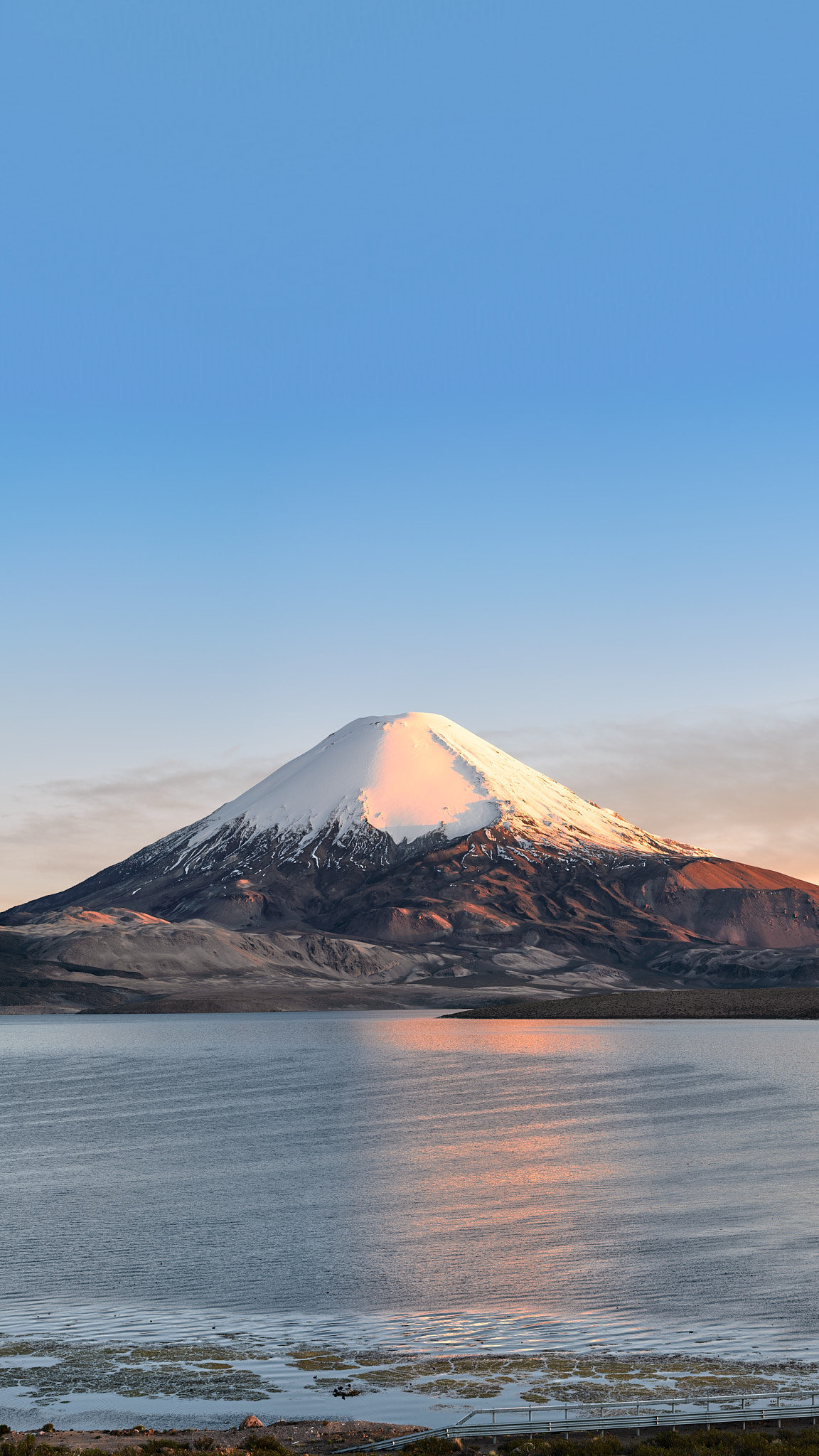
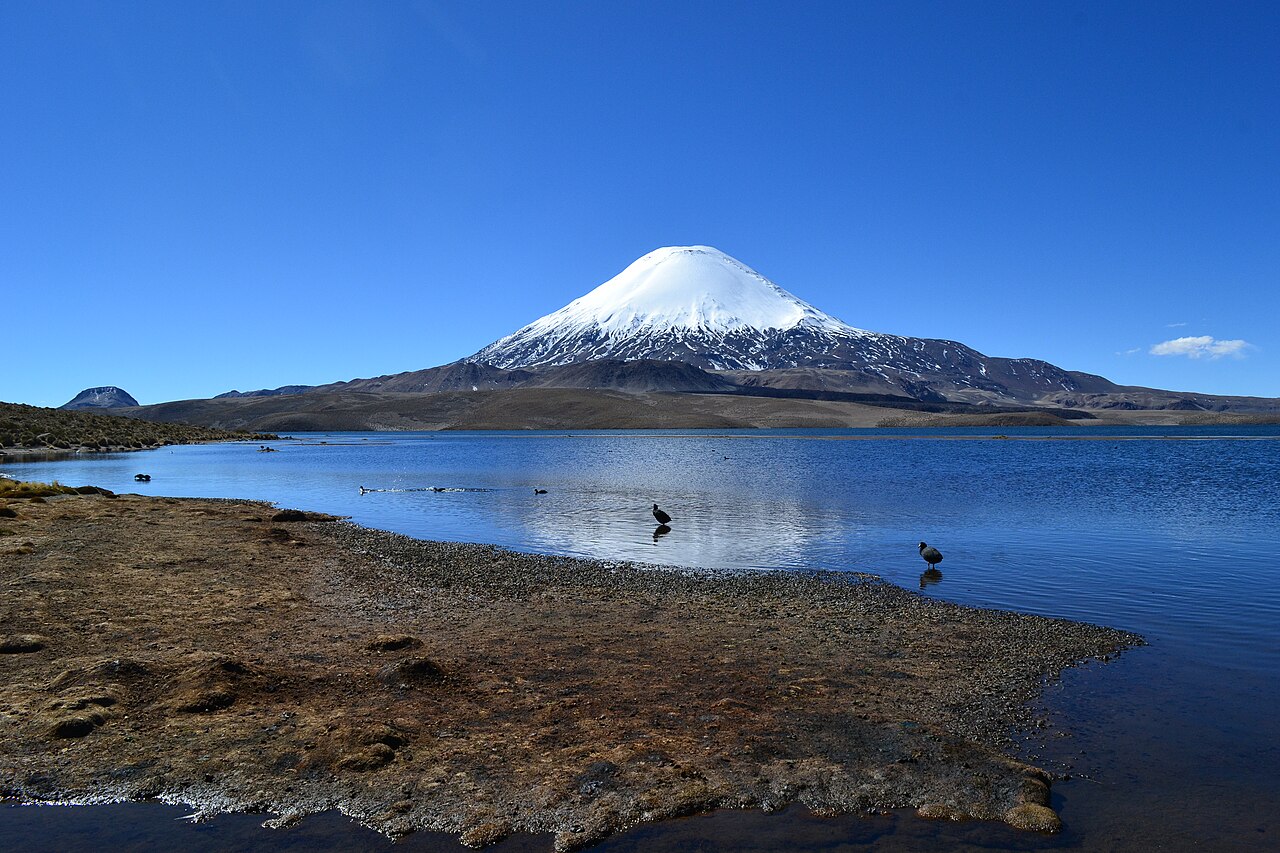
Parinacota (also Parina Quta, from the Aymara language meaning “flamingo lake”) is a massive, largely dormant volcanic cone in the central Andes. It rises above high plains and lakes on the international boundary between Chile and Bolivia. The mountain forms a visually striking, symmetrical cone typical of an Andean stratovolcano and is often referenced alongside its neighbour Pomerape as a paired volcanic complex (Payachata).
Image gallery
10 Images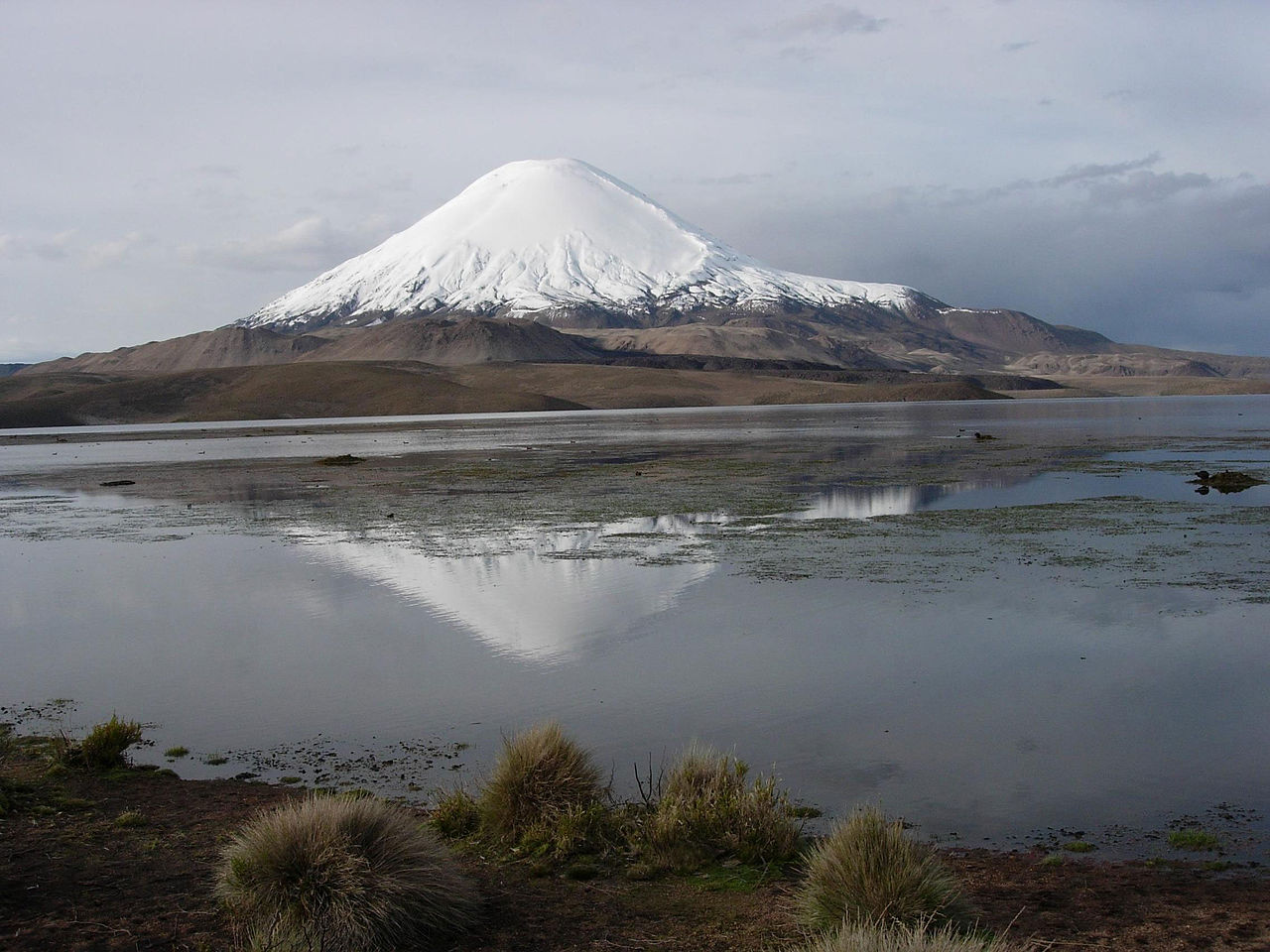





Physical characteristics
Parinacota has steep flanks, a preserved summit crater and glacial features at high elevations. Its bulk is built from alternating lava flows and pyroclastic deposits, giving the cone a layered appearance. Snow and ice persist seasonally, and the volcano overlooks high-altitude wetlands and lakes that support Andean wildlife such as flamingos and vicuñas.
Geology and history
The volcano is part of the Central Volcanic Zone of the Andes, formed by subduction-related magmatism. Its composition is typical of many Andean cones, mainly intermediate to silica-rich lavas. Geological evidence shows episodes of construction, explosive activity and collapse during the late Pleistocene and Holocene, after which activity declined and the summit became quiescent.
Ecology, culture and protection
High Andean ecosystems around Parinacota include puna grasslands and saline lakes that attract migratory and resident birds. The mountain and nearby features are culturally important to local Aymara communities and figure in traditional practices. Much of the Chilean side lies within protected territory, which helps conserve scenic landscapes and biodiversity.
Uses and recreation
Parinacota is a destination for experienced mountaineers because of its altitude and technical sections. Visitors also come for highland birdwatching, photography and to visit nearby archaeological sites. Access is seasonal and requires acclimatization and local guidance.
Notable facts
- Often paired with the neighbouring peak Pomerape as a twin-volcano landmark (Payachata).
- The name reflects local wildlife and hydrology: Aymara words that link flamingos and lakes.
- Straddles an international border, touching protected areas in both Chile and Bolivia, and is an example of an Andean stratovolcano in the Central Volcanic Zone (volcano studies).
Questions and answers
Q: What is the name of the volcano on the border of Chile and Bolivia?
A: The name of the volcano is Parinacota or Parina Quta.
Q: What does the name Parinacota or Parina Quta mean?
A: The name Parinacota or Parina Quta means "flamingo lake" in Aymara language.
Q: What type of volcano is Parinacota?
A: Parinacota is a massive dormant stratovolcano.
Q: Where is Parinacota located?
A: Parinacota is located on the border of Chile and Bolivia.
Q: How is Parinacota described?
A: Parinacota is a massive dormant stratovolcano.
Q: What language does the name Parinacota or Parina Quta come from?
A: The name Parinacota or Parina Quta comes from Aymara language.
Q: Is Parinacota an active or inactive volcano?
A: Parinacota is a dormant volcano which means it has not erupted recently but has the potential to erupt in the future.
Related articles
Author
AlegsaOnline.com Parinacota (Parina Quta) — stratovolcano on the Chile–Bolivia border Leandro Alegsa
URL: https://en.alegsaonline.com/art/74657
Sources
- peakbagger.com : "Cerro Parinacota, Bolivia/Chile"
- andeshandbook.org : "Volcán Parinacota"